Written by : Knowledge Centre Team
Last published : 2025-12-29
12 minutes read
Share

The core purpose of insurance is to protect against risk. In case of untimely demise, there is a loss of income, and hence, financial support is a must for the rest of the dependents. Term insurance in this case covers loss of income by providing a lump sum amount called “Sum Assured” to your loved ones. While everyone actualises the importance of purchasing insurance, overseeing the premium part is something that many miss. It is influenced by certain factors, and health is an important factor in today’s date.
It plays a very important role in the insurance premium calculation and the company’s decision to issue a policy. They also check for BMI (Body Mass Index), which is a key indicator of your health. It is a no-brainer that healthier people are at a lower risk, and therefore, such proposals are quickly accepted and at lower premiums. Let’s move further and learn more about aspects like BMI and their impact on your term plans.
Key Takeaways
|
Lifestyle habits, occupation, family history, and past illnesses have a direct correlation to the premium of the policy.
The insurer may ask you to undergo a complete medical examination to evaluate your current medical condition. The insurance company may also look at chronic illnesses and lifestyle diseases such as hypertension, high cholesterol, and diabetes etc. If any or all of such diseases exist, the insurer may:
Refuse to issue the policy.
Issue the policy with a higher premium.
Issue the policy by excluding death caused by any of these illnesses.
Issue the policy with a waiting period for pre-existing illnesses.
An OTP has been sent to your mobile number

Sorry ! No records Found
Thank You for submitting the response, will get back with you.
Thank you for your interest in our product. Our financial expert will connect with you shortly to help you choose the best plan.
Rakesh is 28-years old and pays ₹1000 each quarter as a premium towards his term life insurance policy. However, his friend, Rajesh, who is also 28-years old, pays ₹1050 each quarter for the same policy and sum assured.
What could be the reason behind this difference? Could it be BMI? Most of us have heard of this term at some point or the other. Whereas doctors use it for deciding the prognosis, actuaries use it for calculating insurance premiums.
Body Mass Index (BMI) is an easy method to determine the appropriateness of a person’s weight as compared to their height. It is a broad-level indicator of a person’s health. BMI measurement considers age, height, weight, and gender to recommend an ideal number.
A normal BMI score lies between 18.5 and 24.9 and indicates that the person’s weight is proportionate to their height. A BMI chart is used to categorise a person into the following four classifications:
BMI or Body Mass Index is a broad measure of your body fat to work out if your weight is healthy.
*Disclaimer: The BMI Calculator provides an estimate based on height and weight and is for informational purposes only. It does not consider factors like muscle mass, bone density, or fat distribution, which can impact health. Results should be interpreted with caution and alongside other health indicators. Users are responsible for their health decisions and should consult a healthcare professional for accurate assessments.
BMI measures how much body fat is appropriate basis one’s height and weight. It is calculated by dividing a person’s weight (in kilograms) by the square of their height (in meters). Body fatness is determined by how high the BMI is. The interpretation of BMI in adults is fairly uniform and simple.
BMI | Weight Status |
|---|---|
Below 18.5 | Underweight |
18.5 - 24.9 | Normal Weight |
25.0 - 29.9 | Overweight |
30.0 and above | Obesity |
If your BMI is within the normal range, you will be offered the best possible premium for your age. If the BMI classifies you as overweight but at the lower end of the scale, the insurer may still issue a policy with a slightly higher premium. However, with increasing BMI, the associated premium may increase multi-fold.
The underlying logic is simple. Higher BMI indicates a higher chance of being afflicted with heart-related ailments that could prove fatal. Even people classified as “underweight” are at risk of being afflicted with illnesses due to deficiencies in the body. This additional risk for the insurer leads to higher premiums for the policyholder.
Click here to use: Term Insurance Calculator
One of the primary reasons to buy life insurance is to ensure you have sufficient financial cover to support your loved ones in case of an unfortunate, untimely demise. However, if your BMI is high, then you must definitely consider it. People with high BMI have a higher chance of getting afflicted with diabetes, hypertension, high cholesterol, fatty liver, sleep apnoea, and gall bladder problems.
With the above reference tables handy, you can easily compare insurance policies online and buy the best plan that meets your needs.
Apart from protecting your family from financial risks, paying a higher premium for insurance policies can motivate you to change your lifestyle and reduce your weight. The health benefits of being leaner and fitter are priceless!
You may look at the iSelect Smart360 Term Plan by Canara HSBC Life Insurance because this is a flexible and comprehensive policy. It lets you select the way the sum assured should be disbursed. It can be paid out as a lump sum, in an equated monthly pay structure, or part-lump sum and balance disbursed in instalments over a fixed term.
In a nutshell, BMI and term insurance premiums indeed have a direct correlation. A healthy BMI not only brings down the cost of the insurance policy but also keeps you in shape.
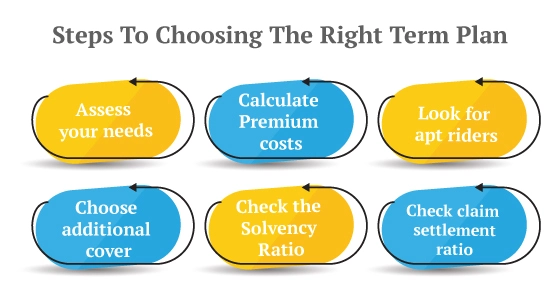
Although BMI plays an important role in deciding on the issuance of an insurance policy, you should look at several other factors before proposing:
Check for options to increase cover as per your life stages
Divide the sum assured for a lump sum and regular income payments upon a death claim
Look for the maximum tenure possible to cover extended loans after retirement
So, even if you have a high BMI, choose a term plan which offers adequate financial safety to your family. Needless to say, remaining fit, healthy, and in shape is the best way to not just save on insurance premiums, but also for your well-being and longevity.
Your health status plays a decisive role in determining both your eligibility and the premium of your term insurance policy. Among health indicators, BMI serves as a simple yet powerful factor in estimating the risk you pose to an insurer. Even if your BMI is high, securing life cover is crucial, especially to safeguard your loved ones.
With the right plan, like the iSelect Smart360 Term Plan by Canara HSBC Life Insurance, you can customise your cover and ensure financial protection despite your health metrics. Investing in your health today not only lowers your insurance cost but also enhances your quality of life tomorrow.
Disclaimer - This article is issued in the general public interest and meant for general information purposes only. The views expressed in this blog are solely those of the writer and do not necessarily reflect the official policy or position of Canara HSBC Life Insurance Company Limited or any affiliated entity. We make no representations or warranties of any kind, express or implied, about the completeness, accuracy, reliability, suitability, or availability with respect to the blog or the information, products, services, or related graphics contained in the blog for any purpose. Any reliance you place on such information is therefore strictly at your own risk. You should consult with a qualified professional regarding your specific circumstances before taking any action based on the content provided herein.
Canara HSBC Life Insurance offers online term insurance plans to secure your family financially in your absence.