


how-cashless-mediclaim-policies-works-india

How Cashless Mediclaim Policies Work in India?

Understand how cashless mediclaim policies work in India, the step-by-step process, key checks, and what to be financially prepared for

Written by : Knowledge Centre Team

2026-04-15

88 Views

5 minutes read

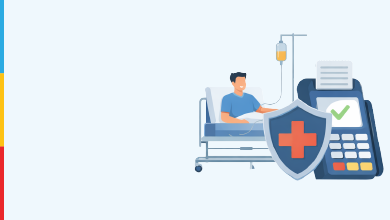
A cashless mediclaim policy is a health insurance arrangement where the insurance company settles hospitalisation bills directly with the empanelled network hospital. The policyholder does not pay the medical expenses upfront; the insurer and hospital settle the account between themselves, subject to policy terms and the approved sum insured.

Key Takeaways

  • A cashless mediclaim policy lets the insurer settle hospital bills, with no upfront payment needed

  • IRDAI mandates pre-authorisation within one hour and final discharge settlement within 3 hours

  • Cashless settlement is available only at network hospitals, so always verify empanelment before a crisis

  • Co-payments, sub-limits, and excess bills are still payable by you, even under cashless cover

  • Financial preparedness begins before the emergency, not when it happens, so know your exclusions in advance

This is fundamentally different from a reimbursement claim, in which the policyholder pays the hospital first and then submits bills to the insurer for reimbursement. It is a process that requires liquidity, paperwork, and patience. Cashless health insurance eliminates out-of-pocket stress, allowing you to focus on recovery rather than payments during an emergency.

Protect Your Family’s Health and Financial Future

Please enter correct name Please enter the Full name
Please enter valid mobile number Please enter Mobile Number
Please enter valid email Please enter Email

Enter OTP

An OTP has been sent to your mobile number

Didn’t receive OTP?

Application Status

Name

Date of Birth

Plan Name

Status

Unclaimed Amount of the Policyholder

Name of the policy holder

Policy Holder Name

Policy No.

Policy Number

Address of the Policyholder as per records

Address

Unclaimed Amount

Unclaimed Amount
Error

Sorry! No records Found

Request Registered

Thank You for submitting the response, will get back with you.

Complaint Registered

.  Please use this ID for all future communications regarding this concern.

Request Registered

Thank You for submitting the response, will get back with you.

Thank you for your interest in our product. Our financial expert will connect with you shortly to help you choose the best plan.

Sorry

How Does a Cashless Mediclaim Policy Work?

Understanding the process end-to-end is essential. Here is exactly what happens when you avail a cashless claim:

  • Admission to a Network Hospital: Cashless treatment is available only at hospitals empaneled with your insurer. Always carry your health insurance card or policy document to the hospital.
  • Inform the TPA/Insurance Desk: Every network hospital has a dedicated insurance or Third-Party Administrator (TPA) desk. Notify them of your intention to avail of cashless treatment and present your policy details and identity proof.
  • Pre-Authorisation Request: The hospital submits a pre-authorisation form to the insurer or TPA, detailing the diagnosis, proposed treatment, and estimated costs. This is the trigger for the cashless process to begin.
  • Insurer Approval: The insurer reviews the request and approves or queries it. As per IRDAI's mandated timelines, pre-authorisation approval must be completed within one hour of receiving the request, ensuring you are not left waiting during a medical emergency.
  • Treatment Proceeds: Once approved, treatment begins. The hospital provides care with the understanding that the insurer will settle the bills up to the approved amount.
  • Discharge and Final Settlement: At the time of discharge, the hospital raises the final bill. IRDAI mandates that the final cashless authorisation at discharge must be completed within three hours, minimising delays when you are ready to leave.
  • Policyholder Pays the Difference, If Any: If the final bill exceeds your sum insured, includes non-covered charges, or breaches sub-limits (such as room rent caps), the policyholder pays only the excess amount.

Planned vs Emergency Hospitalisation

For planned procedures, such as scheduled surgery, notify your insurer at least 48 hours in advance. For emergencies, the hospital should be informed within 24 hours of admission. Timely intimation is critical to avoid rejection of cashless claims.

Types of Cashless Health Insurance in India

Know which type of plan suits your life stage and coverage needs because the right fit directly determines how well your financial protection holds up in a medical emergency.

  • Individual Cashless Mediclaim Policy: Covers a single policyholder. Ideal for working professionals who want dedicated coverage without sharing their sum insured with family members.
  • Family Floater Cashless Mediclaim Policy: Covers the entire family under a single sum insured. Cost-effective, but the sum insured is shared; if one member exhausts the limit, others may face gaps. Choose a restoration benefit to counter this.
  • Senior Citizen Cashless Mediclaim Policy: Specifically designed for individuals aged 60 and above. Typically comes with higher premiums, co-payment clauses, and age-specific coverage, including hospitalisation, ambulance charges, and chronic illness management.
trivia-img

Did You Know?

Cashless health insurance complaints dropped sharply, from 1.87% of the total in FY24-25 to 0.39% in the first half of FY25-26


Source: ZeeNews

Young Term Plan - 1 Crore

What is and isn't Covered Under Cashless Claims?

Check exactly what falls within and outside your coverage to be financially prepared, rather than being caught off guard at the billing counter.

What is covered

What is not covered

Hospitalisation expenses: Room rent, ICU charges, surgery, doctor fees

Self-inflicted injuries or treatment arising from attempted self-harm

Day-care procedures that do not require 24-hour admission

Treatment within the initial waiting period is typically 30 days from policy start, except for accidents

Pre-hospitalisation expenses up to 30 days before admission

At Non-network hospital, cashless treatment is not available; reimbursement applies instead

Post-hospitalisation expenses up to 60-90 days after discharge

Substance abuse-related treatment expenses linked to alcohol or drug misuse

Ambulance charges for emergency transport to a network hospital

Cosmetic or elective procedures not arising from illness or injury

Key Things to Check Before Relying on Cashless Cover

Having cashless health insurance is not the same as being financially prepared. Here are six checkpoints every policyholder must verify:

  • Network Hospital List: Cashless payment is available only at empaneled hospitals. Before finalising a policy, confirm that quality hospitals in your city, especially those you trust or are closest to your home, are in the network. The list is available on the insurer's website and is updated periodically.
  • Co-payment Clause: Some policies, especially senior-citizen plans, require the policyholder to pay a fixed percentage of each bill. A 20% co-payment on a ₹5 lakh bill means ₹1 lakh comes from your pocket, regardless of cashless coverage. Know this number before a hospitalisation.
  • Sub-limits on Room Rent and ICU: Many policies cap room rent at 1% of the sum insured per day. If your policy has a ₹5 lakh sum insured, you are entitled to a ₹5,000-per-day room. Opting for a higher room can trigger proportionate deductions on the entire bill, not just the room. This is a common source of surprise expenses at discharge.
  • Sum Insured Adequacy:A cashless facility only works within your sum insured limit. If your policy covers ₹3 lakh and the bill is ₹5 lakh, you pay the ₹2 lakh difference, in cash, at discharge. Regularly reviewing and updating your sum insured is essential, especially given that medical inflation in India averages 12–15% annually.
  • Pre-authorisation Timelines: For planned hospitalisations, always inform the insurer 48 hours in advance. Missing this window can complicate the cashless approval process. Save your insurer's emergency helpline and TPA (Third-Party Administrator) contact in your phone today, not during a crisis.

What Happens if Cashless Treatment is Denied?

Cashless treatment can be denied if the hospital is not a part of the network hospitals, documentation is incomplete, or the condition is not covered. In such cases, reimbursement is the fallback, but it requires the policyholder to have sufficient funds available upfront. Always keep a healthcare emergency fund as a financial buffer alongside your mediclaim policy.

Cashless vs Reimbursement: Which Serves You Better?

Both are valid claim mechanisms, but they serve different situations.

Cashless health insurance is the stronger option for financial preparedness: no upfront funds required, faster resolution, and less paperwork during a crisis. It is best suited for emergencies and planned procedures at network hospitals.

Reimbursement offers flexibility: you can seek treatment at any hospital, including non-network ones, but it requires upfront financial liquidity and involves a documentation-heavy process that can take 15-30 days to resolve.

The ideal approach is to be prepared for both. Use cashless wherever possible, but maintain a liquid emergency fund to fall back on if reimbursement becomes necessary.

Conclusion

A cashless mediclaim policy is one of the most practical financial preparedness tools available to Indian families today. It removes the immediate financial burden at the most vulnerable moment, a medical emergency and ensures that health needs, not fund availability, drive treatment decisions.

But true preparedness means knowing your network hospitals, understanding your sub-limits, keeping your sum insured adequate, and having a financial buffer for the gaps that no mediclaim policy, cashless or otherwise, can fully cover. The more you understand how your cashless health insurance works before you need it, the more confidently you can protect both your health and your finances when it matters most.

Glossary

  1. Pre-Authorisation: Insurer's advance approval for cashless treatment at a network hospital, issued before or during admission
  2. Network Hospital: A hospital empaneled with your insurer, where bills are settled directly without upfront payment from you
  3. TPA: A licensed intermediary that manages cashless claim processing between the hospital and the insurer
  4. Co-payment: A fixed percentage of the hospital bill that the policyholder must pay out of pocket, even under cashless cover
  5. Pre-authorisation: An approval from the insurer for a planned treatment, confirming that it is covered under the policy
glossary-img
Uncertain About Insurance

FAQs

In cashless claims, the insurer settles the hospital bill directly, and you pay nothing up front. In reimbursement claims, you pay first and recover the amount later by submitting documents. Cashless is faster and stress-free; reimbursement requires liquidity and paperwork.

You can still get treated there, but cashless treatment will not apply. You pay the full bill upfront and file a reimbursement claim after discharge, including all original bills, the discharge summary, and medical records. Always keep a financial buffer for such situations.

Yes. Final approval at discharge can differ from initial pre-authorisation if the treatment scope changes, non-covered expenses are added, or the bill exceeds the sum insured. Always ask the hospital's TPA desk for an enhancement request if costs increase during treatment.

For emergencies, the hospital's TPA desk should notify the insurer within 24 hours of admission. For planned hospitalisations, inform the insurer at least 48 hours in advance. Save your insurer's helpline number and policy details on your phone before you ever need them.

Cashless does not mean zero cost. You are liable to pay co-payment amounts, charges beyond sub-limits such as room rent caps, non-medical expenses like toiletries and attendant fees, and any amount exceeding your sum insured, all payable directly at the time of discharge.

Disclaimer - This article is issued in the general public interest and meant for general information purposes only. The views expressed in this blog are solely those of the writer and do not necessarily reflect the official policy or position of Canara HSBC Life Insurance Company Limited or any affiliated entity. We make no representations or warranties of any kind, express or implied, about the completeness, accuracy, reliability, suitability, or availability with respect to the blog or the information, products, services, or related graphics contained in the blog for any purpose. Any reliance you place on such information is therefore strictly at your own risk. You should consult with a qualified professional regarding your specific circumstances before taking any action based on the content provided herein.

Recent Blogs

How to Choose the Best Mediclaim Plan in India?
15 Apr '26
101 Views
5 minute read
Learn how to choose the best mediclaim plan in India by comparing coverage, premiums, benefits, and exclusions to protect your health and finances.
Read More
Health Plan
OPD vs IPD: Key Differences, Costs & What It Means for You?
15 Apr '26
76 Views
5 minute read
Learn the difference between OPD and IPD, treatment costs & how to plan finances for rising healthcare expenses in India.
Read More
Health Plan
What is Co-Pay in a Health Insurance Policy?
06 Mar '26
1092 Views
5 minute read
Co‑pay in health insurance means sharing medical or claim costs with the insurer. Learn how co‑pay works in a health plan and when it applies.
Read More
Health Plan
What is Health Insurance and How Can It Help You?
26 Feb '26
888 Views
8 minute read
A health insurance plan provides coverage against medical and surgical expenses incurred due to accidents, illness or any injury during a specified tenure.
Read More
Health Plan
Which Medical Insurance Plan is Perfect for You?
26 Feb '26
951 Views
7 minute read
Find the perfect medical insurance plan tailored to your needs. Compare policies, benefits, and coverage options to make the right choice.
Read More
Health Plan
3 Benefits of Buying Health Insurance Plan for Senior Citizens
26 Feb '26
888 Views
8 minute read
Buying the best health insurance plan has multiple benefits. It offers a financial shield when your income slumps. Learn the 3 benefits of buying health insurance plans for senior citizens to buy the best health plan online.
Read More
Health Plan
Family Health Insurance Plans: Meaning, Benefits & Comparison
24 Feb '26
3747 Views
10 minute read
Secure your family’s health with the right insurance. Compare benefits, coverage & features to choose the best health policy.
Read More
Health Plan
Health Insurance for HIV-Positive Individuals: Coverage Guide
23 Feb '26
86 Views
5 minute read
Explore health insurance options for HIV-positive individuals in India, coverage inclusions, waiting periods, eligibility rules, and factors to review before buying a policy.
Read More
Health Plan
Women's Health Insurance: Best Plans & Maternity Coverage
11 Feb '26
945 Views
5 minute read
Explore the best women's health insurance plans, including maternity coverage. Find the perfect plan for your needs. Discover more @Canara HSBC Life Insurance
Read More
Health Plan