


does-life-insurance-pay-for-suicidal-death-in-india

Does Life Insurance Pay for Suicidal Death in India?

Does life insurance cover suicide in India? Understand payout rules, waiting periods, exclusions, and eligibility conditions.

Written by : Knowledge Centre Team

2025-12-27

1151 Views

10 minutes read

Life insurance is a promise to protect your loved ones and ensure their future remains bright, even when life throws its most challenging curveballs. It's natural to seek clarity on every aspect of this promise, especially when it comes to sensitive and complex situations. One such question that often arises, and understandably so, is how insurers handle insurance cover in case of suicidal deaths. 

In this blog, we aim to provide a comprehensive look at this important aspect, helping you navigate the policy terms and conditions with greater confidence. After all, when it comes to protecting your family, every detail matters. Ready to gain a clearer understanding? Let's divein.

Key Takeaways

  • Life insurance policies in India cover death by suicide, but only after a mandatory one-year waiting period

  • Claims for suicide deaths can be denied if the policy has lapsed (and is not revived) or if material non-disclosure/fraud is detected.

  • The payout amount varies for non-linked and linked policies if suicide occurs within the first 12 months

  • Policies bought before 1 January 2014 may not include suicide cover

  • Always read the policy terms carefully and keep mental health support resources handy

Does Life Insurance Cover Suicidal Death in India?

Yes, a life insurance policy can pay for death by suicide in India, but certain conditions apply. Before 2014, many life insurance policies either excluded suicide permanently or during the first policy year. In such cases, claims could be rejected based on the policy’s suicide exclusion clause. However, the conversation around mental health and suicide has evolved, and regulations have changed accordingly. 

The Insurance Regulatory and Development Authority of India (IRDAI) made some amendments to the clauses related to suicide in life insurance plans. Any life insurance policy bought after 2014 pays the sum assured in case of the policyholder's death by suicide, provided certain conditions are met. These conditions vary slightly depending on whether you have a non-linked plan or a linked plan.

Get Life Cover Instantly

Please enter correct name Please enter the Full name
Please enter valid mobile number Please enter Mobile Number
Please enter valid email Please enter Email

Enter OTP

An OTP has been sent to your mobile number

Didn’t receive OTP?

Application Status

Name

Date of Birth

Plan Name

Status

Unclaimed Amount of the Policyholder as on

Name of the policy holder

Policy Holder Name

Policy No.

Policy Number

Address of the Policyholder as per records

Address

Unclaimed Amount

Unclaimed Amount
Error

Sorry ! No records Found

.  Please use this ID for all future communications regarding this concern.

Request Registered

Thank You for submitting the response, will get back with you.

Death Due to Suicide: Policy Terms and Payout Conditions

Let us understand the provisions and payout conditions related to death due to suicide under life insurance policies in detail.

  • If Death Occurs Due to Suicide Within the First 12 Months: If death due to suicide occurs during the first 12 months of the policy (or from the date of revival), the claim payout is usually limited and depends on whether the plan is linked or non-linked.
  • Non-Linked Plans: In case of death due to suicide within 12 months from the date of commencement of risk under the policy or from the date of revival of the policy, as applicable, the nominee or beneficiary shall be entitled to at least 80% of the total premiums paid till the date of death or the surrender value available as on the date of death whichever is higher, provided the policy is in force.
  • Linked Plans: In case of death due to suicide within 12 months from the date of commencement of the policy or from the date of revival of the policy, as applicable, the nominee or the beneficiary shall be entitled to the fund value as available on the date of intimation of death. Further, any charges other than Fund Management Charges (FMC) and guarantee charges recovered after the date of death shall be added back to the fund value as of the date of death.
  • If Death by Suicide Occurs After 12 Months: If death by suicide occurs after 12 months from the risk start date under the policy or from the date of revival, the full death benefit will be paid.

    The extent of the death benefit may vary depending on the specific plan and its terms. It is important to review the policy documents carefully to understand the exact coverage and conditions related to death by suicide.
  • An Example to Help You Understand Better: For instance, Akash was an accountant at a large firm in Bangalore. As an accountant, he recognised the value of a life insurance policy and incorporated it into his financial plan. Unfortunately, Akash died by suicide after struggling with mental health issues. His family was left without a reliable source of income. But Akash had bought a life insurance policy two years before his death (and the policy was in force). This life insurance plan provided his spouse, Akash's nominee, with a lump-sum payment.
    It’s important to note that policies issued before 1 January 2014 may have different terms and conditions regarding claims in such cases.

Why Does Life Insurance Cover Death by Suicide in India?

While death is never easy to deal with, suicide is often even harder. It takes a toll on the mental health of family members. Death by suicide is not classified as an accidental death, yet it is a valid cause for a life insurance claim, subject to policy terms (such as the suicide clause and waiting period). 

However, suicide can still lead to a significant loss of income, particularly for those beneficiaries who are dependents. This can include children, parents, or a dependent spouse.

Therefore, insurance companies may be required to pay compensation to family members. A beneficiary can be more than one person, in which case the compensation is divided among them as per the nomination details. The insurance company pays a lump-sum amount to the beneficiary as the death benefit if the claim is admissible.

trivia-img

Did You Know?

Suicide has been among the top 2 causes of death for Indians aged 15-29 for 2 decades. 


Source: TOI

Young Term Plan - 1.5 Crore

Exclusions to Suicide Cover in Life Insurance Policies in India

An insurance company can reject a claim under the following circumstances:

  • Policy Lapse: An insurance company may not pay the death benefit if the policy term has lapsed and is not in force (and has not been revived).
  • Fraud: The insurance company is not liable to pay if the policyholder has committed insurance fraud or there is material non-disclosure affecting the policy.

Do All Life Insurance Policies Pay for Suicidal Deaths in India?

Most insurance policies issued after 1 January 2014 have been updated to include the suicide clause. This means the nominee will receive a lump-sum death benefit if eligible under the policy terms. If the policyholder dies by suicide after the mandatory 12-month waiting period, the nominee is eligible to receive the death benefit. Always check your policy document for specific waiting periods and conditions related to suicide cover.

When are You Not Eligible for Suicide Cover?

Most insurance companies have a strict rule against any misleading information given by the policyholder. In such cases, the nominee is not entitled to any payment from the insurance company. The insurance company pays only if the policyholder has not committed any insurance fraud or material non-disclosure. Moreover, if the policyholder was insured under a group insurance policy, the nominee is generally not eligible for any suicide cover unless specifically stated in the group policy’s terms and conditions.

Mental Health and Suicide Prevention Resources

If you or someone you know is struggling with thoughts of self-harm or suicide, please remember that help is available, and you are not alone. Reaching out for support can make a difference.

Here are some trusted helplines in India that provide free and confidential mental health support:

Name PurposeContact NumberWebsite

AASRA

24/7 helpline for emotional support

+91-98204 66726

www.aasra.info

iCall

Free counselling for stress, depression, and relationship issues

+91-9152987821

www.icallhelpline.org

Snehi

Mental health support for youth and families 

+91-9582208181

www.snehi.org

Tele MANAS

Government of India’s free, confidential, and professional mental health support

1800-89-14416

https://dghs.mohfw.gov.in/ 

If you ever feel unsafe with your thoughts, please reach out to a trusted friend, family member, or mental health professional without delay.

Conclusion

While most life insurance policies now include a suicide clause, it’s still important to do thorough research and read the terms carefully. Policies purchased before 1 January 2014 may have different terms and may not include suicide cover in the same manner.

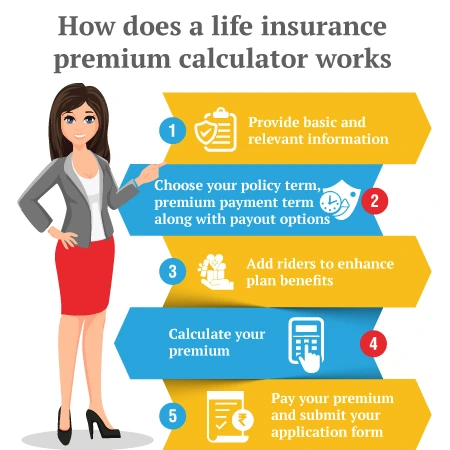
Many insurers now offer tools, such as online premium calculators, to help you estimate the premium you will need to pay. Life insurance should always be bought after careful self-assessment, taking into account your existing financial situation and your family’s needs.

Getting a life insurance policy is one of the best ways to protect your loved ones against the uncertainties of life. With the right cover, you can ensure that your family has a safe financial cushion, even in your absence.

Glossary

  1. Suicide Clause: A policy condition that defines claim payout rules if death occurs due to suicide
  2. Waiting Period: A fixed initial period (usually 12 months) during which suicide-related payout may be limited
  3. Nominee: The person chosen to receive the life insurance payout if the policyholder dies
  4. Policy Lapse: When a policy becomes inactive due to non-payment of premiums and may stop providing cover
  5. Linked Plan (ULIP): A life insurance plan where premiums are invested in market-linked funds, with fund value payouts
glossary-img
Uncertain About Insurance?

FAQs

Suicidal death is generally covered after 12 months (1 year) from the date of risk commencement or revival, as per the policy’s suicide clause.

If suicide occurs within the first 12 months, the payout is usually limited (for example, a refund of a percentage of premiums or the fund value in linked plans). If it occurs after 12 months, the full death benefit is generally payable in accordance with the policy terms.

No. Suicidal death is not treated differently under term insurance vs other life insurance plans. It is governed by the same standard suicide clause across life policies. Typically, if suicide occurs after the waiting period (usually 12 months), the nominee is eligible for the full sum assured. If it occurs within the waiting period, insurers generally pay only the premium amount as per policy terms. This approach is broadly standardised across life insurance products under IRDAI-aligned guidelines.

In short, the difference lies in the type of policy (term, endowment, etc.), not in a separate suicide rule; the suicide clause applies universally across life insurance plans.

Group life insurance may not be eligible for any suicide cover unless specifically stated otherwise. The exact payout depends on the terms and conditions mentioned in the group policy document.

Yes, nominees can be eligible for life insurance benefits after a suicidal death if it occurs after 1 year from the policy start date (or revival date), subject to the policy’s suicide clause and the policy being in force.

Yes. A suicide-related claim can be rejected if the policy has lapsed and is not revived, or if the insurer finds fraud or material misrepresentation/non-disclosure during policy issuance or claim verification.

Disclaimer - This article is issued in the general public interest and meant for general information purposes only. The views expressed in this blog are solely those of the writer and do not necessarily reflect the official policy or position of Canara HSBC Life Insurance Company Limited or any affiliated entity. We make no representations or warranties of any kind, express or implied, about the completeness, accuracy, reliability, suitability, or availability with respect to the blog or the information, products, services, or related graphics contained in the blog for any purpose. Any reliance you place on such information is therefore strictly at your own risk. You should consult with a qualified professional regarding your specific circumstances before taking any action based on the content provided herein.

Recent Blogs

Life Insurance Policy Lapse: Impact, Risks and What You Can Do?
16 Jan '26
3007 Views
10 minute read
Know what a life insurance policy lapse means, why it happens, how it affects coverage and benefits, and the options available to restore protection.
Read More
Life Insurance
Best Investment Options with High Returns in 2026
10 Jan '26
9688 Views
16 minute read
Best Investment Options in India. Looking for investments to meet your long-term financial goals? Here are the best investment plans for the year 2026 in India.
Read More
Life Insurance
Have Multiple Life Insurance Policies? Things You Should Know
09 Jan '26
1296 Views
7 minute read
Is it legal to own multiple life insurance policies? Would it cause any problem in claim settlement? Discover your answers here.
Read More
Life Insurance
What is Survival Benefit in Life Insurance?
06 Jan '26
3238 Views
7 minute read
Learn about survival benefits in life insurance, how they work, and their key features. Understand eligibility and payouts with Canara HSBC Life Insurance.
Read More
Life Insurance
Types of Life Insurance: Which One is Best for You?
05 Jan '26
3122 Views
9 minute read
Learn about different types of life insurance policies with Canara HSBC Life Insurance. Discover the best plans in India in 2026 and know how to buy them online.
Read More
Life Insurance
Principle of Indemnity: Meaning, Concept, Example
05 Jan '26
4545 Views
11 minute read
Understand the Principle of Indemnity in insurance. Its meaning, concept, and real-life examples. Learn how it protects policyholders from financial loss.
Read More
Life Insurance
What Is a Joint Life Insurance Policy and How Does It Work?
31 Dec '25
1183 Views
10 minute read
A joint life policy is a single plan that covers both the wife and the husband whether both of them are earning or only one. Understand how it works, who it suits best, key benefits, payout structure, and important points to consider before choosing one.
Read More
Life Insurance
What Is Insurable Interest in Life Insurance?
31 Dec '25
2471 Views
11 minute read
Explains the meaning of insurable interest in life insurance, why it is required, who can have it, and how it affects policy validity and claims.
Read More
Life Insurance
9 Financial Resolutions to Become Money-Smart This Year
31 Dec '25
1283 Views
11 minute read
Buy the best life insurance plan and become financially fit. Learn 9 more different financial resolutions to make your year worthwhile.
Read More
Life Insurance

Life Insurance - Top Selling Plans

We bring you a collection of popular Canara HSBC life insurance plans. Forget the dusty brochures and endless offline visits! Dive into the features of our top-selling online insurance plans and buy the one that meets your goals and requirements. You and your wallet will be thankful in the future as we brighten up your financial future with these plans.