Written by : Knowledge Centre Team
2025-11-14
8 minutes read
Share
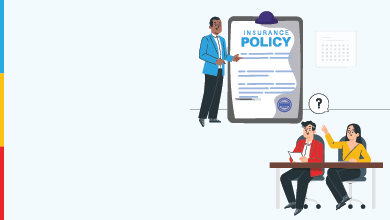
Temporary disability insurance is a crucial financial support system for employees who are unable to work due to an injury or illness sustained on the job. In India, this benefit is primarily provided through the Employees' State Insurance Corporation (ESIC), a government-run organisation offering health and insurance services to workers in the MSME sector.
With over 40 million beneficiaries, ESIC is one of the largest health service providers in the world. Its comprehensive benefits include temporary and permanent disability coverage, sickness and maternity benefits, and more. Among these, Temporary Disability Benefit (TDB) helps ensure income continuity during short-term work absences caused by occupational injuries or diseases.
Here’s everything you need to know about the temporary and permanent disability insurance benefits available under the ESI.
Key Takeaways
|
An OTP has been sent to your mobile number

Sorry ! No records Found
Thank You for submitting the response, will get back with you.
Thank you for your interest in our product. Our financial expert will connect with you shortly to help you choose the best plan.
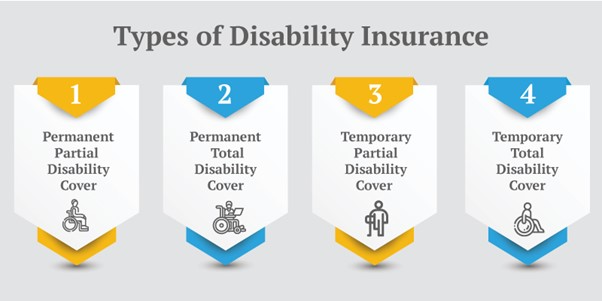
The Temporary Disability Benefits are there to help an employee who suffers an Employment Injury or Occupational Disease and has been officially diagnosed and is unable to work for the time being.
An "employment injury" is an injury that an employee suffers as a result of an "accident" or "occupational sickness." It can arise out of and in the course of his job.
For example, something as simple as an ankle sprain that makes it difficult for you to walk or take care of your company's routine job can be considered a temporary disability.
If you need to apply for TDB, you need to have the following documents:
Accident report form 16
Forms 8, 9, 10, and 11
The ESIC Med.13 certificate
The eligibility for an insured person begins fromthe first day of insurable work. The benefit amount is 90% of their average daily wages. Whether the accident or disease happens inside or outside the country, an employee facing such an incident can claim temporary disability benefits.
The ESIC does not have any prescribed limit regarding the duration of TDB. Payments will be available as long as the temporary disability continues and substantial progress is treatable. Sickness compensation will be granted to the insured person if the duration of the Temporary Disablement is shorter than three days (not including the day of the accident).
PDB is given to an insured person who loses their ability to work because of Employment Injury (including Occupational Diseases) and has a permanent residual disability.
For example, if there is an accident that causes absolute deafness or loss of any body parts to an employee, they can claim Permanent Disability Benefit.
The Medical Board and the Special Medical Board in the ESIC-affiliated medical institutions need to determine the degree of disability resulting from an injury or illness.
PDB can last for the time given by the Medical Board if the assessment is temporary or for the rest of the person's life if the assessment is final.
The PDB rate is based on the percentage of loss of earning capacity as assessed and confirmed by the Medical Board, MAT, or EI Court, resulting from the TDB.
In the 2nd Schedule to the ESIC Act of 1948, you can see a list of injuries that are thought to cause permanent total disability and a percentage loss of earning capacity. Thus, the highest rate of PDB can be the same as the highest rate of TDB.
The ESIC sometimes changes the PDB amount to account for inflation. The most recent change went into effect on 31st December 2021
An insured person whose PDB has been judged to be final and who has been given it at a rate of not more than ₹10 per day can ask for the periodical payments of PDB to be turned into a lump sum.
When a request for commutation is made within 6 months of the Medical Board's decision being made public, the periodic payments will be turned into a lump sum, as long as the total amount of commutations is at most ₹60,000 at the time the final award starts.
However, if such a request is made after 6 months, LO/RO will forward the case to MR/PTMR to determine if the insured person has a normal life expectancy for their age. The Medical Referee puts this kind of certificate on the RO/LO letter.
In all cases, an insured person's age will have to be proven to the Corporation's satisfaction. The Medical Board checks and confirms the anticipated age of the insured persons who can't show enough proof of their age. Also, the Medical Board's opinion is final in this case.
Apart from the TDB and PDB, there are other benefits available for employees under the ESIC schemes.
While ESIC primarily provides medical and disability benefits, it also extends protection in case of job loss due to factory closures, layoffs, or long-term disabilities. To ensure continued financial support during such unforeseen employment disruptions, the government has introduced special schemes.
This unemployment benefit scheme has been active since April 1, 2005.
A person is eligible if they have been insured under the scheme for at least two years. They can claim benefits if they lose their job due to one of the following reasons:
The factory or business shuts down
They are laid off
They suffer a permanent disability of at least 40%, not caused by work-related reasons
Key Benefits Include:
ESI hospitals and dispensaries will pay for medical care for the insured person and their family while the insured person is receiving unemployment benefits
Unemployment Allowance is equal to 50% of the wage for up to two years
ESIC pays for fees and travel allowances for vocational training to help people improve their skills
This plan is a way to help employees who are covered by Section 2(9) of the ESI Act of 1948. It gives them relief payments for up to 90 days once in their lives. The scheme started on July 1, 2018, as a pilot project that would run for two years. The Employees' State Insurance Corporation (ESIC) has officially extended the Atal Beemit Vyakti Kalyan Yojana for an additional two years, from July 1, 2024, to June 30, 2026.
It was also decided to raise the unemployment relief rate under the scheme from 25% to 50% of wages and to make it easier for people to qualify.
To avail the benefits under this scheme, certain eligibility and documentation requirements must be met.
You can also send a physical claim containing the following to the designated ESIC Branch Office by mail or in person:
An affidavit
A copy of your Aadhaar card
An insured person must have worked in an insurable job for at least a year before becoming unemployed and must have paid into the scheme for at least 78 days in the 12 months before becoming unemployed.
In special cases, relief will be paid 30 days after the worker's last day of work, and the worker can go to the designated ESIC Branch Office to file a claim. You can claim the relief online at www.esic.in.
Temporary disability, permanent disability, and unemployment-related disruptions can severely impact the financial stability of workers and their families. Government-backed schemes like those offered by ESIC, including Temporary Disability Benefit (TDB), Permanent Disability Benefit (PDB), Rajiv Gandhi Shramik Kalyan Yojana, and Atal Beemit Vyakti Kalyan Yojana, provide critical financial and medical support during such times.
Understanding the eligibility criteria, documentation requirements, and benefits under each scheme can help you or your loved ones stay financially secure when life takes an unexpected turn. If you're a salaried worker in the MSME sector, ensure you’re enrolled under ESIC and aware of your entitlements; you never know when you might need them.
While government schemes like ESIC offer extensive support to salaried workers in the MSME sector, not everyone may qualify. For broader or more customisable protection, especially for self-employed individuals or private sector employees, private insurance plans like those offered by Canara HSBC Life Insurance can be a smart addition to your financial safety net
The iSelect Smart360 Term Plan by Canara HSBC Life Insurance comes with optional riders for critical illness and accidental disability, offering lump sum payouts and income replacement during difficult times.
Take action now!
Disclaimer - This article is issued in the general public interest and meant for general information purposes only. The views expressed in this blog are solely those of the writer and do not necessarily reflect the official policy or position of Canara HSBC Life Insurance Company Limited or any affiliated entity. We make no representations or warranties of any kind, express or implied, about the completeness, accuracy, reliability, suitability, or availability with respect to the blog or the information, products, services, or related graphics contained in the blog for any purpose. Any reliance you place on such information is therefore strictly at your own risk. You should consult with a qualified professional regarding your specific circumstances before taking any action based on the content provided herein.

Canara HSBC Life Insurance offers online term insurance plans to secure your family financially in your absence.