



everything-about-claim-settlement-ratio

What is the Claim Settlement Ratio (CSR) in Insurance?

Understand Claim Settlement Ratio (CSR), how it’s calculated, and why it matters when choosing a life insurance policy

Written by : Knowledge Centre Team

2026-01-08

9930 Views

10 minutes read

The CSR full form in insurance is Claim Settlement Ratio. It is the percentage of life insurance claims the insurer has settled in a particular financial year. 

The claim settlement ratio is a good indicator of how quickly your family will receive the policy benefit in the event of an unfortunate event. This is why it is an important metric to  check when buying life insurance.

Unforeseen circumstances can have a significant impact on an individual's or a family's financial health. That is why the importance of insurance cannot be overstated. In the event of the financial provider's death, life insurance policies provide their dependents with a much-needed financial safety net.

This is where an important metric, the Claim Settlement Ratio, comes into play. It is an objective, numerical indicator published annually by IRDAI that can help you make the crucial decision of which life insurer you should opt for.

Key Takeaways

  • The Claim Settlement Ratio shows the percentage of claims settled by an insurance company out of the total claims received in a financial year
  • A high CSR means the insurer has historically settled a larger proportion of claims, signalling trustworthiness
  • CSR is one of the best ways to check the claims performanceof a life insurance provider
  • IRDAI publishes official CSR data for all registered life insurers every financial year
  • Filling your application form honestlyreduces the risk of claim rejection due to non-disclosure or misrepresentation

What is the Claim Settlement Ratio?

The percentage of insurance claims settled in a financial year compared to the total claims received during that period is what Claim Settlement Ratio of an insurance company is. It helps assess how consistently an insurer honours claims over a financial year and serves as a practical reference point for policyholders to understand an insurer’s approach to claims processing and settlement practices, which is a crucial aspect of your policy.

In general, the Claim Settlement Ratio of an insurer is viewed as an indicator of its overall claim-solvability and risk management ability. The higher the Claim Settlement Ratio of an insurance company, the better it is.

We take great pride in the fact that our Claim Settlement Ratio for FY 2024-25 was 99.43%^.

Get Life Cover Instantly

Please enter correct name Please enter the Full name
Please enter valid mobile number Please enter Mobile Number
Please enter valid email Please enter Email

Enter OTP

An OTP has been sent to your mobile number

Didn’t receive OTP?

Application Status

Name

Date of Birth

Plan Name

Status

Unclaimed Amount of the Policyholder as on

Name of the policy holder

Policy Holder Name

Policy No.

Policy Number

Address of the Policyholder as per records

Address

Unclaimed Amount

Unclaimed Amount
Error

Sorry ! No records Found

.  Please use this ID for all future communications regarding this concern.

Request Registered

Thank You for submitting the response, will get back with you.

How is Claim Settlement Ratio Calculated?

The Claim Settlement Ratio of an insurer is calculated using the formula given below:

Claim Settlement Ratio = (Total number of Claims Approved/Total number of Claims Received) x 100

This result is represented in the form of a percentage. For example, if an insurance company reports a Claim Settlement Ratio of 99.43%, it means that the insurer has settled 9,943 out of 10,000 claims received during the financial year.

Why is Claim Settlement Ratio Important?

The importance of life insurance lies in the assurance that, in the event of the sudden demise of the insured, the insurer processes and settles the claim as per policy terms, enabling beneficiaries to receive the financial support. This, in turn, will help them look after the immediate and future financial needs in the absence of the insured. Claim settlement is a core obligation under the insurance contract, making CSR a relevant metric to consider.

  • Helps in the Family’s Financial Stability: A high claim settlement ratio gives peace of mind that the insurance provider will deliver assistance when it matters most. It ensures your family receives the promised sum without delay or dispute. This money can help them meet daily expenses, repay debts, or manage emergencies. Financial stability during emotional distress can make a big difference, allowing your loved ones to recover without worrying about how to make ends meet.
  • Indicator of Insurer’s Reliability: The Claim Settlement Ratio is a key metric that reflects the life insurance company’s reliability and credibility. A low ratio might indicate issues such as inefficient claim handling, lack of transparency, or poor customer service. At the end of the day, life insurance policies can only be as reliable as the insurance company that provides them. Thus, the Claim Settlement Ratio helps you make an accurate judgment of the trustworthiness and competence of an insurer.

    Every financial year, the Insurance Regulatory and Development Authority of India (IRDAI) issues the Claim Settlement Ratios for every insurance company in the country. A high Claim Settlement Ratio can help you determine whether a company can be depended upon to provide the promised claim to the beneficiaries of the insured. It also indicates that the insurance company has high customer satisfaction and a strong underwriting process.

What is an Ideal Claim Settlement Ratio?

While the higher the claim ratio of an insurance company reflects a stronger claims-handling record, it should not be the sole factor when choosing an insurer.

The size and scale of the insurance company can influence its Claim Settlement Ratio. Larger companies may have a lower claim ratio due to the volume of claims they are handling. Apart from that, the following are some additional factors that decide an ideal claim settlement ratio:

  • Accuracy of Policyholder Information: The accuracy of information provided at the time of policy purchase plays a key role. When customers are transparent about their health, lifestyle, and personal details, it becomes easier for insurers to process claims swiftly.
  • Insurer’s Internal Claim Process: An insurer with a well-defined internal process can settle claims faster and with fewer errors. Timely documentation, proper verification, and trained staff help avoid unnecessary delays. A smooth, clear claims journey builds trust and reduces rejections. When the process is efficient, policyholders and their families face less hassle and stress. This is often reflected in a high and consistent claim settlement ratio.
  • Underwriting Strength and Transparency: Strong underwriting ensures that policies are issued after a thorough risk assessment. Transparent communication about terms, exclusions, and documentation needs also builds confidence. Insurers that maintain high standards in these areas often settle claims more smoothly. Transparency keeps both the insurer and the policyholder aligned, which helps improve overall claim experience and keeps the ratio healthy.
  • Regulatory Compliance and Customer Support: Factors like regulatory compliance and customer service standards also affect the claim experience. Companies that regularly update their claims procedures and prioritise transparency are more likely to earn trust and maintain high settlement rates.

How to Claim a Life Insurance Policy?

We buy an insurance policy so that our family stays financially protected even if we are not present with them. Thus, it is the insurance provider's responsibility to ensure the claim under the policy is settled promptly and appropriately, so the family can receive financial support as soon as possible.

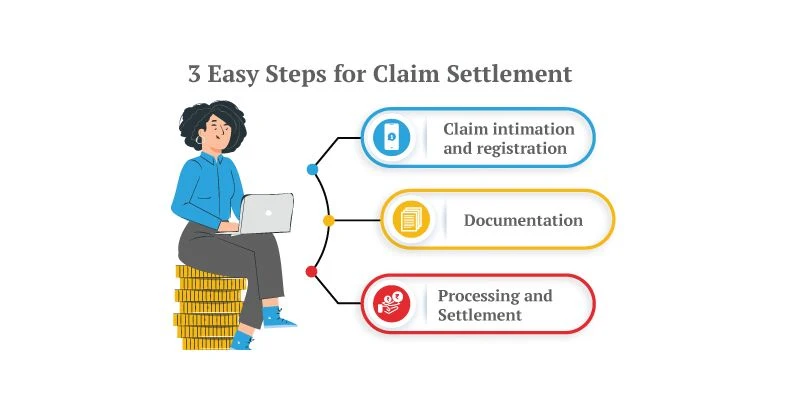
We at Canara HSBC Life Insurance guarantee the quickest, hassle-free claim settlement in the following simple steps.

  • Registration of the Claim: At the earliest, you need to notify the insurance provider of the death

  • Fill the Claim Forms: Complete the required claim form and submit it along with the necessary documents. These are available online

  • Processing: After you have submitted these documents, the company’s assessors will verify the claim 

  • Claim Settlement: Once the decision is made, the claim will be settled, and the beneficiary will receive the amount

trivia-img

Did You Know?

IRDAI mandates insurers settle life claims within 30 days of documents; investigations must finish in 90 days.


Source: IRDAI

YTP 1 Cr.

What are the Documents Required for Claim Settlement?

To file the claim, ensure you submit all required documents to the insurance provider so the claim can be processed without issues. The documents required may vary depending on the type of claim (early or non-early), cause of death, and insurer requirements.

Here is the list of the documents required by the insurer:

  • Policy Document
  • Death Certificate of the Deceased
  • Death Claim Form (Form C)
  • A physician’s statement form to be filled out by the medical practitioners (Form P)
  • Treating Hospital Certificate (Form H)
  • Employers' Certificate (Form E)
  • School Certificate (Form S)

Why is our Claims Settlement Process Reliable?

Easier processes and faster settlement are important in life insurance claims. At Canara HSBC Life Insurance, we understand that during such emergencies, time is of the essence. Therefore, we ensure that the following factors, which make our claim settlement process reliable, are always followed:

  • Fast Process: Our claim settlement process for life insurance claims can process amounts for up to ₹1 crore. However, it varies by case.
  • Transparency: You can obtain the required documents and forms from the branch or download them from the website. The detailed document list ensures that you don’t miss anything before submitting the claim. You can also track your claim application online through the website.
  • Good Support: Your claim application is processed either at a branch office or at the corporate office via post. Once your claim is submitted, you can contact us, and our representative will assist with your application process to ensure a smooth settlement.

What are the Things to Keep in Mind to Avoid Claim Rejection?

To ensure that your claim settlement process happens smoothly and you get your claim without any objection, you should keep in mind the following things.

  • Disclose all the Relevant Facts: Insurance policies work on the "full disclosure principle." When purchasing an insurance policy, you should disclose all the necessary facts truthfully to the insurer. Based on your information, the premium is calculated. If you hide the details to get a lower premium, the insurer may cancel the policy, as hiding relevant facts amounts to a breach of contract under insurance.
  • Fill in the Application Form yourself: Many insurers can offer to fill out your form for you. However, you should fill in the details asked in the form yourself so that facts are not misinterpreted or misused.
  • Read the Terms and Conditions: This is the most important part of the policy. You need to be fully aware of the policy you are purchasing. You should thoroughly understand the terms and conditions.
     Use the free-look period offered by insurance companies to carefully review the policy and decide on it. If you are not satisfied with the policy, you can cancel it within these 15- 30 days and get a refund.
  • Inform your Nominees: An insurance policy requires you to name nominees. These are the people you nominate to receive the sum assured if you die during the policy term. You should keep your nominees informed about the policy and the claim process.
  • Keep your Documents Safe: The nominee appointed by you cannot initiate a claim after your death without submitting the necessary documents. Make sure you have all the documents and claim forms with you so that the claim can be settled faster.

Conclusion

Choosing a life insurance plan requires careful consideration, especially because it is about ensuring your loved ones are protected, especially during financially challenging times. Therefore, the Claim Settlement Ratio matters. It is the reassurance that your insurer will keep its promise when it counts the most.

With a Claim Settlement Ratio of 99.43 per cent, at Canara HSBC Life Insurance, we stand among the most dependable names in the industry. Our dedicated claims team ensures a smooth, transparent, and supportive experience when you need it the most. So, when you choose us, you are choosing peace of mind for your family and a future that stands firm in every situation.

Glossary

  1. Claim Settlement Ratio (CSR): The percentage of claims settled by an insurer out of total claims received in a financial year
  2. Nominee: The person appointed by the policyholder to receive policy benefits in case of death
  3. Beneficiary: The person entitled to receive the life insurance claim amount as per the policy terms
  4. Underwriting: The insurer’s process of evaluating risk before issuing a life insurance policy.
  5. Death Claim: A claim raised by the nominee to receive policy benefits after the insured’s deat
glossary-img
Uncertain About Insurance

FAQs Related to Claim Settlement Ratio

The first thing you need to do while applying for claims is notify the insurance company about the death of the insured. For this, you can contact the agent. You can apply from the website as well.

The claim settlement period may depend on the following factors:

  • Type of policy
  • Claim amount
  • Age of the policy
  • Need for claim investigation

The claim benefit will be provided to the beneficiary/nominee when the policyholder passesaway  during the term of the policy. However, in certain cases (except where “beneficial nomination” applies to close family members under amended provisions), the nominee may act as a trustee for the legal heirs.

The insurer can reject your claim in the following circumstances:

  • The death occurred due to an exempt cause
  • If you have entered false information on the application form
  • The policy had lapsed before the claim
  • Not disclosing the information that is essential to the life insurance policy
  • If there is a discrepancy found in the claim documents submitted

The claims under group policies may be received by the insured or their nominees and legal heirs.

The claim settlement ratio is the percentage of claims settled by a life insurance company out of the total claims received in a financial year, as reported by IRDAI. CSR figures vary by insurer and are published annually in IRDAI’s Handbook on Indian Insurance Statistics.

Life insurance claim settlement typically requires the following documents:

  • A duly filled and signed claim form
  • The original policy document (or policy details, if unavailable)
  • A government-issued death certificate
  • The nominee’s KYC documents (ID proof, address proof, PAN card, and cancelled cheque)

Additional documents, such as medical records, FIR/post-mortem reports, or employer certificates, may be required depending on the case.

While there is no fixed statutory deadline to report a life insurance claim in India, it is advisable to inform the insurer as soon as possible after the policyholder’s death to avoid delays or additional scrutiny. Typically, claims are reported within 30 to 90 days. Once all required documents are submitted, insurers are required to settle valid claims within 30 days, as per regulatory guidelines.

Yes, the Claim Settlement Ratio can vary across different types of life insurance policies, although regulatory disclosures usually publish an overall ratio covering all products. While the reported CSR includes term plans, endowment policies, and ULIPs collectively, term insurance primarily relates to death claims. However, claim handling depends on policy terms and individual case details rather than the product type alone.

Disclaimer - This article is issued in the general public interest and meant for general information purposes only. The views expressed in this blog are solely those of the writer and do not necessarily reflect the official policy or position of Canara HSBC Life Insurance Company Limited or any affiliated entity. We make no representations or warranties of any kind, express or implied, about the completeness, accuracy, reliability, suitability, or availability with respect to the blog or the information, products, services, or related graphics contained in the blog for any purpose. Any reliance you place on such information is therefore strictly at your own risk. You should consult with a qualified professional regarding your specific circumstances before taking any action based on the content provided herein.

Recent Blogs

How do I Surrender my Life Insurance Policy?
18 Feb '26
886 Views
6 minute read
Learn how to surrender your life insurance policy, reasons not to, required documents, and whether you can surrender your term plan with Canara HSBC Life Insurance.
Read More
Life Insurance
Can I Buy A Life Insurance Policy For Someone With A Critical Illness?
17 Feb '26
879 Views
Life insurance may be difficult to obtain if you suffer from a critical illness. However, it is not impossible. Here are the details regarding this kind of life cover.
Read More
Life Insurance
Where Do Life Insurance Companies Invest Your Premiums?
17 Feb '26
2416 Views
10 minute read
Curious where life insurance companies invest your money? Get insights into how your premiums are managed for long-term growth and security.
Read More
Life Insurance
5 Ways to Cash Out a Life Insurance Policy in 2026
17 Feb '26
4906 Views
15 minute read
Learn five common ways to cash out a life insurance policy, including surrender, loans and withdrawals, and understand the impact on coverage and payouts.
Read More
Life Insurance
Prepaid Insurance: Meaning, Examples & How Does it Work?
17 Feb '26
1553 Views
6 minute read
Learn about prepaid insurance, its benefits, and why it’s crucial for securing your financial future by ensuring continuous coverage without interruptions.
Read More
Life Insurance
What is Risk Retention in Insurance? Meaning & Importance
17 Feb '26
2150 Views
7 minute read
Learn about risk retention in insurance, its meaning, importance, and how it helps manage financial risks. Explore with Canara HSBC Life Insurance.
Read More
Life Insurance
How Life Insurance Reduces Financial Stress During Illness?
12 Feb '26
61 Views
7 minute read
Learn how life insurance helps manage medical expenses, income loss, and family financial security during serious illness with practical examples.
Read More
Life Insurance
What Is Non-Traditional Life Insurance & Why It Matters?
11 Feb '26
127 Views
5 minute read
Explore non-traditional life insurance plans, how they differ from traditional policies, and why they matter for modern financial planning.
Read More
Life Insurance
GST on Life Insurance: Rates, Charges & Rules in India
10 Feb '26
2897 Views
10 minute read
What impact does the Goods and Services Tax have on life insurance plans and your premium payments towards them? Here’s all you need to know.
Read More
Life Insurance

Life Insurance - Top Selling Plans

We bring you a collection of popular Canara HSBC life insurance plans. Forget the dusty brochures and endless offline visits! Dive into the features of our top-selling online insurance plans and buy the one that meets your goals and requirements. You and your wallet will be thankful in the future as we brighten up your financial future with these plans.