different-types-of-investments-in-india

Different Types of Investments in India 2026

India offers various investment options, from safe and guaranteed choices to market-linked plans, suited to different goals and risk levels.

Written by : Knowledge Centre Team

2025-12-12

6910 Views

15 minutes read

Savings have been a habitual thing for Indian investors. Hundreds of investments in India try to channel these savings to the greater good. Much like the investors themselves and their unique financial needs, the investments in India also branch into various types.

Each of these saving and investment plans carries returns and risks, which are directly proportional to each other. In other words, the higher the risk involved, the better the chances of returns. When discussing investment options in India, we can broadly categorise the available types of investments into two categories: financial and non-financial. 

On one hand, fixed-income products, such as Public Provident Fund (PPF) and Bank Fixed Deposits (FDs). To help you build an investment plan that matches your risk profile and investment needs with its potential to gain profitable returns, here is an insight into the different types of investment options in India.

So, if you are looking for the best investment options in India, you simply need to match the benefits of the investment plan with your needs.

Key Takeaways

  • Investment options in India can be categorised into financial and non-financial categories, each with distinct risk and return characteristics.

  • Low-risk plans, such as PPF and SCSS, provide stable and tax-efficient returns. Ideal for conservative, long-term savers.

  • ULIPs offer higher returns but carry market-linked risks suited to long-term goals.

  • Real estate and annuities can provide steady income, especially useful during retirement years.

  • A diversified portfolio tailored to your goals and risk appetite is key to building long-term financial security.

What is an Investment Plan?

As the name suggests, investment plans are financial instruments which help you create sustainable wealth for your future needs. There are various investment plans available nowadays that enable you to invest your savings systematically into different money-market products and help achieve your financial goals. These investment plans offer the much-desired advantage of creating wealth through disciplined, long-term investments. Some of the most popular investment options today are:

  • Unit Linked Insurance Plans (ULIPs)

  • Public Provident Funds (PPF)

  • Monthly Income Plans

  • Sukanya Samriddhi Account (SSY)

  • Senior Citizen Savings Scheme (SCSS)

  • Tax-saving Fixed Deposits

Get Life Cover Instantly

Please enter correct name Please enter the Full name
Please enter valid mobile number Please enter Mobile Number
Please enter valid email Please enter Email

Enter OTP

An OTP has been sent to your mobile number

Didn’t receive OTP?

Application Status

Name

Date of Birth

Plan Name

Status

Unclaimed Amount of the Policyholder as on

Name of the policy holder

Policy Holder Name

Policy No.

Policy Number

Address of the Policyholder as per records

Address

Unclaimed Amount

Unclaimed Amount
Error

Sorry ! No records Found

.  Please use this ID for all future communications regarding this concern.

Request Registered

Thank You for submitting the response, will get back with you.

Top 10 Types of Investment in India

You can classify investments in India into several categories based on their risk profile, investment tenure and taxability. The following are the 12 most popular types of investment options in India:

  • Bonds & Debentures: Bonds are a type of investment that is also a capital investment, but safer than equity stocks. Bonds and debentures usually offer a fixed rate of interest to investors. However, depending on the market scenario and investor expectations, bond prices may result in capital gain or loss.

    So, bonds have the following modes of earning for the investors:
  • Coupon / Interest Payments

  • Capital gains/losse

    Unlike equity stocks, bonds have limited tenure. Firms may also issue debentures with a conversion option to equity stocks for the investors. Bonds and debenture investments in India are low to high-risk investments.
    You can access the investment risk of a bond issue through its credit rating. The least risky bond issues will have a rating of ‘AAA’, while ‘BBB’ and ‘C’ will be higher risk.
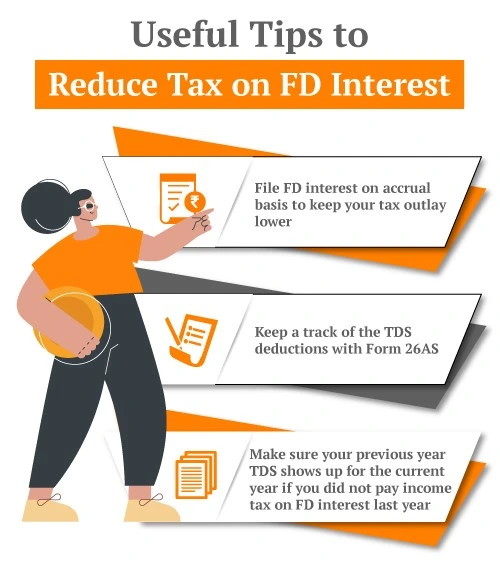
  • Fixed Deposits: Fixed deposits are the oldest and simplest investments in India. You can invest in fixed deposits with banks, post offices and even corporations. While banks and post office fixed deposits carry the lowest investment risk, corporate deposits have a higher risk-return profile.
    Fixed deposits are unaffected by market performance and have a fixed tenure and rate of interest. You may have the option to receive interest in your savings account, depending on the FD provider.
    Banks may offer a higher rate of interest for senior citizen investors in FDs. Coupled with the facility of receiving interest payments in a bank account, FDs are a good way to generate stable pensions for retired investors.
  • Life Insurance Plans: Life insurance plans are some of the best investments in India for achieving important financial goals in your life. Life insurance plans fulfil specific financial needs for individuals and families. For example:
    1. Financial Safety Need for Family: Term Life Insurance and Critical Health Plans
    2. Child’s Higher Education Goal: Guaranteed Savings Plans and Money Back Plans
    3. Child’s Marriage Goal: Endowment Plans
    4. Retirement Savings: Pension Plans and Long-Term Investment Plans
    5. Wealth Distribution or Legacy Goal: Whole life insurance plan
    6. Life insurance plans are some of the best long-term investments in India for wealth preservation as well. You can protect your accumulated money from inflation and taxes using a life insurance plan.
       
  • Real Estate: Ownership of real estate is one of the basic financial needs of everyone. In any case, you will need to invest in at least one residential property in your lifetime. However, real estate is also a lucrative investment option in India.
    Real estate investment is closely with the country’s economic progress and government policies. Thus, real estate investment risk is also high. Here’s how you can invest in different real estate properties:

    1. Buy residential or commercial assets
    2. Buy land for residential or commercial use
    3. Invest in REITs (Real Estate Investment Trusts)

Real estate investments will offer a return on your investment in the following two ways:

  1. Regular rental income
  2. Capital appreciation

    The best part about real estate investment in India is that the rental income is inflation-adjusted. Thus, investing in real estate for rental income is a good option for retired investors for their pension.
  • Retirement Plans: Retirement plans are long-term investment options that help you build an adequate corpus for a comfortable retirement. Some of the most popular retirement investments in India include:
    1. Public Provident Fund (PPF)
    2. New/National Pension Scheme (NPS)
    3. Employee Provident Fund (EPF)
    4. Unit Linked Insurance Plans

      These are the best investment options in India for building a good retirement corpus over a long time. These plans offer tax savings for you at the time of investment. The majority of these plans offer tax-exempt increments and maturity values as well.
      You can invest the accumulated money from these investments into annuity plans and generate long-term pension income after retirement.
  • Unit Linked Insurance Plans (ULIPs): These are a unique life insurance plus investment plan.. Each ULIP offers multiple funds as investment options. These funds will include equity, debt, hybrid and liquid funds.
    At the same time, ULIPs also offer a life cover for the policyholder. The life cover ensures that your family can meet the goal even after your untimely demise.
    Further, Unit Linked Insurance plans offer automatic portfolio management options for aggressive investors. These options will allow you to manage your investment risk automatically depending on the market movement or the time to invest.
  • Annuities: Annuities refer to investments in India that offer regular income to the investor. You can invest a large corpus or invest for a few years in annuity plans and then start receiving a fixed, regular sum of money from it.
    The following two kinds of annuity investment options are available in India:

    1. Immediate Annuity
    2. Deferred Annuity

An immediate Annuity is the best investment plan in India to start a regular income within one month of investment. However, if you want to start the income after a few years, you can invest in deferred annuity options.

Deferred annuities provide a growth period for your corpus or regular investments before drawing income.

 
  • Public Provident Fund (PPF): The first retirement investment in India for self-employed and small investors, the PPF, has a rate of return, although fixed, that is revised periodically by the Ministry of Finance.
    The return is annually compounded for each financial year. Thus, investing in April of the year will yield better returns than investing in any other month.
    PPF is the best investment option in India to build a tax-free corpus of funds, as the maturity amount from this savings scheme is completely exempt from tax. The minimum investment tenure for the plan is 15 years. You can extend the account after maturity in batches of 5 years.
    You can withdraw money partially after five financial years of investment. Before partial withdrawals, you can borrow from the accumulated corpus if needed.
  • Certificate of Deposit (CD): It is a money market investment in India. The Federal Deposit Insurance Corporation (FDIC) insures CDs against the funds you invested in a bank deposit. Like any other money market investment in India, RBI governs CD issues.

    Prominent features of CDs are as follows:

    1. Single issue of ₹1 lakh and its multiples
    2. Commercial bank CDs can have a maturity period of 7 days to 1 year
    3. CDs from other financial institutions mature within 1 to 3 years
    4. CDs are fixed-income securities with short investment tenures. Thus, it is one of the safest investment options in India.
       
  • Bank Products: Banks in India offer some of the best investment plans in India for safe investors. These investments are easy to operate, especially if you have an account in the same bank. Other bank investments include:

    1. Fixed deposits for senior citizens
    2. Recurring deposits
    3. Gold / Silver Coins and Bars
    4. RBI Bonds
    5. Sovereign Gold Bonds
    6. Portfolio Management Services
    7. Capital Gain Bonds & Deposit
    8. Non-Convertible Bonds / Debentures
    9. Tax-Free Bonds

While bank investment options in India are full of fixed income and safe investments, they also offer investments in alternative assets. Bank’s customised portfolio management services let you participate and grow your wealth with a portfolio of equity, debt, real estate and commodity investments.
Other than these, you can also invest in commodities like gold and silver, and investment trusts. However, these investments require big-ticket inflows and offer lower liquidity. On the other hand, some of the most liquid, i.e., easy to sell, investments in India include liquid funds and savings accounts.

Why Should You Invest?

Being a salaried individual or even as a self-employed businessperson, you must realise that you cannot achieve your life goals by relying on your savings alone. Instead, it would help if you found ways to maximise your savings and build wealth that meets your and your family’s needs. To do this, you must invest these savings in an investment plan that helps you avail of high returns but with minimal or no risk involved.

On the other hand, if you choose not to invest, you may miss out on various opportunities to maximise your wealth-building potential and financial worth. If you invest your money wisely and on time, you can easily make significant gains throughout the investment tenure.

How to Choose the Right Investment Plan?

To choose the right investment plan for yourself, you need to consider the following points -

  1. Review your financial needs and goals: both existing and future.
  2. Calculate your investment timeline for each life goal.
  3. Develop an investment strategy that comprises the right balance of insurance and investment policies.
  4. Diversify your portfolio to include multiple investment plans and minimise the risk involved.
  5. Be aware of the different charges levied under each investment scheme.
  6. Periodically review your investments.

Also Read: Direct Investment

Types of Investment Plans Based on Risk Factor

Each investment instrument carries a distinctive risk profile and potential for return generation. For each of these plans, their associated risk of investment can be described as the probability of the plan performing either below expectations or experiencing an irreparable loss of value.

Based on the risk associated, we can broadly classify different investment plans into three categories:

  • Low-Risk Investments: Low-risk investment plans, essentially, are those in which there are approximately zero risks involved. These low-risk investment plans usually provide consistent and reliable growth of value, with minimal losses. Such types of investment include:

    1. Public Provident Fund 
    2. Post Office Monthly Income Schemes
    3. Senior Citizen Savings Scheme 
    4. Employee Provident Fund 
    5. Sukanya Samriddhi Yojana
    6. Tax Saving FDs
    7. Sovereign Gold Bonds
    8. Life Insurance
    9. Bonds
       
  • High-Risk Investments: Investment plans categorised as high-risk are suitable for investors who wish to sustain long-term capital growth. While most of these high-risk investment plans are likely to incur fluctuations throughout the investment tenure, they provide ample opportunities to create substantial returns. These high-risk investment plans usually include Unit Linked Insurance Plans
  • Medium-Risk Investments: Investment plans classified as medium or moderate risk options not only provide opportunities to avail of diversified and balanced investment returns but also help you accept a certain level of market volatility. These medium-risk investment options, thus help diversify your investment portfolio by including a mix of equity and debt instruments, which then generates stable returns with minimal risks. A monthly income plan is the best example of a medium-risk investment plan.

Factors to Keep in Mind while Investing

Different types of investments in India offer different risk, return and maturity (liquidity) features. For the best results, you should check for the following eight factors while choosing different investment options:
  1. Investment Volatility: Highly volatile investments offer better long-term growth for your investment. However, such investments may need a higher investment amount or a longer investment period.
  2. Investment Tenure: You need a balance of long-term and short-term investments. Short-term investments will ensure the availability of money, and long-term investments will ensure growth.
  3. Past Performance: The past performance of investments, especially portfolio investments, gives you an idea about their risk-return profile.
  4. Your Financial Goal: The best way to use different investment options for your benefit is to attach them to a financial goal. This will ensure you are clear about the acceptable volatility and tenure of the investment.
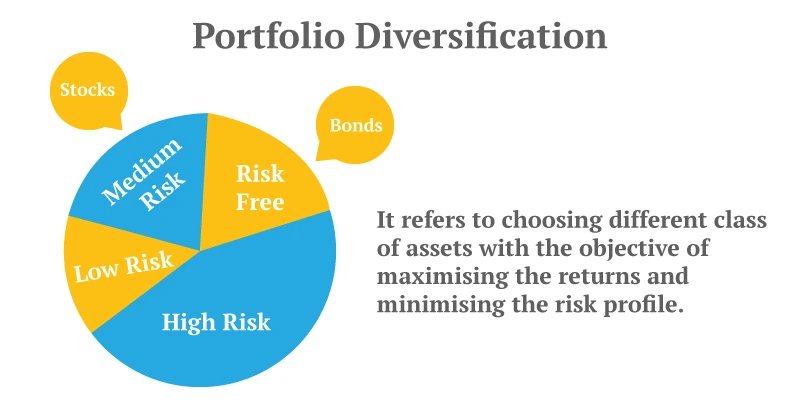
  5. Your Investment Portfolio: Diversification across time and asset classes is a feature of a good investment portfolio. Always keep a bird’s eye view of your portfolio while selecting a new type of investment.
  6. Your Understanding of the Investment Option: It’s better to park your funds in investments you understand. That way, you can wade through market situations without unnecessary stress.
  7. When to Review: Every type of investment needs a review after some time. Reviewing investments will ensure that you stay up to date with the investment and make changes while you still have time.
  8. Investment Frequency: Different investment options in India require different investment frequencies. Not following the same can lead to penalties and losses in earnings.
  9. Flexibility Available: Flexibility in an investment plan can be for investment tenure, maturity, frequency, amount and withdrawals. More flexible investments are better.

Conclusion

Every investor has different goals, risk tolerance, and timelines. That’s why it’s important to choose investment options that align with your needs and offer the right balance between risk and returns. Whether you prefer the stability of traditional savings schemes or the growth potential of market-linked instruments, there’s a wide range of choices available today.

If you're looking for a plan that combines long-term growth with life cover, Unit Linked Insurance Plans by Canara HSBC Life Insurance can be a well-rounded option. These plans give you the flexibility to invest in equity, debt, or balanced funds, while also ensuring financial security for your loved ones.

In the end, a mix of informed choices and disciplined investing is what helps turn today’s savings into tomorrow’s financial confidence.

FAQs Related to Types of Investments

The following are the best investment options available in India for parking your savings:

  • Bonds & Debentures

  • Fixed Deposits

  • Life Insurance Plans

  • Real Estate

  • Retirement Plans

  • Unit Linked Insurance Plans

  • Annuities

  • Public Provident Fund

  • Certificate of Deposit

  • Bank Products

If your simple investment objective is to maximise your return on investment, the best investment options in India will be:

  • New/National Pension Scheme 

  • Unit Linked Insurance Plans 

  • Bank Products: Portfolio Management Services

The various types of investments in India often invest in different sorts of assets. For example, equity mutual fund invests in equity stocks, REITs primarily invest in real estate assets, and Gold ETFs invest only in gold bullions and similar assets.

Asset allocation refers to the amount invested in a specific asset. For example, you can create a portfolio of 60% equity stocks, 20% fixed income securities and 20% gold. Thus, asset allocation for gold in your portfolio will be 20%.


The investment process generally involves the following five steps:

Step 1: Define your investment objective

Step 2: Identify the most suitable investment options

Step 3: Finalise and start investing in the different types of investments to maintain the diversity of the risk-return profile

Step 4: Review the investment performance regularly and increase/decrease investment as needed

Step 5: Withdraw funds to meet your goal

The risk involved while investing depends on the type of investment option you are using. Also, investment tenure plays an important role in the risk profile of the investment option. The following are the important risks involved with investments in India:

  • Inflation risk

  • Liquidity risk

  • Volatility/Market risk

  • Default/Credit risk

  • Reinvestment risk

Disclaimer - This article is issued in the general public interest and meant for general information purposes only. The views expressed in this blog are solely those of the writer and do not necessarily reflect the official policy or position of Canara HSBC Life Insurance Company Limited or any affiliated entity. We make no representations or warranties of any kind, express or implied, about the completeness, accuracy, reliability, suitability, or availability with respect to the blog or the information, products, services, or related graphics contained in the blog for any purpose. Any reliance you place on such information is therefore strictly at your own risk. You should consult with a qualified professional regarding your specific circumstances before taking any action based on the content provided herein.


Recent Blogs

Life Insurance - Top Selling Plans

We bring you a collection of popular Canara HSBC life insurance plans. Forget the dusty brochures and endless offline visits! Dive into the features of our top-selling online insurance plans and buy the one that meets your goals and requirements. You and your wallet will be thankful in the future as we brighten up your financial future with these plans.