4 Common Post-Retirement Risks you Should Know

4 Common Post-Retirement Risks you Should Know

Prepare for a longer life and higher expenses after retirement.

Written by : Knowledge Centre Team

2026-01-10

1087 Views

7 minutes read

Retirement is often seen as the time to relax, explore long-lost hobbies, and enjoy the freedom from daily routines. This phase goes beyond just saving a portion of your salary. It is about shaping a future where you can live with a mindset free from any financial constraints. Many people overlook the fact that retirement also comes with certain risks. 

These may not be obvious today, but they can affect your lifestyle later. In this blog, we help you understand the four most common risks retirees face. More importantly, we share ways you can prepare for them and protect your golden years.

Key Takeaways

  • Longevity risk can deplete savings faster than expected.

  • Inflation erodes purchasing power post-retirement.

  • Critical illnesses can cause financial strain.

  • Early planning helps beat longevity risk.

  • Inflation-adjusted assets protect corpus value.

How Does an Ideal Post-retirement Life Look?

To live an ideal post-retirement life is what you work for. You just want to relax and travel the world. You could also start to pursue a hobby you left long ago. Most importantly, you should live a stress-free life post-retirement. But what is life without risks and uncertainty? You could encounter various risks post your retirement as well. There are certain risks that you can face post-retirement. These tend to threaten your financial soundness and hinder your retirement plan to live stress-free after retirement.

Here are the 4 most common risks you can face after you retire:

  • Underestimating longevity.

  • Risk of unexpected medical expenses, i.e., critical illness, accidents.

  • Systematic changes, urban development, etc.

  • Any other unexpected costs.

Secure Your Retirement with Guaranteed Income Plans

Please enter correct name Please enter the Full name
Please enter valid mobile number Please enter Mobile Number
Please enter valid email Please enter Email

Enter OTP

An OTP has been sent to your mobile number

Didn’t receive OTP?

Application Status

Name

Date of Birth

Plan Name

Status

Unclaimed Amount of the Policyholder as on

Name of the policy holder

Policy No.

Address of the Policyholder as per records

Unclaimed Amount

Error

Sorry ! No records Found

.  Please use this ID for all future communications regarding this concern.

Request Registered

Thank You for submitting the response, will get back with you.

Thank you for your interest in our product. Our financial expert will connect with you shortly to help you choose the best plan.

Why Longevity Is Often Misjudged as a Risk After Retirement?

Many people believe their retirement funds will last because they have planned for the next 15 or 20 years. However, with growing medical advancements and better lifestyles, it is becoming more common to live well into the late 80s or even past 90. This means your retirement might span more than three decades. If your finances are not aligned with that possibility, you may run out of money when you need it the most.

  • The Real Cost of Living Longer: The challenge is not just about having enough savings, but also about ensuring a steady income and financial protection that lasts your entire life. Without this, covering daily needs, healthcare expenses, or emergencies becomes increasingly difficult as you grow older.
  • How a Whole Life Term Plan Helps?: One effective solution is to opt for a whole life term insurance plan that offers coverage up to 99 years of age. These plans are designed to support you throughout your lifetime while providing peace of mind to your loved ones. If you choose a variant with return of premium, it becomes even more beneficial. This means if you outlive the policy term, all premiums paid by you will be returned as a survival benefit.
  • Protection and Payout in One: This approach works well in two ways. First, it ensures long-term coverage, so your family remains financially protected in case something happens to you, even during your later years. Second, if you survive the policy term, the returned premiums serve as a lump sum payout that can be used for medical expenses, care support, or even a legacy for your loved ones.

    A whole life term plan with return of premium, balance protection, and financial recovery. It supports your long life, rather than punishing it. As retirement gets longer, this becomes not just an option but a necessity.

Risk of Critical Illness and How to Combat It?

If you or your spouse suffers from a serious disease requiring extensive medical care, such as cancer or heart problems, then it can be classified as a critical illness. These illnesses not only affect your health but also impact your finances. Treatment for such conditions often involves expensive hospital stays, surgeries, and long-term medications. 

For retirees who may already have a fixed income, these sudden costs can quickly eat into savings meant for daily needs. To protect yourself, it is wise to consider a health insurance plan that includes critical illness coverage. 

This kind of support can reduce the burden on your family and help you focus on recovery, without the fear of medical expenses draining your retirement fund. 

Many life insurance products, such as term insurance, provide you with an option to enhance your protection through riders. Riders improve the scope of your policy. You should buy a term plan that offers critical illness benefits.

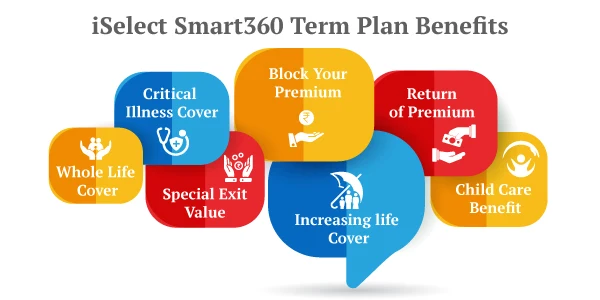
iSelect Smart360 Term Plan:

iSelect Smart360 Term Plan by Canara HSBC Life Insurance offers the option to continue the cover till the age of 99. The plan carries critical cover as a default benefit. Thus, you can maintain the critical health cover throughout your life.

If this option is chosen, then you are entitled to receive a lump sum amount if you get diagnosed with a critical illness. This can help you go a long way in meeting the heavy expenses associated with the disease.
Systematic Changes and How to Manage Their Associated Risks?

Systematic changes are the changes that affect the broader environment and are usually far beyond your control. These changes usually take place gradually, but a sudden occurrence is also likely at times.

What are the Risks to Retirement Investments Due to Systematic Changes?

Let us look at some of the common risks that can be caused by systematic changes: 

  • Inflation Risk: The value of the money you possess today may not remain the same 10 years from now. Inflation causes a decrease in the value of money. This is not a new thing. So you should always aim to save more than expected.

    But certain events can shoot up the inflation level to an unthinkable extent. If the rate of inflation gets very high, then it could result in your corpus getting used up sooner than it was supposed to be, as your income will not increase with inflation. Your corpus remains the same.
  • Interest Rate Risk: Excessive changes in interest rates, both high and low, can pose a risk to you.

    Low interest rates prevailing in the market can decrease the value of your retirement corpus. Low interest rates prove an even bigger risk when you are dependent on the savings to live post-retirement, as now you have to save more to keep up with expenses

    On the other hand, when the rates are high, the value of bonds declines.
  • Stock Market Risk: This is the risk that can concern you if you invest in the stock market. The stock market, though known for its ability to give higher returns, witnesses huge ups and downs. A recession in the stock market can lower your portfolio and thus your corpus.

How to Mitigate Systematic Risks?

Though these risks are out of your control, you can try to mitigate them or reduce their effect to some extent. Here’s how:

  • Diversity is the Key: Diversity in investments lets you mitigate the risk associated with markets. This can be summed up by the fact that you don’t put all your eggs in one basket. Instead of investing in one source, you should try to invest in multiple securities.

    For example, dividing your investment in equities, debt, and even liquid funds according to risk capabilities.
  • Investing in Inflation-Adjusted Assets: You cannot stop inflation, but you can invest in assets that can reduce its effect on your corpus. Investing in assets that go hand in hand with the inflation rate can benefit you.

    These assets are:
    1. Gold
    2. Real estate

Risk of Unexpected Costs

However secure you are, both physically and financially, after retirement, the truth is that you never really know what the future holds. Unforeseen events, such as a sudden accident, can bring large medical bills that may shake your financial stability in an instant.

For example, if an unfortunate accident results in severe injuries to your spouse, it can deeply impact the balance of your existing corpus. What you have saved over the years could start depleting faster than expected.

The costs of hospital stays, ongoing medication, medical equipment, and even hiring a full-time caretaker can easily catch you off guard. This is why it becomes essential to prepare in advance. Being financially ready for such unexpected situations is key to ensuring peace of mind and protecting your loved ones.

How to Deal with Unexpected Costs?

Insurance policies can help meet unexpected costs. But a healthcare plan will be useful till the age of 70. If this occurs when you are way past 70, you will have no option but to bear these expenses with your own money. These costs will not only take a toll on you mentally, but financially as well

This can be done by creating an emergency fund. Set aside a certain amount from your retirement corpus every month. This will act as your emergency fund. This will help you if you are in times of an unexpected house repair or an accident, etc.

Now you have an idea about how these risks can affect you post your retirement. Though you cannot change the future, the least you could do is to prepare for it. A well-thought-out life insurance policy and planning well in advance will go a long way to make sure that you fight these risks and lead a peaceful life after you retire.

How to Prepare for Living Peacefully with a Retirement Plan?

You have planned to live for 80 years, but what if you surpass that age? Will your corpus be enough? 

Here are a few suggestions that will answer these questions and help you live peacefully with a retirement plan:

  • Life Long Pension Plan: Pension schemes and plans can prove to be a good help in planning for a longer than expected life. Lifetime pension plans can even provide you with a regular income stream for as long as you live

    For example, you decide to set aside money in a pension plan when you are 30. You are currently earning ₹1 lakh with an increment of 5 per cent per year. You decide to put 9 per cent of your annual income into a pension fund that provides an ROI of 8% for 30 years. Then your corpus will be ₹2.28 Cr.

    However, if you withdraw at the same rate as you earned, you'll use up all your money by 90. What if you live past 90? Where will the money come from then? You can follow the options below:
  • Increase the Rate of Savings: You can increase the amount you put into your pension fund from the start. In the above example, increasing your savings from 9% to 15% will result in a corpus of ₹3.8 Cr. This is how compounding benefits you.
  • Reduce your Expenses: Instead of increasing your savings, cutting back on expenses will make your fund last longer. Withdrawing less than the expected amount would increase the longevity of your corpus.

Conclusion

Delaying a life insurance plan is not just about paying a higher life insurance premium in the future. It can also mean reduced coverage, fewer benefits, and leaving your family financially vulnerable. The smartest choice is to act when you are young and healthy, so you secure a low premium and strong protection for years to come. 

With policies like iSelect Guaranteed Future Plus by Canara HSBC Life Insurance, you can lock in assured benefits and create a safety net that grows with you. Every year you wait costs more, so take the step today and protect your tomorrow without unnecessary expense.

Disclaimer - This article is issued in the general public interest and meant for general information purposes only. The views expressed in this blog are solely those of the writer and do not necessarily reflect the official policy or position of Canara HSBC Life Insurance Company Limited or any affiliated entity. We make no representations or warranties of any kind, express or implied, about the completeness, accuracy, reliability, suitability, or availability with respect to the blog or the information, products, services, or related graphics contained in the blog for any purpose. Any reliance you place on such information is therefore strictly at your own risk. You should consult with a qualified professional regarding your specific circumstances before taking any action based on the content provided herein.


Recent Blogs

How EPF Pension is Calculated? Formula, Eligibility & Examples
03 Apr '26
39 Views
9 minute read
Learn how EPF pension is calculated using the EPS formula, average salary, and service years. Includes eligibility rules and simple examples.
Read More
Retirement Plan
How to Reactivate a Frozen NPS Account in India?
03 Apr '26
47 Views
8 minute read
A complete guide to unfreeze your NPS account in India. Know the minimum contribution, KYC fixes, and online or offline reactivation steps.
Read More
Retirement Plan
How to Check EPF Balance Using Missed Call? | Easy EPF Balance Check
02 Apr '26
111 Views
6 minute read
Learn how to check your EPF balance using a missed call. Follow simple steps, eligibility criteria, and tips for a quick EPF balance check.
Read More
Retirement Plan
How to Reset EPFO Passbook Password? EPFO Member Passbook Guide
02 Apr '26
113 Views
6 minute read
Learn how to complete an EPFO passbook password reset using UAN and OTP. Follow simple steps to regain access to your EPFO member passbook online.
Read More
Retirement Plan
National Pension Scheme (NPS): How to Invest & Maximise Returns
31 Mar '26
922 Views
8 minute read
Discover how to invest in the National Pension Scheme (NPS) in India. Learn about tax benefits, investment options, and how it compares to private pension plans.
Read More
Retirement Plan
Employee Pension Scheme (EPS-95): Eligibility, Benefits & How It Works
31 Mar '26
1235 Views
9 minute read
With EPS-95 minimum pension up to ₹7,500, private-sector employees may need to rethink VRS plans. Know the impact and retirement benefits in 2025.
Read More
Retirement Plan
How to Withdraw from Your Retirement Plan Before Maturity?
13 Mar '26
504 Views
5 minute read
Thinking of early withdrawals from your retirement plan? Learn when it is allowed and how to avoid costly mistakes with smart planning.
Read More
Retirement Plan
Senior Citizen Card: How to Apply for it Online?
12 Mar '26
13613 Views
10 minute read
Learn the step-by-step process to apply for a Senior Citizen Card in India. Discover eligibility criteria, required documents, and benefits that come with the card for senior citizens.
Read More
Retirement Plan
Is Pension Taxable in India? Rules, Exemptions & Types
27 Feb '26
1999 Views
7 minute read
Know which types of pension are taxable in India, what exemptions apply, how commuted and uncommuted pension are treated, and how to plan your tax liability.
Read More
Retirement Plan

Retirement - Top Selling Plans

We bring you a collection of popular Canara HSBC life insurance plans. Forget the dusty brochures and endless offline visits! Dive into the features of our top-selling online insurance plans and buy the one that meets your goals and requirements. You and your wallet will be thankful in the future as we brighten up your financial future with these plans.