Understanding Defined Benefit Pension Plan

Defined Benefit Pension Plan: Meaning and How It Works

A defined benefit pension plan provides fixed retirement income based on salary and service years, offering predictable and stable income.

Written by : Knowledge Centre Team

2025-12-23

1269 Views

8 minutes read

Do you know what’s better than knowing that you can save money after retirement? It’s knowing how much money you can get after investing for your retirement. Defined Benefit Pension Plans are retirement benefit plans in which you already know how much money you are going to get after retirement.

The return is calculated based on your salary amount and the number of years you have been in service.

A defined benefit plan is usually the result of your consistency and discipline rather than your financial contributions. Gratuity and leave salary are the two most popular defined benefit plans available to the employed workforce in India.

Key Takeaways

  • Defined benefit plans assure fixed retirement income based on salary and years of service.

  • Your employer fully funds most defined benefit plans without requiring your own contributions.

  • Gratuity and leave salary are the most common defined benefit options available in India.

  • Vesting period rules apply, so benefits may not be available if you leave a job too early.

  • Payments can be chosen as a lump sum, a monthly pension, or a joint pension with spousal support.

How does a Defined Benefit Plan Work?

Defined Benefit Plans give you a definite amount based on a predefined formula, regardless of your actual contribution to such a plan. There are formulas to calculate the resultant value, and the major factors of that formula are the salary amount and the years of service.

Some salient features of defined benefit plans are as follows:

  • The benefit may depend upon your length of service, salary, or an incident
  • Employers are the only ones who contribute to your DB Plans.
  • The benefit is payable only at the time of superannuation or upon the incidencei the eligible employees
  • Employers should consider using a group insurance policy to provide these benefits, thereby avoiding liquidity issues

Employers might use an insurance policy to provide you with gratuity. Otherwise, it’s a CTC. That’s because a company must pay gratuity to the employees who have completed certain years of service.

What is the Vesting Period in Defined Benefit Plans?

Many Defined Benefit Plans are defined based on years of service. Mostly this period is called the vesting period in a company that offers a Defined Benefit Pension Plan. An employer who leaves the company before the completion of the vesting period may not be entitled to the complete benefits of the Defined Benefit Plan.

Your returns are dependent on which plan you take. Many life insurance policies in India give returns as a lump sum of money. Some might provide a regular sum of the amount.

Get Expert Guidance for Your Retirement & Investments

Please enter correct name Please enter the Full name
Please enter valid mobile number Please enter Mobile Number
Please enter valid email Please enter Email

Enter OTP

An OTP has been sent to your mobile number

Didn’t receive OTP?

Application Status

Name

Date of Birth

Plan Name

Status

Unclaimed Amount of the Policyholder as on

Name of the policy holder

Policy Holder Name

Policy No.

Policy Number

Address of the Policyholder as per records

Address

Unclaimed Amount

Unclaimed Amount
Error

Sorry ! No records Found

.  Please use this ID for all future communications regarding this concern.

Request Registered

Thank You for submitting the response, will get back with you.

How is Defined Benefit Paid?

Most defined benefit plans provide you with the option to decide how you want your funds to be delivered. The following are some of the often-provided payment options:

  1. A Single-life Pension: provides a set income each month for as long as the beneficiary lives. No payments are  made to the policyholder's survivors after thei passing.
  2. A Lump Sum Payment: is made when one receives the full amount of their plan. When the policyholder unfortunately passes away, no more payments are provided to the survivors.
  3. A Qualified Survivor and Joint Plan: Until death, the insured receives a set monthly benefit. Benefits are also paid to the policyholder's surviving spouse if they are still alive. When a spouse receives pension or retirement benefits, they get at least half of the policyholder's total payout.

Making the correct payment choice is crucial, as it can significantly impact the amount of benefit you ultimately receive. Therefore, you should carefully weigh all the available possibilities and evaluate the benefit amounts offered by each.

Also Read - How to Withdraw Pension Contribution?

What are the Pros and Cons of Defined Benefit Plans

Defined benefit plans offer a range of benefits, but there are certain disadvantages to these plans too. Here’s a list of both pros and cons of these plans:

1. Pros of a Defined Benefit Plan:


  • Enhanced retirement funds: Employee incentives are assured under a set benefit plan, providing retirees with a higher retirement benefit.
  • Benefits are unaffected by market swings: Employee retirement benefits remain unchanged regardless of what happens to the markets or investments.
  • Possibility of spousal support: After an employee's passing, a spouse could be allowed to receive the benefits.
  • Tax advantages for employers: Employers may often deduct their payments to defined benefit plans from their taxes.
  • Better employee retention: Employees who participate in defined benefit plans might stay with a firm for a long time as they wait for their benefits to vest and begin to accrue the most.

2. Cons of a Defined Benefit Plan:


  • No investment preference: You will not influence the investments made with their funds.
  • Vesting takes a while: If an employer needs six years of service before a benefit becomes vested, and you quit after four years, all the funds you have earned will remain with the employer.
  • Lack of flexibility: Although it may be simpler with cash balance plans, it may be challenging to transfer funds from one plan to another as a person changes employment. This does not imply that you won’t be getting all the collective benefits when you retire. Simply maintain numerous sources of income.
  • No possibility to enhance your benefit: Because the benefits equation is fixed, you cannot grow your retirement income.
  • High maintenance costs: Defined benefit plans are more demanding for firms to operate than defined contribution schemes as they provide assured payouts regardless of market conditions.

What are the Available Defined Benefit Plans in India

The Indian retirement system is a mix of defined-contribution and defined benefit plans. The following types of defined benefit plans are available in India:

  • Gratuity Payment: Statutory benefit applicable to employers with 10 or more employees.
  • Leave Salary: Not statutory but helps promote work-life balance among employees and compensates fairly for eligible leaves.
  • Employee Life Insurance: Life insurance benefits is available to the employee’s family in the case of the sudden death of the employee.
  • Employee Personal Accident Insurance: Compensates the employee and his/her family in the case of an accidental injury or disability, which may put them off work for a while or permanently. 
  • Workmen Compensation: Provides statutory benefits payable to workers and employees in the case of workplace injury.
  • Atal Pension Yojana (defined benefit pension plan): Guarantees a minimum monthly pension based on a minimum contribution for a minimum number of years.
  • Guaranteed Pension Plans: Pension plans offered by life insurance companies offer guaranteed lifetime pensions. If held jointly with the spouse, the pension continues until one of the holders is alive.

How to Provide Defined Benefits to Employees?

Statutory defined benefit plans that employers must offer to their employees can be seen as a financial challenge to the enterprises in India. However, you can use the insurance plans to offer these benefits and even offer better benefits than the statutory limits:

  1. Group gratuity plans:
    • Takes care of leave salary as well
    • Can be a guaranteed benefits plan or a unit-linked plan
    • Additional unpaid funds improve the employer’s cash flow
  2. Group personal accident insurance
  3. Group term life insurance plans
  4. Workers compensation insurance
     

Defined Benefit Plans for a Safer Retirement

Defined benefit plans are a great boost to your retirement kitty. However, do note that your benefits improve with your longevity at your employer. The longer you stick to one employer the better your gratuity and leave salary benefits will be.

Defined benefit plans are almost entirely funded by employers' contributions. However, saving schemes and retirement benefits such as guaranteed plans will require some contribution from you. However, understanding the plans can help you maximise your benefits from them.

You can earn a consistent income even after your retirement. This policy contributes positively to your post-retirement finances. So, we recommend that you understand the defined benefit pension plans to secure your post-retirement life.

To get a better understanding of how much you can save post-retirement, you can even refer to our user-friendly retirement calculator, available on the official website for free.

Disclaimer - This article is issued in the general public interest and meant for general information purposes only. The views expressed in this blog are solely those of the writer and do not necessarily reflect the official policy or position of Canara HSBC Life Insurance Company Limited or any affiliated entity. We make no representations or warranties of any kind, express or implied, about the completeness, accuracy, reliability, suitability, or availability with respect to the blog or the information, products, services, or related graphics contained in the blog for any purpose. Any reliance you place on such information is therefore strictly at your own risk. You should consult with a qualified professional regarding your specific circumstances before taking any action based on the content provided herein.

Recent Blogs

GPF vs PPF: Differences, Benefits & Which is Better?
10 Feb '26
509 Views
7 minute read
Compare GPF vs PPF in terms of eligibility, interest rates, tax benefits, withdrawal rules, and which is better for retirement planning.
Read More
Retirement Plan
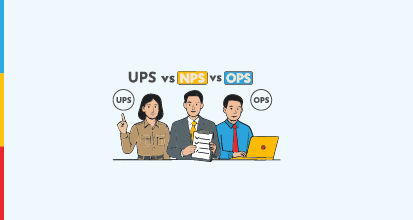
Unified Pension Scheme (UPS): Benefits, Returns & Eligibility
09 Feb '26
20 Views
8 minute read
Explore UPS pension scheme benefits, eligibility rules, returns, and how it compares with NPS and other retirement plans in India.
Read More
Retirement Plan
Bucket Strategy for Retirement: Meaning & How It Works
09 Feb '26
618 Views
8 minute read
Understand the bucket strategy for retirement planning and how it helps manage risk, income stability, and long-term wealth growth.
Read More
Retirement Plan
Is a PF Account Enough for Retirement Planning in India?
15 Jan '26
3188 Views
10 minute read
Already have a PF account? Learn why a retirement plan is still essential for complete financial security and stress-free life after retirement.
Read More
Retirement Plan
Difference Between Defined Benefit Plan & Defined Contribution Plan
09 Jan '26
1740 Views
12 minute read
Your retirement will be funded by defined contribution and defined benefit plans. But how should you decide defined benefit vs defined contribution results?
Read More
Retirement Plan
What is Superannuation? Types and Tax Benefits
07 Jan '26
712 Views
9 minute read
A superannuation benefit is a type of benefit that is paid to the employees by their employers as a pension benefit. Learn what superannuation is and how it works.
Read More
Retirement Plan
What is Family Pension? Everything You Need to Know
05 Jan '26
1831 Views
10 minute read
Family Pension is a government scheme for central government employees. Learn its meaning, eligibility criteria, and how it works with Canara HSBC Life Insurance.
Read More
Retirement Plan
Is NPS Tax Benefit Available in New Tax Regime? | NPS Deduction Rules
05 Jan '26
4227 Views
7 minute read
Is NPS tax benefit allowed in the new tax regime? Understand eligibility, Section 80CCD(2) deductions, and how NPS works for taxpayers.
Read More
Retirement Plan
What is Pension? Meaning, Types & Benefits Explained
04 Jan '26
3683 Views
12 minute read
A pension is a retirement fund contributed by the employer, employee, or both, with the employer covering the largest share. Learn more with Canara HSBC Life Insurance!
Read More
Retirement Plan

Retirement - Top Selling Plans

We bring you a collection of popular Canara HSBC life insurance plans. Forget the dusty brochures and endless offline visits! Dive into the features of our top-selling online insurance plans and buy the one that meets your goals and requirements. You and your wallet will be thankful in the future as we brighten up your financial future with these plans.