


Difference between Defined Benefit and Defined Contribution Plan

Difference Between Defined Benefit & Contribution Plans

Learn the difference between defined benefit and defined contribution plans, how they work, and which retirement plan suits you best

Written by : Knowledge Centre Team

2026-01-09

1739 Views

12 minutes read

Retirement planning isn’t something you start after you stop working. It’s built gradually during your earning years. And one of the most important decisions you make along the way is understanding how your retirement benefits are structured, whether you receive a fixed, assured payout or contribute regularly to build a corpus over time.

Broadly, retirement plans fall into two categories:

If you are employed and drawing a salary, chances are you are already contributing to, or eligible for, one or both types of retirement plans. Discover more about them here.

Key Takeaways 

  • A pension plan doesn't just appear at retirement; it's the result of consistent efforts and long-term planning throughout your working years

  • Retirement plans are classified into defined benefit plans and defined contribution plans

  • Defined benefit plans provide guaranteed retirement income, but are becoming less common, especially in the private sector, due to financial sustainability challenges

  • Plans like EPF, NPS, and PPF allow individuals to build their retirement corpus, 

  • Defined benefit plans are typically employer-funded, whereas defined contribution plans involve contributions from both employees and/or employers

What is a Defined Benefit Plan?

A defined benefit retirement plan is one where your maturity benefit, or benefit on retirement, is defined. The benefit will be available to you regardless of your investment performance, subject to the plan’s terms and conditions.

Benefits can be paid in a lump sum or as a regular pension. However, in any case, the benefits are only payable upon your superannuation or retirement.

Examples of defined benefit plans include:

As interest rates decline and markets become more profitable, sustaining defined benefit schemes can become difficult. Thus, over the last few years, many of these schemes have been replaced by defined contribution plans.

Get Expert Guidance for Your Retirement & Investments

Please enter correct name Please enter the Full name
Please enter valid mobile number Please enter Mobile Number
Please enter valid email Please enter Email

Enter OTP

An OTP has been sent to your mobile number

Didn’t receive OTP?

Application Status

Name

Date of Birth

Plan Name

Status

Unclaimed Amount of the Policyholder as on

Name of the policy holder

Policy Holder Name

Policy No.

Policy Number

Address of the Policyholder as per records

Address

Unclaimed Amount

Unclaimed Amount
Error

Sorry ! No records Found

.  Please use this ID for all future communications regarding this concern.

Request Registered

Thank You for submitting the response, will get back with you.

What is a Defined Contribution Plan?

Defined contribution plans are retirement plans where your maturity benefit depends on your contributions and the investment performance. The investment or the contribution is usually predefined for you based on your income. The majority of retirement investment plans are defined-contribution plans.

Examples of defined contribution retirement plans include:

You should always have at least one running defined-contribution retirement plan. These plans give you financial control over your retirement.

Defined Benefit Vs. Defined Contribution Plans

Defined benefit and defined contribution plans serve one purpose, i.e., to support your retirement. However, these plans have many differences as w

Defined Benefit PlansDefined Contribution Plans

Available only to certain organised sector employees and government employees

Anyone can avail themselves of these plans, including self-employed individuals

Only the employer contributes to these plans

Both employers and employees can contribute to these plans

The employer is responsible for paying a pre-defined benefit, so if the plan is not adequately funded, it may create a financial obligation that can impact the employer’s liquidity

The employer’s responsibility is limited to making fixed contributions (if applicable), so it does not create an open-ended payout liability and has a more predictable impact on employer finances

Benefits depend on the employee’s service tenure and average income

Benefit depends on the total contributions made (by the employee/employer) and the investment returns earned on those contributions

Employees may not have any control over the benefit amount

Benefits depend on the contribution amount and plan performance

Which are the Best Defined Contribution Plans?

Defined contribution plans are one of the best retirement savings options for you. The latest defined contribution plans allow you to invest as per your risk appetite. Now you can even benefit from long-term equity exposure for your savings.

Here are some of the best-defined contribution plans you can invest in India:

  1. National Pension Scheme (NPS): The National Pension Scheme is the most widely used defined contribution pension scheme. The scheme is open to corporate and government employees, as well as the public.

    Here are the salient features of this retirement saving plan:
    • Invest a percentage of your income every month
    • Employers can also contribute to employees’ NPS accounts
    • The account is easily portable from one employer to another
    • Invest in a portfolio of equity, debt (government and corporate), and alternative investments
    • Maturity withdrawals are available only at the age of 60
    • Premature withdrawals are allowed in the case of emergencies
    • Lump-sum withdrawal of up to 60% of the total fund value is tax-free at the age of 60 The remaining amount must go into a pension plan
    • No limit on annual investment. However, an employer’s contribution above 10% of salary (for non-government employees) will become taxable in your hands
    • Tax benefits of up to ₹2 lakhs on invested money u/s 80C and 80CCD(1B)

      Also Read -  NPS Returns
       
  2. Public Provident Fund (PPF): PPF is one of the most popular defined contribution schemes. The scheme is a government-backed retirement saving plan open to all Indian residents.

    Salient features of PPF are as follows:
    • The rate of return is not fixed for the full 15-year term and is announced by the government quarterly
    • The minimum holding period is 15 years
    • You can invest up to ₹1.5 lakhs every year
    • You can withdraw partially after completing 5 financial years
    • From the 3rd to the 6th financial year, you can borrow funds from your PPF account
    • Invested money and maturity values are exempt from tax (eligible for EEE benefit under applicable conditions)
    • You can extend the account multiple times for 5 years after completing the 15-year holding period
       
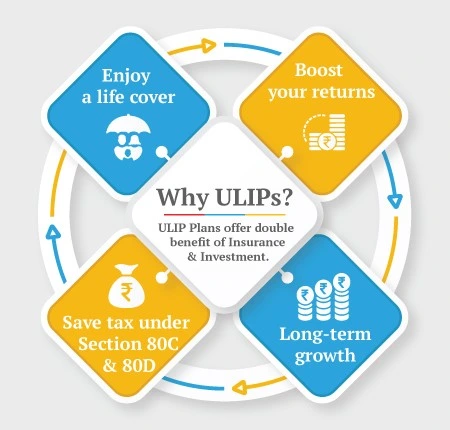
  3. Unit Linked Insurance Plans (ULIPs): ULIPs are versatile, long-term investment plans offered by life insurance companies. ULIPs mix the best of both investments and the basic insurance world to provide a flexible and managed investment solution.

    Here are the salient features of ULIP plans you should consider:
    • Invest in a mix of diversified equity, debt, and liquid funds
    • You can SIP into equity funds even if you are investing in a lump sum
    • You can switch between funds multiple times during the investment period without withdrawing money or paying tax
    • Manage your portfolio allocation with automatic strategies
    • Investment up to ₹2.5 lakhs p.a. in ULIPs, keep your ULIP maturity and withdrawals tax-free
    • You can withdraw the fund value partially after five years
    • You can avail of an 80C benefit on the invested money

Why Add Guaranteed Plans to Your Retirement Portfolio?

Other than the defined contribution pension plans, you can also avail defined benefit plans from life insurance companies. These are guaranteed pension plans which also provide premium protection features.

You can use these plans to secure a retirement life for your dependent spouse or other family members. The premium protection feature will ensure that the spouse receives the guaranteed benefit even after your demise during the contribution period.

Financial safety during retirement depends entirely on your decisions during the employment period. You should invest anywhere between 10 to 30% of your income in defined contributions and guaranteed retirement plans.

Diversifying your investment into guaranteed plans will ensure a minimum safety line for your pension. At the same time, defined contribution plans can replenish your wealth further with market-linked wealth growth.

trivia-img

Did You Know?

Under the old tax regime, NPS offers an extra ₹50,000 deduction under Section 80CCD(1B), over and above ₹1.5 lakh!
 

Source: ET

Retirement plan

Tax Benefits of Defined Benefit & Defined Contribution Plans

When planning for retirement, understanding the tax advantages of different retirement plans is crucial. Both defined benefit and defined contribution plans offer significant tax benefits, but they differ in how contributions, earnings, and withdrawals are taxed.

Tax Benefits of Defined Benefit Plans:

Defined benefit plans, often referred to as traditional pension plans, provide a guaranteed income after retirement. These plans offer several tax advantages:

  • Employer Contributions are Tax-deductible: Employers can deduct their contributions to the plan, reducing their taxable income

  • Tax-Deferred Growth: The funds in the pension plan grow tax-deferred until the retiree starts receiving benefits

  • Taxable Withdrawals: Upon retirement, payouts are taxed as ordinary income, but retirees often fall into a lower tax bracket, making the taxation more manageable

Tax Benefits of Defined Contribution Plans:

Defined contribution plans, such as the National Pension System (NPS) in India, provide tax benefits at different stages:

  • Tax-Deferred Contributions: Employees can contribute to these plans on a tax-deductible basis (subject to the applicable tax regime and limits), lowering their taxable income for the year

  • Employer Matching is Tax-free: If an employer offers matching contributions, those funds are not taxed until withdrawal

  • Tax-Free Growth: Investments in the plan grow tax-free, allowing compound interest to work more effectively

  • Tax-advantaged Withdrawals: Some plans allow tax-free withdrawals in retirement if conditions are met. In India, partial NPS withdrawals can be tax-exempt under specific conditions

Choosing the Right Plan for Maximum Tax Savings:

Both defined benefit and defined contribution plans offer tax advantages, but the right choice depends on your financial situation. If you prefer guaranteed income and higher employer-funded contributions, a defined benefit plan might be ideal. However, if you value flexibility, control over investments, and tax-deferred growth, a defined contribution plan is a great option.

Mistakes to Avoid When Choosing a Defined Benefit or Defined Contribution Plan

Selecting the right retirement plan, whether a defined benefit plan or a defined contribution plan, is crucial for financial security in your post-work years. However, many individuals and employers make common mistakes that can impact their retirement savings. Here are the key pitfalls to avoid when making your decision.

  • Failing to Assess Long-Term Financial Needs: One of the biggest mistakes is failing to consider long-term financial needs. Defined benefit plans provide a fixed pension, making them ideal for those seeking financial stability. In contrast, defined contribution plans depend on market performance and contributions, requiring a proactive savings approach. If you don’t evaluate your future expenses, you may end up with insufficient retirement funds.
  • Ignoring Employer Contributions and Matching: Many employees overlook employer contributions, particularly in defined-contribution plans, such as EPF and NPS.. Employers often match a percentage of your contributions, effectively giving you free money. Failing to contribute enough to maximise the employer match means leaving money on the table.
  • Not Understanding Investment Risks: With defined contribution plans, your retirement savings are invested in various assets. Many employees either take too much risk by investing aggressively or play it too safe, reducing their long-term growth potential. It's essential to strike a balance based on your risk tolerance and retirement timeline.
  • Overlooking Inflation’s Impact: Inflation erodes purchasing power over time, and many retirees underestimate its impact. While defined benefit plans may offer inflation-adjusted payouts, defined contribution plans depend on market returns. Failing to plan for inflation can leave you financially strained during retirement.
  • Not Factoring in Job Changes: If you frequently switch jobs, a defined contribution plan might be more flexible, as you can roll over funds into another retirement account. Defined benefit plans, on the other hand, often require long-term service for full benefits. Failing to consider your career trajectory can result in lost pension benefits.
  • Misjudging Plan Fees and Costs: Both types of plans have administrative costs. Defined contribution plans often include fund management fees that can eat into your returns over time. Failing to review these costs can significantly impact your retirement corpus.
  • Delaying Contributions: Procrastination is a major mistake in retirement planning. The earlier you start, the more time your money has to grow due to compounding interest. Waiting too long to contribute to a defined contribution plan or relying solely on a defined benefit plan, without additional savings, can lead to financial gaps in retirement.

Wrapping Up

Financial safety during retirement depends largely on your decisions during the employment period. It’s important to divide your savings thoughtfully, spreading them strategically across defined contribution options and guaranteed retirement plans to build stability and growth.

Diversifying your investment into guaranteed plans will ensure a minimum safety line for your pension. At the same time, a defined contribution pension scheme can replenish your wealth further with market-linked returns.

Glossary

  1. Gratuity: A lump sum paid to employees based on tenure and last salary, upon retirement or resignation
  2. Voluntary Retirement Scheme: An option allowing employees to retire early with benefits before the standard retirement age
  3. Employee Provident Fund: A retirement savings plan where both employer and employee contribute a percentage of salary
  4. Voluntary Provident Fund: An extension of EPF that allows employees to voluntarily contribute beyond the mandatory contribution
  5. National Pension Scheme: A defined contribution retirement savings plan where contributions are invested in market-linked securities.
glossary-img
Uncertain About Insurance

FAQs

The Employee Provident Fund (EPF) is not a defined benefit plan. Rather, it is a defined contribution plan in which both the employee and employer make contributions based on a fixed percentage of the employee's salary. The actual benefit depends upon the contributions made and the interest accrued over time.


Defined benefit plans can be disadvantageous due to the financial burden they place on employers. It potentially affects their liquidity and financial stability. Additionally, employees have limited control over their retirement benefits, as these are predetermined and not influenced by individual contributions or investment choices.


A defined benefit plan is a pension scheme in which retirees receive a predetermined amount based on factors such as salary history and years of service. Examples include traditional employer pensions and government pension plans.

Yes, gratuity is a defined benefit plan, as it provides a lump-sum payment to employees based on their tenure and last drawn salary upon retirement or resignation. The benefit amount is predetermined and calculated using a fixed formula set by the employer or government regulations.

A defined benefit is calculated by using a fixed formula, generally based on factors such as final salary, the number of years of service and your contribution rate. This ensures your retirement benefit remains stable and unaffected by market fluctuations, guaranteeing a consistent payout.

Usually, no. Most defined contribution plans do not guarantee returns, as the final benefit depends on contributions and market-linked or declared returns.

The difference between a defined benefit plan and a defined contribution plan is that a defined benefit plan offers a fixed payout, while a defined contribution plan’s retirement savings depend on contributions and investment performance.

The difference between DB and DC pension plans affects retirement planning because DB plans offer predictable income, while DC plans offer flexibility but require you to manage investment risk.

No. EPF is a defined contribution plan, while gratuity is a defined benefit plan. Defined contribution plans examples include EPF, NPS, and PPF.

Disclaimer - This article is issued in the general public interest and meant for general information purposes only. The views expressed in this blog are solely those of the writer and do not necessarily reflect the official policy or position of Canara HSBC Life Insurance Company Limited or any affiliated entity. We make no representations or warranties of any kind, express or implied, about the completeness, accuracy, reliability, suitability, or availability with respect to the blog or the information, products, services, or related graphics contained in the blog for any purpose. Any reliance you place on such information is therefore strictly at your own risk. You should consult with a qualified professional regarding your specific circumstances before taking any action based on the content provided herein.

Recent Blogs

GPF vs PPF: Differences, Benefits & Which is Better?
10 Feb '26
506 Views
7 minute read
Compare GPF vs PPF in terms of eligibility, interest rates, tax benefits, withdrawal rules, and which is better for retirement planning.
Read More
Retirement Plan
Unified Pension Scheme (UPS): Benefits, Returns & Eligibility
09 Feb '26
18 Views
8 minute read
Explore UPS pension scheme benefits, eligibility rules, returns, and how it compares with NPS and other retirement plans in India.
Read More
Retirement Plan
Bucket Strategy for Retirement: Meaning & How It Works
09 Feb '26
617 Views
8 minute read
Understand the bucket strategy for retirement planning and how it helps manage risk, income stability, and long-term wealth growth.
Read More
Retirement Plan
Pros and Cons of Retirement and Pension Plans in India
30 Jan '26
2056 Views
10 minute read
Retirement plans ensure regular income after retirement. Know the pros & cons to choose the best plan for a financially stable, stress-free retired life.
Read More
Retirement Plan
Is a PF Account Enough for Retirement Planning in India?
15 Jan '26
3187 Views
10 minute read
Already have a PF account? Learn why a retirement plan is still essential for complete financial security and stress-free life after retirement.
Read More
Retirement Plan
What is Superannuation? Types and Tax Benefits
07 Jan '26
706 Views
9 minute read
A superannuation benefit is a type of benefit that is paid to the employees by their employers as a pension benefit. Learn what superannuation is and how it works.
Read More
Retirement Plan
What is Family Pension? Everything You Need to Know
05 Jan '26
1830 Views
10 minute read
Family Pension is a government scheme for central government employees. Learn its meaning, eligibility criteria, and how it works with Canara HSBC Life Insurance.
Read More
Retirement Plan
Is NPS Tax Benefit Available in New Tax Regime? | NPS Deduction Rules
05 Jan '26
4226 Views
7 minute read
Is NPS tax benefit allowed in the new tax regime? Understand eligibility, Section 80CCD(2) deductions, and how NPS works for taxpayers.
Read More
Retirement Plan
What is Pension? Meaning, Types & Benefits Explained
04 Jan '26
3680 Views
12 minute read
A pension is a retirement fund contributed by the employer, employee, or both, with the employer covering the largest share. Learn more with Canara HSBC Life Insurance!
Read More
Retirement Plan

Retirement - Top Selling Plans

We bring you a collection of popular Canara HSBC life insurance plans. Forget the dusty brochures and endless offline visits! Dive into the features of our top-selling online insurance plans and buy the one that meets your goals and requirements. You and your wallet will be thankful in the future as we brighten up your financial future with these plans.