Insurance Claim - How does Insurance Claim Work

Insurance Claims Procedure & How to Avoid Rejections?

Understand what an insurance claim is, the insurance claim process, required documents, claim settlement, and tips to avoid claim rejection

Written by : Knowledge Centre Team

2026-07-29

917 Views

8 minutes read

Insurance claims are one of the most important aspects of an insurance policy, as they determine the financial support provided when a covered event occurs. A claim can be filed when the policyholder experiences a loss or event covered under the policy terms. The claim processing or claim settlement process begins when the policyholder or nominee notifies the insurer and submits a claim along with the required documents.

Every insurance claim is governed by and limited to the terms and conditions of the policy covering the contingency. Life insurance claims and health insurance claims processes differ a lot. While a health insurance claim may be processed on a cashless basis, a life insurance claim must undergo a lengthy, thorough verification process.

Read along to know what is an insurance claim, how the insurance claim process works, and the key steps involved in claim settlement in insurance.

Key Takeaways

  • Always read and understand the policy terms to avoid surprises during claim settlement

  • Keep nominee details updated to ensure a hassle-free claim process for your family

  • Disclose all relevant information honestly to prevent claim rejection

  • Choose policies with a high claim settlement ratio for better financial security

  • Use insurance as a financial safety net, not just a tax-saving tool

What is an Insurance Claim?

An insurance claim is a formal written request to the insurance company for the amount assured upon the occurrence of an event as specified in the insurance policy. It is compensation against losses covered under your insurance policy. As an insured or as a nominee, you are entitled to claim because of the premiums paid to the insurer in line with the terms and conditions of the policy document.

Insurance is a financial agreement in which you pay a fixed premium, and in return, the insurer provides financial cover for losses incurred. In the case of life insurance, the loss of income due to untimely demise is considered a loss for the grieving family and is compensated up to the sum assured. The purpose of the claim process is to initiate the assessment and settlement of benefits after a covered event, ensuring that eligible policyholders or nominees receive the financial support provided under the policy.

Secure Your Family’s Future with the Right Life Insurance Plan

Please enter correct name Please enter the Full name
Please enter valid mobile number Please enter Mobile Number
Please enter valid email Please enter Email

Enter OTP

An OTP has been sent to your mobile number

Didn’t receive OTP?

Application Status

Name

Date of Birth

Plan Name

Status

Unclaimed Amount of the Policyholder as on

Name of the policy holder

Policy No.

Address of the Policyholder as per records

Unclaimed Amount

Error

Sorry ! No records Found

.  Please use this ID for all future communications regarding this concern.

Request Registered

Thank You for submitting the response, will get back with you.

Thank you for your interest in our product. Our financial expert will connect with you shortly to help you choose the best plan.

How Does the Insurance Claim Process Work?

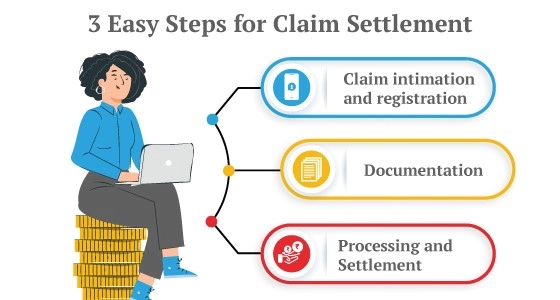
Insurance claims across the policies follow a similar process, except for a few steps where claim processing can be faster. The usual procedure includes the following:

  • Report the unfortunate event to the insurer. The event should be the one covered in the policy. For example, death cannot be reported to a health insurer.

  • Receive and file the claim form along with all the relevant documents.

  • Submit the supporting documents to strengthen your claim.

  • After verifying the documents, the insurer processes the claim and may approve it, seek additional documents, or reject it based on the policy provisions.

  • If the claim is approved, the insurer pays the benefits offered in the policy.

  • The claim settlement may include a lump sum payment, regular income, or a mix of both, as selected by the policyholder in the policy.

Claim processing times may vary by insurance company. Life insurance claims may take anywhere from one working day to 30 days to process. In health insurance, eligible cashless claims at network hospitals are often settled directly with the hospital upon approval. This process, known as cashless claim settlement, reduces the need for the policyholder to pay eligible medical expenses upfront, except for non-covered costs. Reimbursement claims, however, are settled after the insurer verifies the submitted documents.

Documents Required for a Life Insurance Claim

In the case of life insurance, the nominee should register by submitting a death claim form along with identity and address proofs at the nearest branch. Once the claim is registered, the insurer would require a physician’s statement along with certificates from all the hospitals where the insured was treated for the illness that ultimately caused his/her death. A certificate from the insured’s employer may also be requested.

The following documents, along with your claim form, are mandatory for filing a death claim:

  • Original policy documents

  • Original/attested copy of the death certificate issued by the local municipal authority

  • Death claim application form (Form C)

  • NEFT mandate form attested by bank authorities, along with a cancelled cheque or bank account passbook

  • Nominee's photo identity proof, such as a copy of a passport, PAN card, Voter identity card, Aadhaar (UID) card, etc.

You may have to submit additional documents related to the cause of death. For health or mediclaim policies, the identity and address proofs of the insured have to be submitted along with copies of investigation reports, discharge summary, claim form, and hospital certificate.

How to Check a Life Insurer’s Claim Experience?

When selecting a life insurer, it is equally important to assess how smoothly and efficiently the insurer manages the claims process. A customer-centric insurer typically offers a transparent claims process, clear communication, and dedicated support to assist policyholders and nominees throughout the claim journey.

Before purchasing a policy, consider evaluating the insurer's claim experience by looking at the following factors:

  • Claim Settlement Ratio (CSR): This indicates the percentage of claims settled by the insurer during a financial year. While a higher ratio generally reflects consistent claim settlements, it should be considered alongside other factors. For example, at Canara HSBC Life Insurance, this ratio currently stands at 99.52%^ for the FY 2025-26.

  • Average Claim Settlement Time: Faster claim processing can provide timely financial support to beneficiaries. Check whether the insurer publishes its average claim settlement timelines.

  • Ease of Filing a Claim: Look for insurers that offer multiple claim registration channels, such as online portals, mobile apps, branch offices, and customer helplines.

  • Customer Support: Responsive customer service and timely updates throughout the claims process can make the experience much smoother for policyholders and nominees.

  • Grievance Redressal Mechanism: A well-defined grievance resolution process demonstrates the insurer's commitment to addressing customer concerns efficiently.

Evaluating these factors together provides a more balanced view of an insurer's claim experience than relying on any single metric alone. This can help you choose an insurer that not only offers suitable coverage but also provides dependable support when it matters most.

How to Avoid Life Insurance Claim Rejection?

Most life insurance claims are settled smoothly when the policyholder has provided accurate information and the claim complies with the policy terms. Here are a few pointers to keep in mind to avoid rejection of claims:

  • Don’t Sign Up in a Haste: As the proverb goes, “Buy life insurance when you don’t need it, because when you need it, you may not get one.” You may opt for a life insurance policy during your heyday. However, if you have signed up in haste without thinking it through, the deal may cost you dearly when you or your family need the money most.

    Before buying a policy, read the terms and conditions carefully, especially the exclusions, waiting periods (if any), and claim requirements. Making an informed decision today can help ensure your loved ones receive the intended financial protection in the future.
  • Don’t Conceal Information: On the other hand, you must also provide accurate details and disclose all information in utmost honesty and sincerity while availing yourself of a life insurance policy. Non-disclosure or misrepresentation of material facts may affect claim settlement if it is found to be relevant under the policy terms.
  • Pay Premiums on Time: Life insurance premiums can be paid annually, half-yearly, quarterly, or monthly. Paying premiums on time helps keep your policy active and ensures uninterrupted coverage. But non-payment of premiums will nullify the policy and make it inactive. There could be grace periods or options to revive policies within some stipulated time frame.

    Any mishap that occurs when the policy is inactive may not be covered by the insurer. If the policy lapses due to non-payment of premiums, your insurance coverage may cease, which could affect the claim benefits available under the policy.
  • Nominee Details: Although the insurer will ask you to enter nominee details, you must ensure they are accurate. The name and contact details of the nominee should match those on a legally valid form of identification. Updating nominee details whenever there is a change can reduce the burden on the family if a claim is needed.
  • Form Filling: Convenience should not lure you into letting a salesperson or anyone else fill out the form on your behalf. Even if someone assists you in completing the form, you remain responsible for the information provided. Taking the time to verify every detail can help prevent issues during claim settlement.
  • Say “Yes” to All Medical Tests: Agreeing to the medical screenings requested by a prospective insurer is a smart move, primarily because the insurance company covers the entire cost, offering you a free health assessment. More importantly, these tests establish an official, transparent baseline of your health at the time of policy issuance, drastically reducing the likelihood of future claim disputes over "undisclosed conditions." Because the insurer orders and evaluates these results before approving your coverage, they cannot later reject a legitimate claim by alleging you hid a health issue that these very tests were designed to uncover.

    Learn if you can buy a life insurance policy without a medical exam in India.

Life Insurance Claim Vs. Other Insurance Claims

Life insurance claims generally fall into two categories: maturity claims and death claims.

Not all life insurance policies offer maturity benefits. For policies that do, the insurer typically notifies the policyholder before the policy matures and provides instructions for submitting the required documents. Once the verification is complete, the maturity proceeds are credited to the registered bank account.

In the event of the insured's death, the nominee must submit the claim form along with the required documents. After verifying the claim, the insurer disburses the policy benefits in accordance with the policy terms and conditions.

Mediclaim works a little differently. The insured can opt for cashless payments when hospitalisation is pre-planned, thereby simplifying the process of paying and then claiming. The insurance company conducts due diligence on the treatment based on the details provided by the hospital and pays the hospital directly.

Motor insurance may cover both the damage claim for the insured vehicle and a third-party claim when someone else is injured or their property is damaged. Motor insurance claims may require copies of police complaints, surveyor reports, etc., to be enclosed with the claim form.

Insurance policies are a “must-have”, and there is no second thought to it. However, when you select a policy from a plethora of options, choose one that gives you peace of mind. Your family should not feel stressed out at the time of a claim, should that need arise. A high claim settlement ratio indicates strong underwriting guidelines and exemplary customer focus.


Basis of Differentiation

Life Insurance Claims

Other Insurance Claims (Health, Motor, Property, etc.)

Purpose of the Claim

Provides financial benefits to the insured or nominee after a covered event, such as death, maturity, or survival, as per the policy terms

Compensates for financial losses arising from covered events, such as hospitalisation, vehicle damage, or property loss.

Insurance Claim Amount

Usually pays a fixed policy benefit, such as the sum assured or maturity benefit

Based on the actual covered expenses or losses, up to the sum insured and subject to policy terms

Who Can File the Claim?

The policyholder (for maturity benefits) or the nominee (for death claims)

Generally filed by the policyholder, although cashless claims may be settled directly with the hospital or service provider

Basis of Settlement

The payout is determined by the policy benefits and is generally not linked to the actual financial loss incurred

The insurer assesses the actual covered loss or expense before settling the claim

Do you know

Did You Know?

IRDAI has extended the free-look period to 30 days, giving policyholders more time to review and return an unsuitable life insurance policy for a refund
 

Source: ET

Introducing Promise4Wealth

Common Insurance Claim Myths & Misconceptions

Life Insurance or health insurance claims are essential for covering financial losses in the event of unexpected events. However, certain myths and misconceptions create hurdles for individuals to make the right decision. Let’s break down some misconceptions in detail:

  • Claims Process is Complex: It is common to believe that the insurance claims process is lengthy and complex, but the reality is quite different. With the help of advanced technology and customer support, many insurers have streamlined their claims processes. Online claim filing and efficient customer support systems have reduced the claim processing time and complexity.

    To streamline the claims process, insurers should provide regular updates and transparent communication to policyholders.
  • Claim Settlements Reduced the Policy Benefits: There is another misconception that once the policyholder applies for the claim, their policy benefits, sum assured, will be reduced. The reality depends on its terms and conditions. For instance, in the case of health insurance, the sum assured is reinstated in the next policy year. Policyholders should review their policy terms to clarify how the claim will be settled. 
  • Claims Get Rejected Unfairly: Some policyholders complain about their claim rejections, but the true picture is not known. Claims are usually rejected for various reasons, such as non-disclosure of critical information, policy coverage issues, and discrepancies in the application process. To avoid such scenarios, policyholders should provide accurate information and read the policy documents very carefully.
  • Small Claims Aren’t Worth It: Many policyholders have the misconception that small claims are useless and might affect future premiums. The primary goal of insurance is to provide financial protection, no matter the size of the claim. In an emergency, failing to file a claim may lead to financial setbacks.

    Keep in mind that insurance acts as a financial safeguard against financial setbacks, big or small. Considering policy for any valid claim is a great financial decision.

Wrapping Up

Insurance provides more than just monetary benefits; it provides stability. It reduces danger, calms anxiety, and gives you the confidence to face the uncertain future. Gaining benefits from any insurance policy can be easier with a clear understanding of how to submit a claim. Invest in insurance for your resilience and peace of mind in addition to your belongings.

Glossary

  1. Nominee: A person chosen by the policyholder to receive the insurance benefits if the insured passes away
  2. Claim Settlement Ratio (CSR): The percentage of claims an insurer settles out of the total claims received during a financial year
  3. Maturity Benefit: The amount paid to the policyholder when a life insurance policy completes its policy term
  4. Underwriting: The process of evaluating risk and setting premiums before issuing an insurance policy
  5. Grace Period: The extra time allowed after a premium due date to pay without immediately losing insurance coverage
Glossary book
Uncertain About Insurance

FAQs

In India, the following individuals are eligible to submit an insurance claim:

  • The assignee or nominee under the policy

  • Any close relative of the insured

  • The insurance agent who handles the policy

Gather important documents, such as the original policy, the death certificate detailing the cause of the accident, and pertinent records, such as the FIR. Send these papers to the branch together with a completed claim form. The insurance company then continues the verification procedure, closely reviewing information related to the accident.

If you require any clarification or help, you can contact representatives by emailing customerservice@canarahsbclife.in, visiting the closest Canara HSBC Life Insurance branch, or calling 18001030003/18001800003 (BSNL). 


Life insurance death claims are generally classified into the following types:

  • Natural Death Claim: Filed when the insured passes away due to natural causes, such as illness, disease, or age-related conditions, provided the policy terms are met.

  • Accidental Death Claim: Filed when the insured dies as a result of an accident. If the policy includes an Accidental Death Benefit Rider, the beneficiary may receive an additional payout, subject to the rider's terms and conditions.

  • Early Death Claim: A claim that arises when the insured passes away shortly after purchasing the policy. Such claims may undergo additional scrutiny by the insurer before settlement.

What is the step-by-step insurance claim process in life insurance?

The process differs depending on whether you are filing a maturity claim or a death claim. Here’s a closer look:
 

For a Maturity Claim (applicable only to life insurance policies that offer maturity benefits)
 

  • The insurer notifies the policyholder before the policy maturity date

  • The policyholder submits the required documents and bank details

  • The insurer verifies the documents

  • Once the verification is complete, the maturity proceeds are credited to the registered bank account
     

For a Death Claim
 

  • The nominee informs the insurer about the policyholder's death

  • The nominee submits the claim form along with the required documents, such as the death certificate and identity proof

  • The insurer verifies the claim and may request additional documents if required

  • Once the claim is approved, the policy benefits are paid to the nominee as per the policy terms and conditions

The documents required generally include the original policy document, claim form, death certificate (for death claims), nominee's identity and address proof, bank account details, and any additional documents requested by the insurer based on the nature of the claim.

If all the required documents are submitted, insurers are generally expected to settle life insurance claims within 30 days. If the claim requires further investigation, it should be completed within the timelines prescribed by the applicable regulations, after which the claim is settled as per the policy terms.

A death claim is filed by the nominee after the insured's death to receive the policy benefits. A maturity claim is paid to the policyholder when the policy term ends, provided all policy conditions have been met.

A claim may be rejected if it does not meet the policy terms, involves material non-disclosure, or lacks the required documentation. To improve the chances of a smooth claim settlement process in insurance, provide accurate information when purchasing the policy and submit complete documents during the claim process.

Disclaimer - This article is issued in the general public interest and meant for general information purposes only. The views expressed in this blog are solely those of the writer and do not necessarily reflect the official policy or position of Canara HSBC Life Insurance Company Limited or any affiliated entity. We make no representations or warranties of any kind, express or implied, about the completeness, accuracy, reliability, suitability, or availability with respect to the blog or the information, products, services, or related graphics contained in the blog for any purpose. Any reliance you place on such information is therefore strictly at your own risk. You should consult with a qualified professional regarding your specific circumstances before taking any action based on the content provided herein.

Recent Blogs

Types Of Insurance Thum Desktop
What Questions are Asked on a Life Insurance Application?
07 Aug '26
1891 Views
5 minute read
Filling up a life insurance application form could be a daunting task if you are unaware of the detailed
Read More
Life Insurance
Types Of Insurance Thum Desktop
Is life insurance premium payout available if I die abroad?
07 Aug '26
884 Views
7 minute read
If you are a globetrotter, you must be wondering if the best term life insurance plan will pay out your premium if you die abroad or outside India.
Read More
Life Insurance
Should I consider buying a life insurance plan if I am single?
Should You Buy a Life Insurance Plan If You are Single?
07 Aug '26
1609 Views
7 minute read
Find out whether buying a life insurance plan as a single individual makes sense based on financial goals, liabilities, and future responsibilities.
Read More
Life Insurance
Types Of Insurance Thum Desktop
Is Life Insurance Premium Tax Deductible?
07 Aug '26
894 Views
6 minute read
Learn about Tax Deduction on Life Insurance Premiums. Understand Tax Benefits Offered and Maximize Income Tax Benefits with the Right Life Insurance Plans @Canara HSBC Life Insurance.
Read More
Life Insurance
Solvency Ratio in Insurance: Why It Matters Before Choosing an Insurer?
07 Aug '26
1511 Views
7 minute read
Understand solvency ratio in life insurance and how it reflects an insurer’s financial strength and ability to meet claim obligations.
Read More
Life Insurance
Types Of Insurance Thum Desktop
What Happens If You Stop Paying Life Insurance Premiums?
07 Aug '26
1035 Views
7 minute read
Learn the impact of missed premium payments including grace period rules, policy lapse, revival options and surrender benefits.
Read More
Life Insurance
What does Sum Assured Mean in a Life Insurance Policy?
07 Aug '26
741 Views
6 minute read
Secure your family's future with Canara HSBC Life Insurance. Compare and buy the best life insurance plans online at affordable premiums with an easy application process.
Read More
Life Insurance
Whole Life Insurance Sp Mobile
Who is a Beneficiary in a Life Insurance Policy?
07 Aug '26
995 Views
6 minute read
Who is a Beneficiary in a Life Insurance Policy? Learn its meaning, types, and importance to ensure your loved ones get the right financial support.
Read More
Life Insurance
Life Insurance Payout Delays Due To Incorrect Nominee Details Thum Desktop
Can Incorrect Nominee Details Cause Life Insurance Payout Delays?
07 Aug '26
2375 Views
6 minute read
Learn how incorrect nominee details can delay life insurance payouts and steps to ensure timely claims with accurate information.
Read More
Life Insurance

Life Insurance - Top Selling Plans

We bring you a collection of popular Canara HSBC life insurance plans. Forget the dusty brochures and endless offline visits! Dive into the features of our top-selling online insurance plans and buy the one that meets your goals and requirements. You and your wallet will be thankful in the future as we brighten up your financial future with these plans.

Family Shield: Enhanced Protection

iSelect Smart360 Term Plan
  • 3 Plan options
  • Life cover till 99 years
  • Steady income benefit
  • Block your premium at inception

Start Young, Pay Less, Stay Secured

Young Term Plan
  • Life cover till 99 years
  • Coverage for spouse
  • Block your premium rate
  • Covers 40 critical illness

Fixed Returns, Zero Risks & Worries

iSelect Guaranteed Future Plus
  • 4 Plan options
  • Life cover + Guaranteed benefits
  • Accidental death benefit
  • Premium protection cover