

types-of-electronic-fund-transfer-in-india

Different Types of Electronic Fund Transfers in India

A simple guide to various ETF types so you can choose the right investment mix for long-term growth and stability

2025-11-03

128 Views

6 minutes read

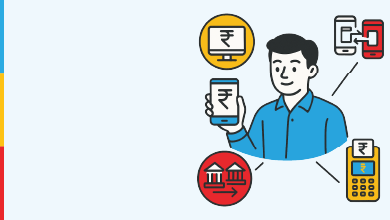
Electronic Fund Transfers (EFT) have become an important part of India’s digital payments ecosystem. It makes sending and receiving money faster, safer, and more convenient than using cash or cheques. Whether for daily payments, business transfers, bill settlements, or personal transactions, EFT has simplified the way we manage money. As banking becomes more digital, understanding the different EFT methods helps in choosing the right one for different financial needs.

Key Takeaways

  • Electronic Fund Transfer (EFT) enables secure, paperless transfer of money between bank accounts for payments, purchases, and insurance premium transactions

  • Using EFT for term insurance premium payments ensures convenience and timely payments without visiting a branch.

  • NACH/ECS is ideal for recurring premiums, helping prevent policy lapses by automating deductions on the due date

  • Insurers use EFT modes such as NEFT and IMPS for quick and seamless claim settlements

  • Choosing the right EFT mode depends on urgency, frequency, and comfort, ensuring smooth financial planning and uninterrupted life protection

What is Electronic Fund Transfer (EFT)?

Electronic Fund Transfer refers to the process of transferring money electronically from one bank account to another. These transfers are conducted through banking networks under the supervision of the Reserve Bank of India (RBI). EFT eliminates the need to physically visit a bank, issue cheques, or handle cash. It supports everything from bill payments and online shopping to salary transfers and personal remittances.

Types of Electronic Fund Transfers in India

Below are the major EFT systems used widely across indian banks and payment platforms.

National Electronic Funds Transfer (NEFT)

NEFT enables individuals and businesses to transfer funds to any bank account in India. It works throughout the day in regular settlement cycles. NEFT is suitable when instant payments are not required. There is no minimum transfer limit, allowing easy, secure, and bank-supported transfers for routine payments like bills, fees, and reimbursements.

Real-Time Gross Settlement (RTGS)

RTGS is designed for high-value transactions where funds need to be transferred quickly. Transfers happen individually in real time, meaning the money moves instantly from one bank to another. The minimum transfer amount through RTGS is ₹2 lakhs. It is preferred for urgent business payments, property transactions, or large transfers. It offers high security and ensures immediate confirmation of settlement.

Immediate Payment Service (IMPS)

IMPS allows instant electronic money transfer at any time, including weekends and holidays. Transfers can be made through mobile banking, internet banking, or payment apps. It is useful for emergency payments or last-minute transactions. It is commonly used for small to medium-value payments between individuals, making daily transactions faster and convenient.

Unified Payments Interface (UPI)

UPI has changed the way India makes payments by allowing transfers through mobile apps. It supports quick payments by scanning QR codes or selecting contacts. UPI is widely used for shopping, fuel payments, utility bills, and peer-to-peer transfers. It offers unmatched ease of use and has driven India’s move toward cashless payments.

Electronic Clearing Service (ECS) 

ECS is used for recurring and bulk transfers such as salary credits, loan EMIs, mutual fund SIP, or utility bill payments. Once a mandate is set, the bank automatically deducts and transfers funds on scheduled dates. This eliminates the need for reminders or manual payments every month. ECS is suited for long-term commitments and ensures payments are always made on time.

Aadhaar Enabled Payment System (AePS)

AePS enables individuals to conduct financial transactions using their Aadhaar number and undergo biometric verification. It is especially useful in rural areas where access to traditional banking infrastructure is limited. With AePS, people can deposit, withdraw, and send money even without a smartphone or ATM card. It supports financial inclusion by enabling banking services through local micro-ATM agents.

National Automated Clearing House (NACH)

NACH is an enhanced and more efficient version of ECS, specifically designed for handling large-scale recurring transactions. It is commonly used by companies, government bodies, and financial institutions for distributing salaries, pensions, subsidies, and collecting EMIs or insurance premiums. NACH ensures timely and organised payments with minimal manual effort, making it a reliable system for both businesses and individuals.

Must read: Premium payment options in Term Insurance

trivia-img

Did You Know?

IRDAI proposals enabling insurers to increase ETF (gold and real estate) investments for ULIPs and term products
 

Source: Money Control

iSelect Guaranteed Future Plus

Advantages of Electronic Fund Transfers

Electronic Fund Transfer offer several practical benefits that make payments smoother and financial management more efficient.

Here’s how EFT systems add value to day-to-day transactions:

  • Convenience in Daily Transactions: EFT allows users to make payments and transfers without visiting a bank or handling cash. Whether you're paying bills, sending money to family, or making online purchases, funds can be moved quickly using mobile apps or internet banking. This saves time and reduces the hassle associated with traditional banking processes.
  • Secure and Reliable Transfers: EFT systems use multiple security layers such as PINs, OTPs, and encryption. This ensures financial information stays protected from fraud or unauthorised access. Transactions are tracked and documented, and both sender and receiver have clarity and proof of payment, making it safer than cash-based transfers.
  • Timely and Scheduled Payments: EFT enables automatic and scheduled transfers, helping ensure payments are made on time. This is especially useful for rent, EMIs, insurance premiums, school fees, and SIP investments. The auto-debit facility reduces the risk of missing due dates and protects against penalties, ensuring financial commitments stay on track.
  • Faster Claim Settlements & Payouts: For insurance and employee benefits, EFT allows quick credit of funds to the recipient’s bank account. This is especially important during claim settlements, providing timely financial support in urgent situations. The direct transfer eliminates delays caused by paperwork or cheque clearance processes.
  • Better Financial Planning and Record Keeping: EFT provides clear records of all payments, transfers, and receipts, which can be easily accessed through bank statements or apps. This improves budgeting, simplifies tax calculations, and reduces complexity in financial tracking. The transparency helps users understand where money is spent and plan expenses more efficiently.

How to Choose the Right EFT Method?

Choosing the right transfer method depends on your payment purpose, urgency, and convenience. The points below will help you make an informed decision:

  1. Consider Transaction Amount and Frequency: For high-value payments, such as property transactions or large investments, RTGS is more suitable because it offers instant and secure settlement. For small or frequent transactions, UPI and IMPS are faster and simpler. Matching the electronic money transfer service to your payment size ensures cost-efficiency and convenience.
  2. Match Payment Timing Needs: If you need immediate transfers, IMPS or UPI is a great choice. When timing is flexible and speed is not urgent, NEFT is a reliable option. For recurring payments like EMIs or monthly premiums, NACH or ECS ensures automatic deduction, preventing missed deadlines without manual involvement.
  3. Evaluate Accessibility and Connectivity: For people in urban areas with smartphones, UPI and mobile apps offer quick and hassle-free payments. In rural or low-connectivity regions, AePS provides easy banking through Aadhaar authentication without internet access. Choosing based on available devices and network access ensures smooth transaction experiences.
  4. Check Charges and Convenience: Some EFT methods may have small charges depending on bank policies and transaction size. UPI is typically free, while RTGS and IMPS may have fees for larger transfers. It’s helpful to compare charges, transfer limits, and processing times across services to select the most cost-effective and convenient option.

Conclusion

Electronic Fund Transfers have made money movement in India faster, secure, and highly convenient. From everyday payments to recurring obligations like insurance premiums, EFT ensures seamless financial management. For term insurance policyholders, efficient payment methods also mean uninterrupted protection for their families.

If you're looking for a reliable term plan backed by easy payment options and smooth claim processes, we at Canara HSBC Life Insurance offer various plans that combine affordability, long-term protection, and flexible premium payment modes through secure EFT channels. 

Managing a life insurance account is now simpler, paperless, and always within your control.

Glossary

  1. EMI: A fixed monthly payment made to repay a loan over a set period
  2. SIP: Investing a small, fixed amount regularly to build wealth gradually
  3. Budgeting: Planning and managing your income and expenses to control spending
  4. Virtual Payment Address: A unique ID used to send and receive money securely
  5. Subsidies: Financial support from the government to reduce the cost of goods or services
glossary-img
Uncertain About Insurance

FAQs

Yes. EFT systems such as NEFT, IMPS, and UPI are encrypted and regulated by the Reserve Bank of India. When paying premiums to insurers like Canara HSBC Life Insurance, these channels ensure secure, traceable, and reliable transactions.

For recurring payments like term insurance premiums, setting up NACH/ECS is ideal. It automates your payments on the due date and prevents policy lapses due to missed deadlines.

Absolutely. Insurer transfers claim amounts directly to the beneficiary's bank account through NEFT or IMPS, ensuring faster and hassle-free settlements.

UPI and IMPS transactions are usually free on most platforms, while NEFT may be free or have minimal charges depending on the bank. Always check your bank’s fee policy for clarity.

You generally need the recipient’s bank account number, IFSC code, and account holder name. For UPI, only a VPA (Virtual Payment Address) may be required, making the process even simpler.

Disclaimer - This article is issued in the general public interest and meant for general information purposes only. The views expressed in this blog are solely those of the writer and do not necessarily reflect the official policy or position of Canara HSBC Life Insurance Company Limited or any affiliated entity. We make no representations or warranties of any kind, express or implied, about the completeness, accuracy, reliability, suitability, or availability with respect to the blog or the information, products, services, or related graphics contained in the blog for any purpose. Any reliance you place on such information is therefore strictly at your own risk. You should consult with a qualified professional regarding your specific circumstances before taking any action based on the content provided herein.

Financial Planning - Top Selling Plans

We bring you a collection of popular Canara HSBC life insurance plans. Forget the dusty brochures and endless offline visits! Dive into the features of our top-selling online insurance plans and buy the one that meets your goals and requirements. You and your wallet will be thankful in the future as we brighten up your financial future with these plans.

Recent Blogs

Why Should You Check Your CIBIL Score Regularly?
12 Jan '26
540 Views
5 minute read
Learn why checking your CIBIL score regularly helps improve loan approval chances, interest rates, and financial health. Simple guide for Indian consumers.
Read More
Personal Finance
Financial Literacy for Young Indians: Why Insurance Knowledge Matters?
11 Nov '25
7 Views
7 minute read
Empower your future! See why every young Indian should master financial literacy and insurance basics for lifelong financial success.
Read More
Personal Finance
Adoption in India: Legal Steps & Financial Planning Guide
03 Nov '25
612 Views
7 minute read
Understand adoption in India with key legal rules, CARA process, eligibility, and smart financial planning to secure your child’s future.
Read More
Personal Finance
What is a Trust Fund and How Does it Work?
24 Oct '25
372 Views
5 minute read
Learn what a trust fund is, how it works, and how it supports your long-term financial planning goals.
Read More
Personal Finance
Legacy Planning: Build Wealth for Future Generations
24 Oct '25
269 Views
5 minute read
Learn how to leave a lasting legacy and grow wealth for your next generation through smart financial planning.
Read More
Personal Finance
Financial Goals for Your Midlife | Smart Money Planning
09 Oct '25
557 Views
7 minute read
Discover the most important financial goals for your midlife, including wealth protection, retirement planning, insurance needs, and smart investment strategies.
Read More
Personal Finance
How to Build Long-Term Wealth Successfully?
11 Aug '25
330 Views
7 minute read
Uncover strategies for long-term investments and wealth planning to grow and protect your money over decades.
Read More
Personal Finance
How Do Policy Riders Impact Life Insurance Premiums?
18 July '25
136 Views
5 minute read
Understand how policy riders impact your life insurance costs. Choose the right riders to balance coverage and affordability.
Read More
Personal Finance
How to Align Your Financial Plan with Different Stages of Life?
30 June '25
515 Views
7 minute read
Learn how to adapt your financial plan for every stage of life, from starting your career to retirement. Secure your future with smart, age-based strategies.
Read More
Personal Finance