


how family pension works

How Family Pension Works After the Death of a Pensioner?

Know your rights and the steps to claim family pension in India after the pensioner's demise.

2025-06-04

1225 Views

8 minutes read

When setting up a family pension scheme, typical questions arise, such as whether the pension will stop after the pensioner's death and, if not,  who is eligible to receive it. Well, losing a loved one is never easy. When that loss comes unexpectedly, especially when it's the financial backbone of the family, it can leave many questions unanswered. Families often find themselves uncertain about what happens next. Therefore, it's important to understand how the family pension works after the unfortunate passing away of a pensioner. 

Let's explore everything you need to know about this important safety net for your loved ones.

Key Takeaways

  • A family pension provides financial support to dependents after the passing of a pensioner.
  • Eligible recipients include spouses, children, and sometimes dependent parents.
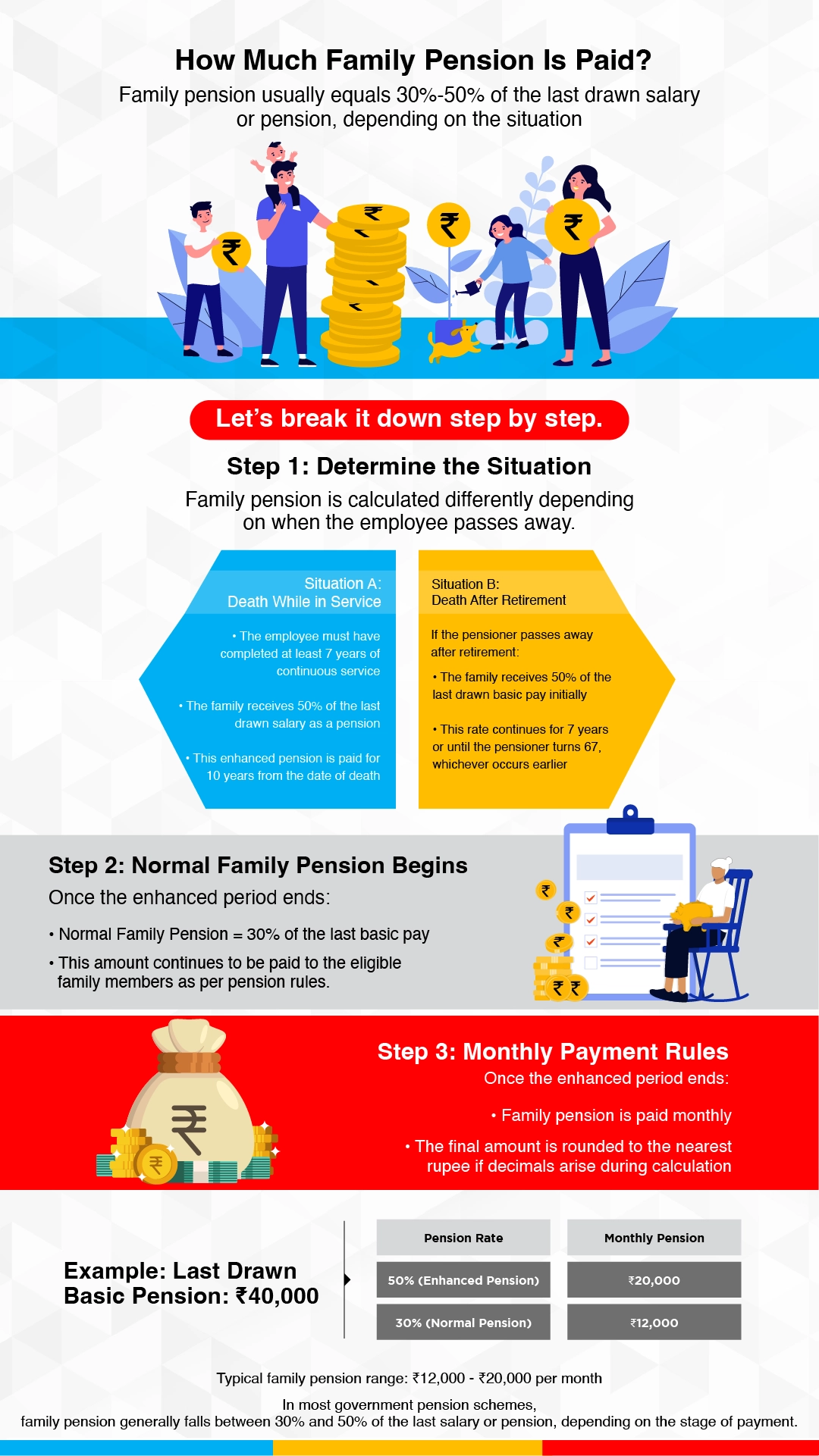
  • Family pension is typically 30% to 50% of the last drawn pension.
  • Timely documentation ensures a smooth pension transfer to nominees.
  • Children and dependent adults with disabilities may be eligible for a continued family pension.

What is a Family Pension?

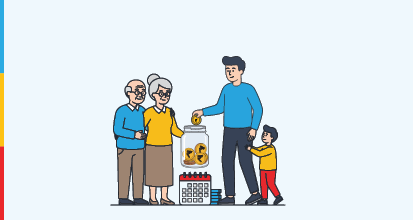
A family pension is a regular monthly income paid to the dependents of a deceased government or private-sector pensioner. It acts as a continuation of the pension, offering financial assistance to the surviving spouse, children, or, in some cases, dependent parents.

This benefit is particularly useful when the pensioner is the sole or primary earner in the family. It ensures the family has a dependable income stream, helping them manage day-to-day expenses even in the absence of the pensioner.

Who is Eligible to Receive a Family Pension?

Eligibility depends on the terms of the pension scheme or retirement plan that was active at the time of the pensioner's passing. Though each pension scheme outlines its own rules, reviewing the policy document or consulting the issuing body is important to confirm exact eligibility.

In most cases, the following people can claim family pension benefits:

  • Spouse (widow or widower): The most common recipient of a family pension is the surviving spouse. They typically receive the full or partial amount as specified under the plan or scheme.
  • Children: Unmarried or dependent children, typically up to the age of 25, are eligible to receive the family pension. In the case of children with disabilities, the benefit may continue beyond this age limit.
  • Dependent Parents: In the absence of a spouse or children, some pension schemes extend the benefit to the pensioner’s dependent parents.

Get Expert Guidance for Your Retirement & Investments

Please enter correct name Please enter the Full name
Please enter valid mobile number Please enter Mobile Number
Please enter valid email Please enter Email

Enter OTP

An OTP has been sent to your mobile number

Didn’t receive OTP?

Application Status

Name

Date of Birth

Plan Name

Status

Unclaimed Amount of the Policyholder as on

Name of the policy holder

Policy Holder Name

Policy No.

Policy Number

Address of the Policyholder as per records

Address

Unclaimed Amount

Unclaimed Amount
Error

Sorry ! No records Found

.  Please use this ID for all future communications regarding this concern.

Request Registered

Thank You for submitting the response, will get back with you.

How Much is Paid as Family Pension?

The amount depends on various factors and the specific rules of the scheme. In most government schemes, the pension is paid out in the following manner:

  • If a government employee dies while still in service, having completed at least 7 years of continuous service, the family pension will be 50% of the last drawn salary.
  • This enhanced rate of 50% will be paid for 10 years starting the day after the employee’s unexpected demise.
  • If the employee passes away after retirement, the same 50% rate will be paid for 7 years or until the deceased's 67th birthday, whichever is earlier.
  • After this period, the normal rate of family pension applies, which is 30% of the last basic pay.
  • The pension amount is calculated monthly and will be rounded up to the nearest whole rupee if it includes any decimals.

Here’s an example:

ComponentValue

Last Drawn Basic Pension

₹40,000

Percentage Payable to Family

30% to 50%

Monthly Family Pension

₹12,000 – ₹20,000


When Does the Family Start Receiving the Pension?

In most cases, the family pension commences on the day following the pensioner’s unfortunate passing. However, the actual disbursement may take a few weeks or months, depending on the documentation and approval process.

To avoid delays, it’s advisable to keep all necessary documents up to date and easily accessible. These typically include:

  • Death certificate of the pensioner.
  • Aadhaar and identity proofs of the nominee.
  • Bank account details.
  • Marriage or birth certificates (to prove relationships).
  • Proof of the pensioner's service and retirement details.

The Role of Retirement Plans in Protecting Families

While traditional pension schemes offer family benefits, not all families may be covered or sufficiently supported. This is where retirement plans offered by life insurance companies like ours come into play.

Modern retirement plans are designed not just for wealth accumulation during working years but also for structured payouts during post-retirement years. Incorporating such plans into your long-term planning provides an additional layer of protection for families, especially those with specific needs or limited access to government pensions.

Many of these plans include:

  • Return of premiums.
  • Guaranteed lifelong income.
  • Death benefits for surviving family members.
  • Optional riders for health-related emergencies.


What Happens to the Pension if the Nominee Passes Away?

If the primary nominee (such as the spouse) also passes away, the family pension may be transferred to the next eligible dependent, such as children or dependent parents, based on the scheme’s provisions.

If no eligible dependents are present, the pension typically ceases. That is why naming secondary nominees or having backup financial support through retirement plans is recommended.

trivia-img

Did You Know?

Family pension is taxed under ‘income from other sources’, but lump sum or commuted amounts may be tax-free in some cases.


Source: mytaxsupport

iSelect Guaranteed Future Plus

Family Pension Calculation After the Death of a Pensioner

Understanding family pension calculation after the death of a pensioner can give clarity on how much a family is entitled to receive. While most government pension systems follow a fixed percentage method, private pension and retirement schemes might offer lump sum amounts or a different structure of monthly income.

Factors that influence this calculation include:

  • The pensioner’s last drawn basic salary or pension.
  • Duration of service or contribution to the fund.
  • Type of plan (government or private).
  • Whether the pensioner passed during service or after retirement.

Tips to Ensure Smooth Pension Transfer

To make sure your family doesn't face roadblocks, here are a few things every pensioner and their family should do:

  • Maintain a nominee record in all pension-related documents.
  • Keep soft and hard copies of identity and address proofs.
  • Stay updated about changes in pension rules.
  • Consider investing in separate retirement plans to supplement existing pensions.
  • Ensure bank accounts are active and linked to the pension authority.

Final Thoughts

No one can fully prepare for loss, but we can certainly take steps to protect those we love. A family pension is more than just a payout; it is a lifeline for those left behind. Whether you are approaching retirement or planning for the years ahead, it is vital to understand the role of pension continuity in your financial planning.

Blending conventional pensions with retirement plans ensures a safety net that goes beyond the basics. It brings peace of mind to know that your family will have support not only emotionally but also financially. At Canara HSBC Life Insurance, we stand by you as your reliable insurance partner because, in that future preparation, there is dignity, care, and love that truly lasts.

Glossary

  1. Family Pension: Monthly payout to a pensioner's dependents after their death.
  2. Nominee: The person legally entitled to receive pension benefits after the pensioner’s death.
  3. Retirement Plans: Insurance or investment schemes offering income after retirement.
  4. Ordinary Pension: Basic family pension offered in regular cases of natural death.
  5. Enhanced Pension: A Higher family pension is offered if the pensioner dies in service or within 7 years.
glossary-img
Uncertain About Insurance

FAQs

Yes, retirement plans often provide higher flexibility and broader coverage. They can offer guaranteed monthly income, death benefits, or lump-sum payouts, making them a reliable financial support tool when traditional pensions are insufficient or unavailable.

The family pension typically begins on the day following the pensioner’s unfortunate demise. However, actual disbursement depends on the timely submission of documents, such as the death certificate, identity proofs, and bank details, by the eligible nominee or legal heir.

Yes, dependent children can receive family pension benefits. Unmarried children are generally eligible until age 25, while disabled children may receive it for life. The eligibility ends when the child becomes financially independent or marries.

If no nominee was named, the legal heir can apply for the family pension. They must submit legal heir certificates and required documents for verification. Approval may take longer in such cases, depending on the pension authority.

In private retirement plans, the calculation may differ. Some offer fixed monthly payouts, while others provide a lump sum or annuity to nominees. The payout is based on the plan type, sum assured, and whether riders have been added.

Disclaimer - This article is issued in the general public interest and meant for general information purposes only. The views expressed in this blog are solely those of the writer and do not necessarily reflect the official policy or position of Canara HSBC Life Insurance Company Limited or any affiliated entity. We make no representations or warranties of any kind, express or implied, about the completeness, accuracy, reliability, suitability, or availability with respect to the blog or the information, products, services, or related graphics contained in the blog for any purpose. Any reliance you place on such information is therefore strictly at your own risk. You should consult with a qualified professional regarding your specific circumstances before taking any action based on the content provided herein.

Retirement - Top Selling Plans

We bring you a collection of popular Canara HSBC life insurance plans. Forget the dusty brochures and endless offline visits! Dive into the features of our top-selling online insurance plans and buy the one that meets your goals and requirements. You and your wallet will be thankful in the future as we brighten up your financial future with these plans.

Recent Blogs