



Monthly Income Plan

What is a Monthly Income Plan and How is It Beneficial?

Explore what a monthly income plan is, its benefits & how it helps build a steady & reliable income stream for your future.

Written by : Knowledge Centre Team

2026-08-07

3896 Views

6 minutes read

Ever wondered what would happen to your family’s daily expenses if your main source of income suddenly came to a halt? Most people assume a standard term insurance policy is enough. However, a lump-sum payout doesn't always guarantee long-term stability. That’s where a Monthly Income Plan (MIP) comes in; it delivers a fixed, regular income to your family over a prolonged period, ensuring their day-to-day life remains uninterrupted.

A Monthly Income Plan (MIP) invests primarily in debt and equity securities with a mandate of producing cash flows and preserving capital. It aims to provide a steady stream of income in the form of dividend and interest payments. Therefore, it is typically attractive for retired persons or senior citizens who do not have other substantial monthly sources of income. Please note  that the term "monthly income plan" is also commonly used for life insurance income plans and government-backed income schemes that provide regular payouts after a specified period.

This blog explains “what is a monthly income scheme”, its benefits, available options, and how to choose the right one.

Key Takeaways

  • A monthly income plan helps create a steady income stream for future financial needs

  • Different options include mutual funds, insurance plans, bank deposits, and government schemes

  • Guaranteed income plans offer predictable payouts, while mutual fund MIPs are market-linked

  • Compare returns, risk, liquidity, taxation, and payout options before investing

  • Choose a plan that aligns with your financial goals, age, and income requirements

What is a Monthly Income Plan?

A monthly income plan is a financial product designed to provide a fixed or regular monthly payout after an investment or premium payment period.

Depending on the product you choose, the payout may come from:

  • Mutual fund returns

  • Life insurance income benefits

  • Bank deposits

  • Government-backed savings schemes

For individuals looking for a steady and predictable income stream, a monthly income plan can be a suitable financial solution. By paying premiums over a specified period, policyholders become eligible to receive a fixed monthly income, subject to the policy terms and conditions. These plans are commonly referred to as monthly guaranteed income plans, assured monthly income plans, or monthly pension plans.

Build Guaranteed Savings for Your Future Goals

Please enter correct name Please enter the Full name
Please enter valid mobile number Please enter Mobile Number
Please enter valid email Please enter Email

Enter OTP

An OTP has been sent to your mobile number

Didn’t receive OTP?

Application Status

Name

Date of Birth

Plan Name

Status

Unclaimed Amount of the Policyholder as on

Name of the policy holder

Policy No.

Address of the Policyholder as per records

Unclaimed Amount

Error

Sorry ! No records Found

.  Please use this ID for all future communications regarding this concern.

Request Registered

Thank You for submitting the response, will get back with you.

Thank you for your interest in our product. Our financial expert will connect with you shortly to help you choose the best plan.

What are the Different Types of Monthly Income Plans?

Different monthly income plans suit different financial goals. Some of the most common options include:

  1. Mutual Fund Monthly Income Plan (MIP): A Mutual Fund Monthly Income Plan invests primarily in debt and equity securities with a mandate of producing cash flows and preserving capital. There are two investment approaches:

    • Dividend-oriented monthly investment plan: The earnings generated by such plans are paid as dividends.
    • Growth-oriented monthly income plan: Through this plan, earnings accrued on the capital are added to the invested amount. It facilitates wealth creation along with corpus growth.

      Note: Mutual fund MIPs do not guarantee monthly payouts. Returns depend on market performance.
  2. Guaranteed Monthly Income Plan: Guaranteed monthly income plans are offered by life insurance companies. After paying premiums for a specified period, you receive guaranteed monthly payouts for a chosen duration while also enjoying life insurance coverage.

    These plans are suitable for people seeking predictable income with financial protection for their family.

  3. Bank Monthly Income Scheme: A bank's monthly income scheme generally refers to fixed deposits that pay interest monthly. These schemes provide stable income and are suitable for conservative investors looking for low-risk returns.

  4. Government Monthly Income Schemes: Government-backed options like the Post Office Monthly Income Scheme (POMIS) and Senior Citizens' Savings Scheme (SCSS) offer regular income with relatively low investment risk.

Features of Monthly Income Plan

MIPs generate higher returns than pure debt funds due to the equity presence. They have delivered returns of 10% to 12%, which is more than fixed deposits offer. However, the dividend payouts are at the discretion of the fund company and are not guaranteed.

Here are some interesting features of the monthly income plan: 

  • It delivers higher returns than other similar savings schemes and fixed deposits.

  • There is no limit on the investment for monthly income plans

  • You do not have to pay any entry load or processing charges

  • If applicable, the exit load is generally capped at 1% on early redemptions

  • Most plans allow you to redeem your investment easily, subject to the scheme's terms and conditions

Note: These features primarily apply to mutual fund MIPs and may vary by product.

Benefits of Monthly Income Plans

A monthly income plan can help you maintain financial stability by providing a predictable source of income. Depending on the type of plan you choose, it can also support long-term wealth creation and financial protection.

Some key benefits include:

  • Steady monthly income: Provides regular payouts to help manage recurring expenses and maintain your lifestyle

  • Financial security: Acts as a reliable backup income source during retirement, career breaks, or unforeseen situations

  • Supports retirement planning: Helps replace your regular salary with a consistent income after retirement

  • Choice of investment options: Investors can choose from bank deposits, government-backed schemes, mutual funds, or life insurance income plans based on their financial goals and risk appetite

  • Potential for wealth creation: Market-linked monthly income plans may offer capital appreciation over the long term, while guaranteed plans focus on stable payouts

Six Factors to Consider before Investing

Since the monthly income is from a debt-oriented mutual fund, the earnings are taxable. You have to pay tax on dividends and tax on capital gains. The following factors will help you know the things better before investing:

  • Financial goals: Identify whether you need regular income for short-term expenses or want to build wealth while generating income over the long term. Your objective will help determine the most suitable plan.

  • Payout options: Compare the available payout frequencies (monthly, quarterly, etc.) and choose a plan that aligns with your cash flow requirements and financial commitments.

  • Wealth-creation potential: Some monthly income plans focus on guaranteed payouts, while others invest in market-linked assets that may offer capital appreciation alongside regular income.

  • Tax implications: Understand how the payouts, interest, dividends, or capital gains are taxed, as tax treatment varies across different monthly income schemes and can impact your overall returns.

  • Risk appetite: Assess your willingness to take investment risk. Conservative investors may prefer bank deposits or government-backed schemes, while moderate-risk investors may consider market-linked options.

  • Current financial situation: Evaluate your income, existing savings, liabilities, emergency fund, and investment horizon before deciding how much you can comfortably invest in a monthly income plan.

Popular Monthly Income Schemes in India 

If you have a considerable amount of disposable income, investing it in savings schemes or monthly income plans that offer regular returns is a great idea. This ensures that your idle money starts paying out dividends or profits.

Below are some popular monthly schemes in India. 

  • Fixed Deposit: With monthly payout options, banks and financial institutions offer fixed deposit facilities. This type of deposit is mainly recommended for pensioners or senior citizens. Key features include:

    1. Fixed return

    2. Regular payouts

    3. Low risk of investment

    4. Allowance of partial withdrawal

    5. Loan against FD

Learn what is a fixed deposit plan and what are the benefits of including it in your investment plan.

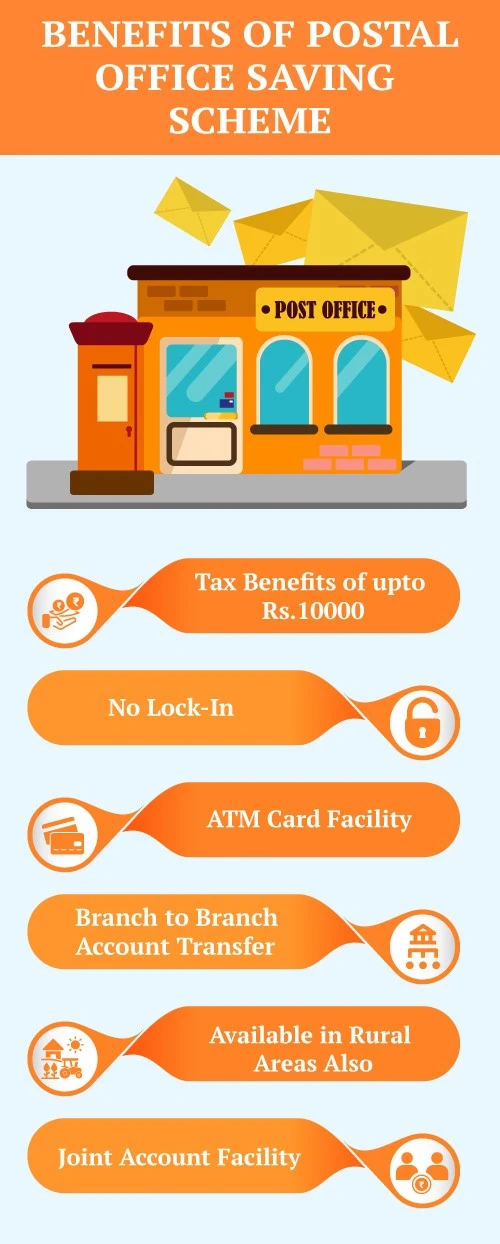
  • Post Office Monthly Income Scheme: The Post Office Monthly Income Scheme is a government-backed savings scheme designed for conservative investors seeking a regular monthly income with minimal risk. It offers a 5-year investment tenure and currently provides an interest rate of 7.4% per annum, payable monthly. Individuals can open a single or joint account, and a guardian can open an account on behalf of a minor. Key features include:

    1. Low-risk investment

    2. Low initial deposits

    3. Return is guaranteed

    4. Premature closure permitted after one year, subject to applicable conditions

    5. Nomination facility available

Do you know

Did You Know?

The Post Office Monthly Income Scheme (POMIS) allows joint accounts with up to three adults, with an equal share in the investment


Source: myScheme

P4W - Canara HSBC Life Insurance
  • Corporate Deposits: Numerous Non-Banking Financial Companies (NBFCs) and housing finance companies (HFCs) offer corporate deposits. These are similar to bank deposits, but the only difference is that you invest with a corporate entity, which is not as secure as a bank. It offers a high-interest rate and adds flexibility, which bank deposits don't provide. Before making investments in corporate deposits, you must check for the financial strength and credibility of the NBFC. Key features include:

    1. Higher interest rates than traditional bank fixed deposits

    2. Fixed investment tenure with predetermined returns

    3. Flexible interest payout options (monthly, quarterly, cumulative, etc.)

    4. Suitable for investors willing to take moderate credit risk

    5. Credit ratings help assess the safety and reliability of the issuer

      Learn more about post office monthly income scheme.

  • Senior Citizen Savings Scheme: Available to senior citizens aged 60 or above. This scheme provides them with the benefit of earning a higher return with minimal risk involvement. All a senior citizen has to do to invest in this scheme is to visit a certified bank or post office. Senior citizens can also invest the money received from retirement benefits in this scheme. The maximum investment limit is ₹ 30 lakh.

    Features of the senior citizen saving scheme:

    1. Safe investment option guaranteed by the Indian government
    2. Availability of nomination facility
    3. Can apply from any authorised bank or post office nearby

      Learn more about the Senior Citizen Saving Scheme.

Who Should Invest in a Monthly Income Plan? 

The majority of the MIP investors are retirees, homemakers, and those about to retire, as per the depositories' data. Monthly income plans are for individuals looking to park their savings to get a regular income. Also, first-time mutual fund investors can consider MIPs as a stepping stone to experience the market.

These plans may also suit:

  • Salaried individuals planning for retirement

  • Parents seeking predictable future income

  • Conservative investors

  • People looking for an additional monthly income source

A lot depends on the asset manager's expertise, as the percentage of equity allocation is at his discretion. The fund manager selects the companies (large-cap, mid-cap, small-cap, or micro-cap) to invest in a pooled investment, helping manage risk. These funds are moderate-risk bets, and they mostly invest in debt securities such as debentures, public securities, and corporate bonds.

Wrapping Up

A monthly income scheme is a smart way to enjoy financial stability and security. Depending on the family's needs and life goals, you may choose a monthly income plan or scheme. Choosing the best monthly scheme will provide future benefits for you and your family.

Before investing, compare different schemes based on factors such as returns, investment tenure, liquidity, associated risks, and tax implications. Diversifying your investments across suitable income-generating options can also help balance risk and improve financial stability. By making informed investment decisions, you can create a steady income stream and work towards achieving your long-term financial goals with greater confidence.

Glossary

  1. Monthly Income Plan (MIP): A financial product designed to provide regular monthly payouts after investment or premium payments
  2. Guaranteed Monthly Income Plan: A life insurance plan that offers fixed monthly income for a chosen period after the premium term
  3. Regular Income: A fixed amount received periodically to help meet ongoing financial expenses
  4. Payout: The money paid to an investor or policyholder at regular intervals, such as every month
  5. Post Office Monthly Income Scheme: A government-backed savings scheme that provides monthly interest income on eligible deposits
Glossary book
Uncertain About Insurance?

FAQs

A monthly income scheme in banks typically refers to a fixed deposit with a monthly interest payout. It offers predictable returns and is suitable for conservative investors. A mutual fund Monthly Income Plan (MIP), on the other hand, invests primarily in debt securities with limited equity exposure. Since it is market-linked, returns and payouts are not guaranteed and may fluctuate with fund performance.

A guaranteed monthly income plan is a life insurance product that provides fixed monthly payouts for a specified duration after the premium payment term. Along with providing a regular income stream, these plans also offer life insurance coverage, helping to secure your family's financial future.

The best monthly income scheme depends on your financial goals, risk appetite, and income requirements. Some popular options include bank fixed deposits with monthly payouts, the Post Office Monthly Income Scheme (POMIS), the Senior Citizens' Savings Scheme (SCSS), corporate fixed deposits, mutual fund MIPs, and guaranteed monthly income plans offered by life insurance companies.

The Post Office Monthly Income Scheme (POMIS) is a government-backed savings scheme that provides regular monthly interest on eligible deposits. It is suitable for individuals looking for a low-risk investment that generates a steady monthly income, especially retirees and conservative investors seeking predictable returns.

A Systematic Withdrawal Plan (SWP) allows investors to withdraw a fixed amount regularly from their mutual fund investments while the remaining corpus stays invested. Unlike a monthly income plan, an SWP does not guarantee returns, as withdrawals depend on the fund's performance and available balance. Which option is better depends on your investment goals, risk tolerance, and need for guaranteed versus market-linked income.

The tax treatment of a monthly income plan depends on the type of product. Interest earned from bank deposits and certain government schemes is generally taxable, whereas mutual funds and life insurance products are taxed under the applicable tax provisions. It is advisable to understand the tax implications before investing.

A monthly income plan may be suitable for retirees, senior citizens, homemakers, salaried individuals planning for retirement, or anyone looking to create a dependable, regular income plan to meet monthly expenses. The right choice depends on your financial objectives and risk appetite.

To choose the right monthly income plan, evaluate your financial goals, expected monthly income, investment horizon, liquidity needs, and risk tolerance. Also compare factors such as expected returns, payout options, tax implications, and whether you prefer a guaranteed monthly income plan or a market-linked investment before making a decision.

Disclaimer - This article is issued in the general public interest and meant for general information purposes only. The views expressed in this blog are solely those of the writer and do not necessarily reflect the official policy or position of Canara HSBC Life Insurance Company Limited or any affiliated entity. We make no representations or warranties of any kind, express or implied, about the completeness, accuracy, reliability, suitability, or availability with respect to the blog or the information, products, services, or related graphics contained in the blog for any purpose. Any reliance you place on such information is therefore strictly at your own risk. You should consult with a qualified professional regarding your specific circumstances before taking any action based on the content provided herein.

Recent Blogs

Why Do Some People Struggle To Save Money Thum Desktop

Why Saving Is Hard Despite Earning a High Income?

11 Aug '26
1977 Views
5 minute read
Earning well but still not saving enough? Discover the psychological and lifestyle factors that make saving money difficult, even with a high income, and how to fix it.
Read More
Saving Plan
Guaranteed Return Plan Thum Desktop

Importance of Savings: Key Benefits & Financial Security Tips

07 Aug '26
1688 Views
9 minute read
Discover the importance of savings, key benefits, and tips for financial security. Plan your future wisely with Canara HSBC Life Insurance.
Read More
Saving Plan
EPF and NPS: Everything You Need to Know

EPF vs NPS - Key Differences & Everything You Need to Know

07 Aug '26
1334 Views
9 minute read
Confused between EPF and NPS? Explore everything you need to know about both schemes, their benefits, differences & which one suits you best in India.
Read More
Saving Plan
Compound Interest Beat Inflation Thum Desktop

Why Do You Need Savings and Investment Plans in India?

07 Aug '26
1186 Views
6 minute read
Saving and Investment Plans help you plan your future expenses if you use your wealth. Learn why it's important, how they help achieve financial goals, build wealth, manage emergencies, and ensure long-term financial security.
Read More
Saving Plan
Compound Interest Beat Inflation Thum Desktop

Pradhan Mantri Jan Dhan Yojana: Eligibility & Benefits Explained

07 Aug '26
3862 Views
9 minute read
Pradhan Mantri Jan Dhan Yojana ensures financial inclusion by providing access to banking, insurance, pension, and credit for Indian citizens. Learn more!
Read More
Saving Plan
How To Balance Your Liquidity And Wealth Creation Thum Desktop

Impact of Missing Your Savings Plan Payment: Penalties & Risks

07 Aug '26
522 Views
8 minute read
Know what happens if you miss a savings plan premium. Understand penalties, impact on returns, and tips to avoid affecting your investment in 2025.
Read More
Saving Plan
How To Avoid Running Out Of Money In Retirement Thum Desktop

Savings Schemes Vs Bank FDs: Which one is Better in 2026?

07 Aug '26
524 Views
7 minute read
Small savings schemes or bank FDs in 2026? Compare safety, returns & tax benefits to choose the best investment option for long-term financial growth.
Read More
Saving Plan
Compound Interest Beat Inflation Thum Desktop

Can a Saving Plan Replace Your Income for Your Family?

06 Aug '26
1879 Views
6 minute read
Savings plans help you inculcate the habit of saving, accumulate wealth, have tax benefits and are a hassle-free option to grow your money.
Read More
Saving Plan
5 Features Of Guaranteed Savings Plan Thum Desktop

5 Best Features of a Guaranteed Savings Plan in 2026

06 Aug '26
2422 Views
7 minute read
Learn about the five key features of a guaranteed savings plan, including assured returns, safety of money, flexible payouts and how it helps with long-term savings goals.
Read More
Saving Plan

Savings and Investment Plans from Canara HSBC Life Insurance

We bring you a collection of popular Canara HSBC life insurance plans. Forget the dusty brochures and endless offline visits! Dive into the features of our top-selling online insurance plans and buy the one that meets your goals and requirements. You and your wallet will be thankful in the future as we brighten up your financial future with these plans.

Fixed Returns, Zero Risks & Worries

iSelect Guaranteed Future Plus
  • 4 Plan Options
  • Life cover + Guaranteed benefits
  • Accidental death benefit
  • Premium protection cover

Save, Dream, Plan. Live Peacefully

iSelect Guaranteed Future Plan
  • 4 plan options
  • Guaranteed Maturity Benefit
  • Premium Protection Cover
  • Tax Benefits