


a-guide-to-filing-itr-3-form

A Simple Guide to Filing ITR-3 Form in India

ITR-3 is used by self-employed individuals and professionals to report business or professional income while filing their income tax return.

Written by : Knowledge Centre Team

2025-10-02

901 Views

6 minutes read

No matter how smart they are, most people feel the stress and nervousness when it comes to filing taxes. The mere thought about the complexity of the process and cluelessness are enough to put one through a lot of tension. If you too are dwelling with such troubles and don’t know what to do, you have reached the right place.

In this article, you will get the complete guide of filing ITR 3 Form and all the answers to the whole slew of questions about the process, life insurance plans for saving on taxes to other ways you can cut on taxes. Read on to know more.

What is the ITR 3 Form?

Let’s begin with the basic definition to gain a proper understanding of the form. Every taxpayer in India has to file a form, known as ITR forms or Income Tax Returns forms. These help in disclosing information related to their income and the applicable tax to the Income Tax Department.

Now, there are around seven types of ITR forms ranging from ITR 1 to ITR 7 form. Depending on their eligibility, people choose the form for filing taxes.

ITR 3 form applies to those individuals of Hindu Undivided Family (HUF) who earn their income through their own business. However, this does not apply if they are a partner in a firm. Such people will be eligible for other ITR forms.

Maximize Your Tax Savings - Talk to an Expert

Please enter correct name Please enter the Full name
Please enter valid mobile number Please enter Mobile Number
Please enter valid email Please enter Email

Enter OTP

An OTP has been sent to your mobile number

Didn’t receive OTP?

Application Status

Name

Date of Birth

Plan Name

Status

Unclaimed Amount of the Policyholder as on

Name of the policy holder

Policy Holder Name

Policy No.

Policy Number

Address of the Policyholder as per records

Address

Unclaimed Amount

Unclaimed Amount
Error

Sorry ! No records Found

.  Please use this ID for all future communications regarding this concern.

Request Registered

Thank You for submitting the response, will get back with you.

Do You Need to File ITR-3 Form?

As mentioned above, the taxpayer should be an individual or HUF running their own business. Here are some other eligibility criteria you need to have to file ITR 3 form:

  • You are the director of a company or business.
  • Your residential status is resident and non-resident of India.
  • You are getting income from a pension.
  • You generate earnings from house property.
  • You have investments in unlisted equity shares.
  • You fall under the category of people whose income is chargeable to tax under “profits and gains of business or profession” like, interest, salary, bonus, commission or remuneration.

What is the Due Date for Filing ITR 3 Form?

Earlier, the due date for filing ITR 3 forms for the financial year 2025-26 was July 31, 2026. 

The new due date for Income Tax Return (ITR) filing for AY 2026-27 is November 30, 2026.

How to File ITR-3 Form?

There are two methods for filing ITR 3 form: online and offline. However, the government strictly advises taxpayers to choose the online option. There are exclusive cases where offline filing is allowed. Below, we have discussed both the options elaborately:

Online Method

For this method, you will need to visit the e-filing portal of the Income Tax Department. Once you click on the form, fill it completely, and verify the same with your digital signatures. You will get an acknowledgment receipt after the successful form filing on your registered email-ID.

In cases where digital signatures are not available, you can verify it using the Income Tax Return Verification form (ITR V). It is sent by the Income Tax department once you have filled the form online. After signing the form, you can send it back to the official address of the IT department.

Offline Method

Offline method for ITR 3 form is allowed if you are a super senior citizen, i.e., 80 years or more. This is also applicable if your income is lower than Rs 5 lakhs and you do not have to possess any income tax fund request.

Now, in case you are eligible for the offline method, you can submit the ITR 3 form in a barcoded or paper form. Just visit the official website of the Income Tax Department and download the form. Fill it properly and submit the form. In case you still need help, consult a CA.

How to Save Tax on Your Total Income?

Knowing about income tax is more than just a formality now. At times, it can help you save your hard-earned money as well. Yes, you read it right!

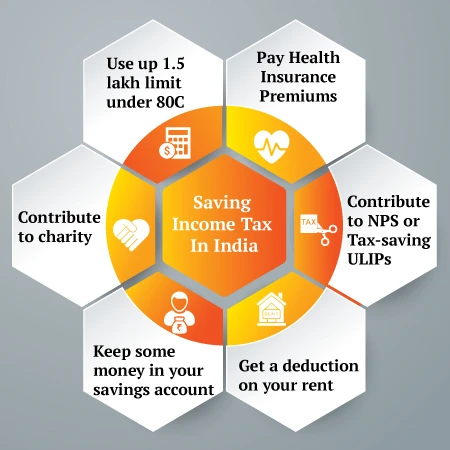
Various ways allow you to save your taxes and ensure better returns. Take a look at some of the best tax saving plans under the Income Tax Act:

  • Unit Linked Insurance Plans: Also known as ULIPs, this tax saving instrument is the best tax saving plan under Section 80C of Income Tax Act. You will be entitled to tax redemption of Rs. 1.5 lakh under this scheme on the money you invest in ULIPs.
  • Equity Linked Savings Scheme (ELSS): Another top method to save taxes, ELSS funds also fall under the 80C basket. They are known to generate the highest return with the shortest lock-in of three years.
  • Life Insurance: Just like ULIPs, life insurance plans also come under Section 80C. The premium is deductible under the income tax calculations.
  • Public Provident Fund (PPF): One of the safest tax saving plans, PPF is favourable for safe returns, taxability, and costs.
  • Sukanya Samriddhi Yojana: Backed by the Indian government, this scheme offers tax deductions under Section 80C up to the maximum amount of Rs 1.5 lakhs.

    Read Also - All You Need to Know Sukanya Samriddhi Yojana (SSY)

  • National Pension Scheme (NPS): As the name suggests, this scheme aims to provide financial security to investors on retirement. NPS also comes with a claim deduction of up to Rs. 1.5 Lakh on the total principal amount.

In addition to this, some other ways you can cut on taxes include:

  • Home Loans: In case you are an owner of a property and have taken a home loan, Section 24 of the Income Tax Act allows you to claim a deduction up to Rs. 2 lakhs on home loan interest.
  • Education Loan: The Section 80E of the Income Tax Act 1961 allows taxpayers to claim a deduction on education loans.
  • Charitable Donations: Under Section 80G of Income Tax Act, you can claim a tax deduction on the amount offered to NGOs and relief funds as donations.

Now that you know how to file your ITR 3 form and save taxes as well, make sure you put this learning into practice. This will help in planning your savings and have a financially stable future.

Disclaimer - This article is issued in the general public interest and meant for general information purposes only. The views expressed in this blog are solely those of the writer and do not necessarily reflect the official policy or position of Canara HSBC Life Insurance Company Limited or any affiliated entity. We make no representations or warranties of any kind, express or implied, about the completeness, accuracy, reliability, suitability, or availability with respect to the blog or the information, products, services, or related graphics contained in the blog for any purpose. Any reliance you place on such information is therefore strictly at your own risk. You should consult with a qualified professional regarding your specific circumstances before taking any action based on the content provided herein.

Recent Blogs

Will Budget 2026 Allow Joint Taxation for Married Couples?
29 Jan '26
8 Views
8 minute read
Find out what Budget 2026 may introduce on joint taxation for married couples, expected benefits, policy outlook, and how it may impact taxpayers in India.
Read More
Tax Saving
What is Income Tax Return (ITR)? Meaning & Filing Process of Filing ITR
21 Jan '26
4898 Views
10 minute read
Learn what an Income Tax Return (ITR) is, why filing your income tax return is important, and how to file your ITR online via the Income Tax Department. Documents, forms, steps, and FY 2026-27 details included.
Read More
Tax Saving
What Is Advance Tax? How to Calculate Advance Tax and Pay It Online
20 Jan '26
2513 Views
9 minute read
Understand advance tax under income tax, who should pay it, how advance tax is calculated, due dates, and online payment steps to avoid penalties.
Read More
Tax Saving
Importance of Taxes in India: Why Taxes Matter?
15 Jan '26
1609 Views
7 minute read
Understand the importance of taxes in India, how they support public services, economic growth, welfare schemes, and national development.
Read More
Tax Saving
What Is SGST? Meaning, Rates & Applicability Explained
15 Jan '26
627 Views
5 minute read
Learn what SGST means, its full form, tax rates, applicability, and how it works under the GST system for intra-state transactions.
Read More
Tax Saving
What is the GST Council? Role, Members & How It Works
14 Jan '26
537 Views
5 minute read
Understand what the GST Council is, its structure, powers, and how it decides GST rates, laws, and policies across India.
Read More
Tax Saving
Why is Your ITR Refund Delayed and What Can You Do?
13 Jan '26
535 Views
5 minute read
ITR refund delayed? Know the common reasons, timelines, and step-by-step actions to track, raise grievances, and speed up your income tax refund.
Read More
Tax Saving
80CCC: What is Deduction Under Section 80CCC?
11 Jan '26
1180 Views
6 minute read
What is Section 80CCC? How can you claim deductions under section 80CCC? Learn the eligibility criteria to claim a deduction under section 80CCC with a life insurance policy.
Read More
Tax Planning
How to Save Tax on Salary Above ₹15 Lakhs? | Tax Saving Guide 2026
10 Jan '26
4813 Views
14 minute read
Learn how to save tax on salary above ₹15 lakhs using effective tax saving options, deductions, exemptions, and smart income tax planning strategies
Read More
Tax Saving

Tax Savings - Top Selling Plans

We bring you a collection of popular Canara HSBC life insurance plans. Forget the dusty brochures and endless offline visits! Dive into the features of our top-selling online insurance plans and buy the one that meets your goals and requirements. You and your wallet will be thankful in the future as we brighten up your financial future with these plans.