


Changes in Term Insurance Premium - What Drives the Term Life Premiums Up or

What Drives Term Insurance Premiums Up and Down?

Learn what drives term insurance premium changes, including age, health, lifestyle, policy features, riders, and underwriting factors.

Written by : Knowledge Centre Team

2025-12-19

1012 Views

7 minutes read

When you buy a term insurance plan, you expect one thing above all else: predictability. A fixed premium, a fixed cover, and the peace of mind that your family is protected no matter what. But have you ever wondered what goes into calculating that premium or what could cause it to change?

A life Insurance plan is an amazing concept of risk management. It is a community product, and the larger the area of adaptation, the better it works. The cost of insurance is determined in multiple stages, and insurers create different classes of risk groups to price policies fairly.

Read on to understand the key factors that drive term insurance premiums up or down and what you can do to keep your costs in check.

Key Takeaways

  • Term insurance premiums are driven by pooled risk; when claims rise across a group, everyone in the new pool pays more

  • Re-insurer cost increases can raise premiums for all new policyholders, even if local claim rates remain unchanged

  • Existing policyholders are not affected by premium revisions; your rate stays locked from the day you buy

  • Age is the single biggest individual factor, buying early locks in a lower premium for the full policy term

  • Lifestyle habits like smoking directly increase your premium; quitting before purchase can lead to significant savings

How Does Term Insurance Pricing Work?

Think of term insurance like a shared protection pool. For example, consider a small town of 100 families. Flood destroys the houses of two families on average every year. The destruction is random, and any two houses may receive the damage.

The town can save its population from gradually going bankrupt by offering insurance to every family. If the repair cost for one house is ₹10,000, the 100 families can collect ₹20,000 and create a pool to assist the families in distress.

In this case, if in any year fewer than two houses are damaged, the premiums (contribution of each family) for the next year could be lower. And if more than two houses are destroyed in a year, the premiums will have to increase.

Term insurance works on the same principle as pooled risk, shared cost, and adjustments based on how that risk evolves.

Protect Your Family with Affordable Term Insurance

Please enter correct name Please enter the Full name
Please enter valid mobile number Please enter Mobile Number
Please enter valid email Please enter Email

Enter OTP

An OTP has been sent to your mobile number

Didn’t receive OTP?

Application Status

Name

Date of Birth

Plan Name

Status

Unclaimed Amount of the Policyholder as on

Name of the policy holder

Policy No.

Address of the Policyholder as per records

Unclaimed Amount

Error

Sorry ! No records Found

.  Please use this ID for all future communications regarding this concern.

Request Registered

Thank You for submitting the response, will get back with you.

Thank you for your interest in our product. Our financial expert will connect with you shortly to help you choose the best plan.

Reasons for Term Insurance Premium Increase

Life insurance premiums work on the principles of shared risk. Insurers worldwide are also connected through reinsurers, global companies that insure the risk of primary insurers. Together, there could be two reasons for a possible premium increase of a term insurance plan:

  • Increased Number of Claims at the Local Level: When the number of death claims rises within a region or demographic, the shared risk pool comes under pressure. Insurers may revise premiums upward to maintain the pool's sustainability. Factors like rising lifestyle diseases, increased mortality rates, or higher claim frequencies in specific age groups can trigger this.
  • Higher Re-Insurer Costs: Re-insurers operate globally and price risk based on worldwide mortality trends, catastrophic events, and actuarial data. When re-insurer rates rise due to factors such as global health risks, geopolitical instability, or large-scale disasters, primary insurers pass on a portion of this increased cost to policyholders through revised premiums.

    Any change in these two factors will affect the prices in general and for the whole group.

Does the Increase Affect Existing Policyholders?

The short answer is ‘no’: the increase will only affect new term insurance policies purchased after the revision takes effect. If you are paying a premium for an existing policy, it will remain the same throughout your policy term. However, when you buy a new term plan, the premiums would be as per the new rates.

That said, if you wish to increase your sum assured on an existing policy, the additional cover will typically be underwritten at current rates. Some insurers do offer loyalty benefits or preferential pricing to existing customers for such increments.

Many term plans today also offer a life-stage increment option, allowing you to request an increase in your life cover amount at key milestones, such as marriage, the birth of a child, or a home loan purchase, without having to buy an entirely new policy.

Do you know

Did You Know?

In 2025, AI underwriting cut term insurance approvals from days to seconds, with 40-60% approved instantly without medical tests.


Source: Business Standard

Young Term Plan - 1 Crore

How to Lower Your Term Insurance Premium?

Since the increase affects the new subscribers, you should know what will affect your individual life cover premium. 

Although a blanket increase in mortality premium will affect the price you pay for the life cover, you still need to consider the following factors:

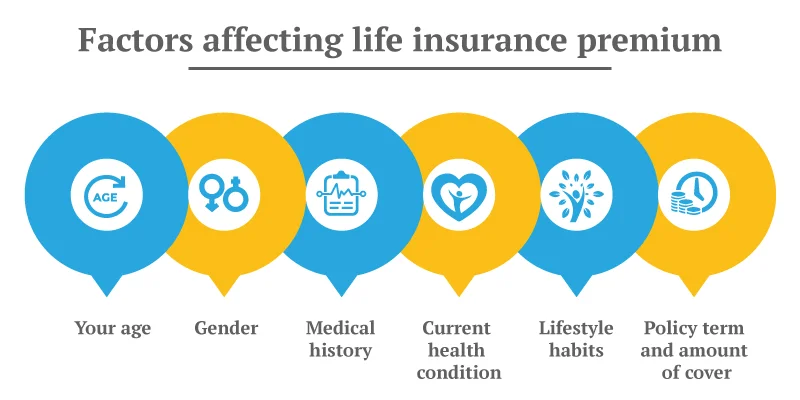
  • Age: The earlier you buy a term insurance plan, the lower your premium will be, and it stays locked at that rate for the entire policy term. Mortality risk increases with age, so every year you delay purchasing cover, you pay a higher price for the same sum assured. Buying young is the single most effective way to reduce your premium.
  • Health: Your current health profile plays a significant role in determining your premium. Insurers assess your medical history, pre-existing conditions, and key vitals like BMI and blood pressure at the time of purchase. While you cannot change past diagnoses, maintaining good health and disclosing your condition accurately ensures fair pricing, and in some cases, an extra premium loading may apply.
  • Lifestyle: Lifestyle habits like smoking and alcohol consumption are entirely within your control - and directly impact what you pay. Smokers, for instance, can pay significantly higher premiums than non-smokers for the same cover. If you want your life insurance premiums to be lower, maintaining a healthy, tobacco-free lifestyle before and at the time of purchase works strongly in your favour.

So, the only way to have a lower premium for your life cover is to buy it at a young age and maintain a healthy lifestyle.

Conclusion

Term insurance is one of the most cost-effective ways to secure your family's financial future, but like any risk-based product, its pricing is shaped by forces both within and beyond your control.

At a macro level, rising claims and re-insurer costs can push premiums upward for new policyholders. At an individual level, your age, health, and lifestyle are the three levers that determine what you personally pay.

The good part is that if you already hold a term policy, your premium remains protected, locked in at the rate you signed up for. And if you are yet to buy one, the message is simple: the sooner you act, the more you save.

Every year you delay is a year of higher risk and higher cost. Buying a term insurance plan early, staying healthy, and choosing the right cover amount are the most powerful steps you can take to ensure long-term, affordable protection for your loved ones.

Glossary

  1. Re-insurer: A global company that insures the risk of primary insurers, helping them manage large-scale or unexpected claim payouts
  2. Sum Assured: The fixed amount your nominee receives upon your death. Higher sum assured means greater cover and a higher premium.
  3. Mortality Risk: Insurers use the statistical likelihood of death within a given period to calculate how much premium you should pay
  4. Premium Loading: An additional charge applied to your base premium by the insurer to account for higher personal risk
  5. Life-Stage Increment: An option to increase your cover amount at key milestones like marriage, childbirth, or a home loan
Glossary book
Uncertain About Insurance?

FAQs

Yes. High-risk occupations such as mining, construction, or aviation are viewed as elevated risk by insurers. Policyholders in such professions may be charged a higher premium or face specific exclusions compared to those in desk-based roles.


Generally, yes. Statistically, women have a longer life expectancy than men, which translates to lower mortality risk. As a result, most insurers offer women slightly lower premiums for the same sum assured and policy term.

For standard level-term plans, the premium remains fixed throughout the policy term and does not decrease. However, switching from an offline to an online policy at renewal, or quitting smoking before purchase, can help you secure a lower rate on a new policy.

Yes, directly. A higher sum assured means greater financial risk for the insurer, which is reflected in a higher premium. However, many insurers offer marginal discounts on a per-thousand-rupee basis for very high sum assured amounts, making larger covers relatively cost-efficient.

Yes. Under the old tax regime, premiums paid towards a term insurance plan are eligible for a deduction of up to ₹1.5 lakh per year under Section 123 of the Income Tax Act, 2025 (previously Section 80C). The death benefit received by the nominee is also tax-exempt under Schedule II (Table S.No. 2) of the new Act.

Disclaimer - This article is issued in the general public interest and meant for general information purposes only. The views expressed in this blog are solely those of the writer and do not necessarily reflect the official policy or position of Canara HSBC Life Insurance Company Limited or any affiliated entity. We make no representations or warranties of any kind, express or implied, about the completeness, accuracy, reliability, suitability, or availability with respect to the blog or the information, products, services, or related graphics contained in the blog for any purpose. Any reliance you place on such information is therefore strictly at your own risk. You should consult with a qualified professional regarding your specific circumstances before taking any action based on the content provided herein.

Recent Blogs

Compare Whole Life Plan vs Term Life Cover
Do You Need a Whole Life Plan or Is Term Life Cover Enough?
09 July '26
1890 Views
5 minute read
Not sure whether whole life or term life cover is right for you? Get a complete comparison of both & find out which plan best suits your financial goals.
Read More
Term Insurance
protect-your-dependents-from-financial-liabilities
Does Term Insurance Cover Citizenship Change?
09 July '26
930 Views
8 minute read
Planning to move abroad or change your citizenship? Learn if your term insurance plan remains valid, the key conditions, and the factors you must know.
Read More
Term Insurance
2 Crore Term Insurance Plan
How Does a 2 Crore Term Insurance Plan Works?
08 July '26
901 Views
5 minute read
As per your needs, you can buy a term insurance plan online with high coverage of INR 1 crore, INR 2 crore, or even INR 5 crore. Learn how much does a 2 crore term life insurance plan cost.
Read More
Term Insurance
Single Premium Term Insurance
Single Premium Term Insurance - Understand the Benefits
08 July '26
893 Views
6 minute read
Single premium term insurance plans have been gaining popularity. Here is everything you need to know about single premium term insurance.
Read More
Term Insurance
Zero Cost Term Insurance
What is Zero Cost Term Insurance and How Does It Work?
08 July '26
1415 Views
11 minute read
Understand what zero cost term insurance means, how premium refund works, eligibility conditions, benefits, limitations, and whether this option suits long-term protection needs.
Read More
Term Insurance
Importance Of Taxes Thum Desktop
What is Policy Term in Insurance? Meaning & Importance
08 July '26
6252 Views
5 minute read
Policy term impacts your life insurance benefits and coverage. Terms vary across policies, so choose wisely. Understand its importance with Canara HSBC Life Insurance.
Read More
Term Insurance
Spouse Term Insurance Thum Desktop
Types of Term Insurance Plans in India
07 July '26
1596 Views
10 minute read
Learn about the different types of term insurance plans, including level term, increasing cover, decreasing cover and return of premium options, to choose what suits your needs.
Read More
Term Insurance
What Is an E-Term Insurance Plan?
What is an E-Term Insurance Plan? Benefits & Features Explained
18 Mar '26
95 Views
7 minute read
Learn what an e-term insurance plan is, how it works, and its benefits. Understand term insurance plans, features, and tips to choose the right cover.
Read More
Term Insurance
Term Insurance Exclusions
Term Insurance Exclusions - What Is Not Covered in Your Plan?
05 Mar '26
2699 Views
7 minute read
Before buying term insurance, know what it does not cover. A complete breakdown of key exclusions & limitations in term insurance plans across India.
Read More
Term Insurance

Term Insurance - Top Selling Plans

Canara HSBC Life Insurance offers online term insurance plans to secure your family financially in your absence.

Family Shield: Enhanced Protection

iSelect Smart360 Term Plan
  • 3 Plan options
  • Life cover till 99 years
  • Steady income benefit
  • Block your premium at inception

Start Young, Pay Less, Stay Secured

Young Term Plan
  • Life cover till 99 years
  • Coverage for spouse
  • Block your premium rate
  • Covers 40 critical illness

Family Shield: Enhanced Protection

Saral Jeevan Bima
  • Affordable prices
  • Multiple premium payment option
  • Get Tax benefits
  • Hassle-free purchase process