difference-between-financial-planning-and-wealth-management

Financial Planning vs Wealth Management: Key Differences

Explains how financial planning and wealth management differ in scope, services and suitability, helping individuals choose the right approach.

Written by : Knowledge Centre Team

2025-11-22

1292 Views

11 minutes read

Financial planning and wealth management are both a part of personal financial management. Financial planning and wealth management are both related to money, but they’re vastly different. Understanding the differences between these two different financial approaches are important. Knowing the difference between financial planning and wealth management will help you choose the right one.

What is Financial Planning?

Financial management helps you in budgeting your income and expenses. You can plan your investments, keep track of money spent and do course corrections when needed.

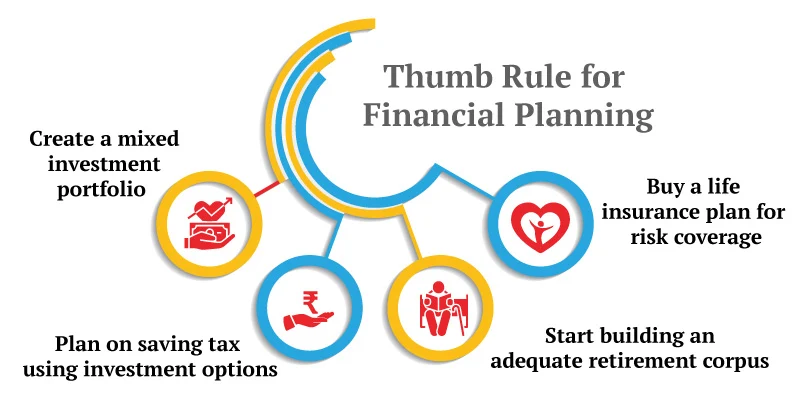
Financial planning is the process of developing a strategy for managing your financial goals. This typically involves taking into account factors such as

  • Your current financial situation,
  • Your future goals and
  • Resources you have available to help meet those goals.

Financial planning is often thought of as a one-time process. It is often linked to investing. You may implement financial planning to help meet long-term goals, such as retirement or include short-term goals, such as saving for a down payment on a home.
What is Wealth Management?

Wealth management is a term that is used to describe the management of assets to help you reach your financial goals. Wealth management strategies may include investing in stocks and bonds, real estate, or other types of assets.

It may also include financial advising and other advice designed to help you maximize your assets.

Financial Planning Vs Wealth Management

Many people confuse financial planning and wealth management . However, there are some key differences between the two disciplines. Financial planning is often a one-time process that is used to create a financial plan to help achieve short and long-term financial goals.

Financial PlanningWealth Management
You only need an income for financial planningYou need a large pool of funds for wealth management
Meet short- and long-term financial goalsManages assets to increase or preserve the value
Focuses on planningFocuses on execution
Manages cash flowCreates or preserves money and assets
Decisions based on financial goalsDecisions focus on wealth goals, i.e., creation or preservation
Gives a comprehensive roadmap for financial lifeFocuses on immediate portfolio strategy


Financial Planning Process

Financial planning revolves around how you will manage your finances and the process involves assessing your current financial situation, identifying your goals and then developing a strategy:

  • Cash Flow: Cash flow is the amount of money coming in and going out of your bank account in a given period. Ensure you have sufficient cash flows to sustain a livelihood. At the same, put surplus money to good use.
  • Goal Planning: Goal planning involves setting specific financial goals and determining what is needed to achieve them.
  • Contingency Plan: A contingency plan is an emergency fund that covers you in the event of a financial emergency. Its cash is set aside for a rainy day.
  • Budget: Budgeting is the process of setting your income against your expenses. It’s a way to manage your income and expenses by putting them together in one place.
  • Investment Plan: An investment plan is a process of deciding what you want to invest in and when

Wealth Management Strategies

Many different strategies can be employed in wealth management. Some common ones include investing in stocks and bonds, real estate, and commodities. Wealth management broadly focuses on accumulation, preservation and distribution which includes managing a portfolio of different assets.

  • Accumulation: Start investing early on, in your career. Get your priorities right, have a clear budget and stick to it. Do not buy things you don’t need. Invest the money instead. Start planning for retirement. Invest in high-growth instruments such as equities.
  • Preservation: If you haven’t covered your health and life with insurance, do so on top priority. Balance your investment portfolio with equity and debt. The proportion of the amount in debt should gradually increase as you inch towards retirement. Take calculated risks because you will not have time to bounce back if your riskier bets do not pan out as planned.
  • Distribution: Time to reap the benefits of all the hard work, due diligence, financial prudence and planning. Earn income from your investments in the form of interest payouts, annuities, profits etc. Keep ploughing back the surplus, if any.

Financial Instruments for Wealth Management

Each of the strategies described above requires investment in an appropriate asset class or financial instrument. Some examples of popular instruments are listed below:

  1. Public Provident Fund (PPF): The Public Provident Fund is a savings plan for the long term and carries a low risk. PPF is one of the safest investment options out there as it is backed by the Indian government’s sovereign guarantee.
  2. Stocks: Stocks are an investment that comes with a medium to high risk and is suitable for long-term investments as you have to hold on to them for at least 5 years to see any significant gains.
  3. Deposits: A deposit is an investment that comes with low risk. While it is a safer option, it is not suitable for long-term investments and that too in large proportions. It can be used for wealth preservation when your approach retirement. You will earn interest at a fixed rate if you put your money in a term deposit.
  4. Gold: You can buy gold in the form of coins or bars. You may also buy Sovereign Gold Bonds (SGB), issued by the Indian Government. SGB is a government security instrument and does not require physical gold to be procured and/or maintained. You get guaranteed interest twice a year and redemption is on maturity. You may also trade the bond on the exchange.
  5. Real Estate: Real estate is an investment with medium to high risk. It is suitable for long-term investments as you need to hold on to it for a few years to see any significant gains.
    • Capital gain over some time
    • Inflation-adjusted rental income
  6. Unit Linked Insurance Plan (ULIP): ULIPs invest in equity and come with several advantages. ULIPs have an insurance cover that comes along with the investment. Moreover, both the investment and the maturity amounts have tax benefits which means you save money on taxes as well.
    • Invest in a diversified portfolio
    • Invest for 5 years to up to 99 years of age 
    • Tax-free partial withdrawals after five years
    • Bonus additions for long-term investors
    • Automated portfolio management for equity investors
    • Systematic withdrawal option
  7. National Pension System (NPS): You may buy annuities from NPS and earn a steady cash flow each month post retirement until the end of your life. You may buy the annuity
    • Using the corpus that you earned elsewhere or
    • Plan well in advance and accumulate money in your NPS account by investing while working The amount of pension depends on the amount that you invested in the accumulation phase (the years that you worked and invested in NPS) or the lump sum amount that you put in on retirement.

Financial planners help you develop a financial plan to meet your short- and long-term financial goals whereas wealth managers help you manage your assets to increase their value. Financial planning often focuses on asset accumulation whereas wealth management typically focuses on asset allocation.

Worried About Emergencies? Start Planning Now

Please enter correct name Please enter the Full name
Please enter valid mobile number Please enter Mobile Number
Please enter valid email Please enter Email

Enter OTP

An OTP has been sent to your mobile number

Didn’t receive OTP?

Application Status

Name

Date of Birth

Plan Name

Status

Unclaimed Amount of the Policyholder as on

Name of the policy holder

Policy Holder Name

Policy No.

Policy Number

Address of the Policyholder as per records

Address

Unclaimed Amount

Unclaimed Amount
Error

Sorry ! No records Found

.  Please use this ID for all future communications regarding this concern.

Request Registered

Thank You for submitting the response, will get back with you.

Disclaimer - This article is issued in the general public interest and meant for general information purposes only. The views expressed in this blog are solely those of the writer and do not necessarily reflect the official policy or position of Canara HSBC Life Insurance Company Limited or any affiliated entity. We make no representations or warranties of any kind, express or implied, about the completeness, accuracy, reliability, suitability, or availability with respect to the blog or the information, products, services, or related graphics contained in the blog for any purpose. Any reliance you place on such information is therefore strictly at your own risk. You should consult with a qualified professional regarding your specific circumstances before taking any action based on the content provided herein.


Recent Blogs

Types of Financial Planning: Key Strategies for a Secure Future
18 Feb '26
902 Views
Different types of financial planning guide your decisions at every life stage. Plan wisely from your first paycheck to retirement with Canara HSBC Life Insurance.
Read More
Financial Planning
Difference Between Financial Year (FY) vs. Assessment Year (AY)
16 Feb '26
1196 Views
7 minute read
Find out what is Assessment Year (AY) & Financial Year (FY). Visit this section and understand the difference between Financial Year and Assessment Year.
Read More
Financial Planning
Tips to Keep Financial Records Organized Effectively
12 Feb '26
619 Views
5 minute read
Learn how to sort, store, and manage your financial records with ease. Improve control and reduce financial stress.
Read More
Financial Planning
Financial Instrument: Meaning, Types and Importance
10 Feb '26
2684 Views
8 minute read
Financial instruments are essential to build and boost your wealth. Know the types of financial instruments available in India. Explore more about the tax benefits of financial instruments.
Read More
Financial Planning
Is SIP Tax Free? How to Start SIP To Save Tax on Your Income?
09 Feb '26
4420 Views
10 minute read
SIPs are one of the best tax-saving investments. Learn if SIP is tax-free under Section 80C of the Income Tax Act to plan your finances.
Read More
Financial Planning
Purpose of Financial Planning and Control in Money Management
16 Jan '26
3890 Views
10 minute read
An explanation of financial planning and control, focusing on budgeting, monitoring expenses, managing resources, and supporting long-term financial stability.
Read More
Financial Planning
PPF Account Basics: 7 Questions to Consider Before Opening
07 Jan '26
906 Views
6 minute read
Seven important questions to consider before opening a PPF account, covering eligibility, lock-in period, returns, and withdrawal conditions.
Read More
Financial Planning
Why Does Liquidity Matter in Financial Planning?
02 Jan '26
1052 Views
8 minute read
Learn what liquidity means in financial planning, why easy access to funds is important, and how liquidity helps manage emergencies and short-term needs.
Read More
Financial Planning
What Is the Right Way to Start Investing in Your 20s?
28 Dec '25
1081 Views
10 minute read
Learn how to invest in your 20s by balancing risk, building good habits early, choosing the right assets and setting the foundation for long-term wealth.
Read More
Financial Planning

Financial Planning - Top Selling Plans

We bring you a collection of popular Canara HSBC life insurance plans. Forget the dusty brochures and endless offline visits! Dive into the features of our top-selling online insurance plans and buy the one that meets your goals and requirements. You and your wallet will be thankful in the future as we brighten up your financial future with these plans.