


What is Goal Based Investing?

What is Goal-Based Investing and Why it is Important?

Discover how goal-based investing gives your money direction, purpose, and discipline to achieve your financial dreams.

Written by : Knowledge Centre Team

2025-10-03

1320 Views

8 minutes read

When it comes to money, most people focus on how much they earn or save, but the real question is: what are you saving for? Goal-based investing flips the spotlight from random saving to purpose-driven planning. From securing your child’s future, buying your dream home, or retiring comfortably, goal-based investing gives every rupee a clear mission. In this blog, we break down what it means, why it matters, and how you can start investing with your dreams in mind.

Key Takeaways

  • Goal-based investing aligns every rupee with a specific purpose. It’s not just about saving randomly but investing with clear, measurable goals.
  • Classify your goals into short-term, long-term, and need-based to choose the right investment mix for each timeline and priority.
  • Select suitable investment options for each goal type, ranging from FDs and PPFs to ELSS, NPS, insurance, or tax-free bonds to balance returns, risk, and liquidity.
  • Understand taxation before you invest. Smart tax planning can protect your returns and help you earn more in hand.
  • Stay committed and review regularly. Goal-based investing rewards discipline, long-term thinking, and the power of compounding to help you achieve the life you want.

Understanding Goal-Based Investing

Under normal circumstances, almost everyone has financial goals. For example, buying a car, owning a house, paying for a child’s higher education, retirement, going on an international vacation, and so on.

You may have a goal to have enough income to live off your retirement years or buy a holiday home after you retire and spend your time there.

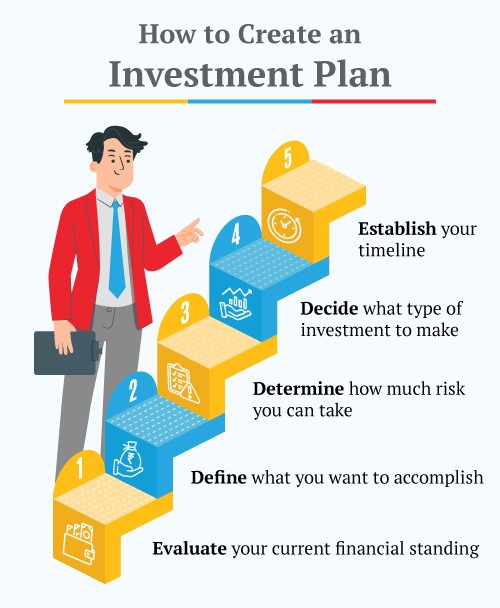
Goal-based investing is a process where your goals are an inseparable part of your investment strategy. In goal-based investing, your goal is of prime importance. Your investment goals will help you decide:

  1. When to invest?
  2. Where to invest?
  3. How much to invest?
  4. When to withdraw?
  5. How much to withdraw?

Goal-based investing puts you in a driver's seat as you are actively involved in the decision-making process. Your success depends on whether you are on track to achieve your goals. You are not competing with anyone in the journey.

First, you create goals and then select investment options that will help you achieve your goals.

How to Identify Your Investment Goals?

Everyone's situation is different when it comes to personal finance and goal-based investing. Hence, you need to identify your goals and accordingly invest to achieve them. Your financial goals must be specific, measurable, and time-oriented. You can identify your investment goals using the below criteria:

  • Short-Term Goals: You can put all the goals you need to complete within three years under short-term goals. These can include expenses like planning a vacation, buying a new car, upgrading your home, or funding any immediate lifestyle needs.
  • Long-Term Goals: Identify goals you need to achieve after three or more years. These goals typically include a child's higher education, marriage, retirement, buying a house, or building a retirement corpus.
  • Need-Based Goals: Need-based goals are usually related to your household and lifestyle expenses. For example, home renovation, maintenance, car repair, child’s school fee, or unexpected medical expenses. Financial protection goals, such as buying life insurance, will also fall into this category.

The majority of your investments must fulfil these three categories of goals.

Benefits of Goal-Based Investing

If you also wonder why you should prefer goal-based investing over traditional investing, then worry not.

Here are some clear advantages that make it worth considering:

  • Gives You Clarity and DirectionWhen you know exactly what you’re investing for, whether it’s your child’s education, a dream home, or your retirement, you have a clear roadmap. This clarity keeps you focused and makes your investment choices more purposeful.
  • Helps You Measure Progress- Goal-based investing makes it easier to track whether you’re on course. You can regularly check if your investments are growing at the pace needed to meet each goal within the desired timeframe.
  • Makes You Disciplined About Saving- Having clear goals motivates you to save and invest consistently. Instead of spending impulsively, you’re more likely to stay committed to putting money aside for your priorities.
  • Reduces Emotional Investing Mistakes- When markets fluctuate, people often panic and make hasty decisions. With goal-based investing, you stay focused on the bigger picture (your long-term goals) and avoid reacting emotionally to short-term ups and downs.

In short, goal-based investing doesn’t just grow your wealth. It helps you stay calm, confident, and in control of your financial future.

Finding Best Investment Options for your Financial Goals

Once you know your goals, you have to look for the best investment option to help you achieve your goals. Every investment option has a risk associated with it, and you must understand it. Below are some of the best investment options. You can invest in them depending on your goals:

Short-Term GoalsLong-Term GoalsNeed-Based Goals
- Bank & post office fixed deposits- Equity mutual funds- Super savers deposits
- Recurring deposits- Equity Linked Savings Scheme (ELSS)- Liquid mutual funds
- Debt mutual funds- Unit Linked Insurance Plans (ULIPs)- Term insurance
- Liquid mutual fundsGuaranteed Saving Plans- Health insurance
 - Public Provident Fund (PPF)- Accidental insurance
 - National Pension Scheme (NPS) 
 - Direct stocks & bonds 


Understand Taxation Before You Invest

Taxation is a crucial factor when choosing an investment option. Higher taxes can eat into your returns, lowering your net gain. For example, let’s say you earn ₹5 lakh in interest from a bank fixed deposit in a financial year. This interest is fully taxable as per your income slab. If you fall under the 30% tax bracket, you’ll pay ₹1.5 lakh in tax, leaving you with only ₹3.5 lakh in hand. Meanwhile, some investment options like tax-free bonds or certain long-term insurance policies can help you reduce your tax burden and increase your net returns.

Always check the tax rules for any product you choose and plan accordingly.

trivia-img

Did You Know?

Using just one budgeting app can increase your savings success by up to 70%, simply by keeping your spending visible.

Source:  Forbes

iSelect Guaranteed Future Plus

Conclusion

Identifying all your financial needs gives you a clear picture of where you stand today and where you want to go tomorrow. Goal-based investing helps you answer crucial questions like why to invest, how much to invest, and where to invest, turning your dreams into a practical plan. More importantly, it gives your money a purpose and keeps you committed for the long run. When you stay invested, you maximize your wealth through the power of compounding and cushion yourself from emotional mistakes.

Glossary:

  1. Long-term purchases: Any contract with an initial period longer than three months to acquire the product.
  2. Automated savings: A system where a set amount is automatically transferred to your savings account at a scheduled time.
  3. Automatic Subscriptions: Subscriptions that charge for renewal from the first payment method on the same date every month.
glossary-img
Uncertain About Insurance

Disclaimer - This article is issued in the general public interest and meant for general information purposes only. The views expressed in this blog are solely those of the writer and do not necessarily reflect the official policy or position of Canara HSBC Life Insurance Company Limited or any affiliated entity. We make no representations or warranties of any kind, express or implied, about the completeness, accuracy, reliability, suitability, or availability with respect to the blog or the information, products, services, or related graphics contained in the blog for any purpose. Any reliance you place on such information is therefore strictly at your own risk. You should consult with a qualified professional regarding your specific circumstances before taking any action based on the content provided herein.

Recent Blogs

Why Does Liquidity Matter in Financial Planning?
02 Jan '26
1053 Views
8 minute read
Learn what liquidity means in financial planning, why easy access to funds is important, and how liquidity helps manage emergencies and short-term needs.
Read More
Financial Planning
What Is the Right Way to Start Investing in Your 20s?
28 Dec '25
1081 Views
10 minute read
Learn how to invest in your 20s by balancing risk, building good habits early, choosing the right assets and setting the foundation for long-term wealth.
Read More
Financial Planning
Why Financial Planning Is Important for Long-Term Security?
27 Dec '25
4909 Views
11 minute read
Learn why financial planning is important, how it helps manage income, expenses and risks, and why it is essential for achieving long-term life goals.
Read More
Financial Planning
Best Investment Plans for 5 Years in India 2026
27 Dec '25
1549 Views
8 minute read
Explore the best investment plans for 5 years that balance returns and risk, helping you meet medium-term financial goals with stability and smart planning.
Read More
Financial Planning
Net Present Value (NPV): Full Form, Meaning & Formula
26 Dec '25
3899 Views
10 minute read
Net Present Value (NPV) measures an investment's total value and profitability. Learn how NPV helps in investment planning with Canara HSBC Life Insurance.
Read More
Financial Planning
How Can You Calculate SIP Returns in India?
26 Dec '25
886 Views
8 minute read
Learn how to calculate SIP returns, understand expected vs actual returns, use formula or calculators, and plan investments effectively for long-term wealth creation.
Read More
Financial Planning
Internal Rate of Return (IRR): Meaning, Formula and Usage
24 Dec '25
3868 Views
10 minute read
Understand Internal Rate of Return (IRR), its meaning, and calculation formula. Learn how it measures investment performance with Canara HSBC Life Insurance.
Read More
Financial Planning
What is a Fixed Deposit: FD Meaning, Benefits & Types
24 Dec '25
1287 Views
11 minute read
A fixed deposit (FD) is a financial instrument that allows you to invest your funds for a fixed period and earn returns at a fixed rate. Visit this section to understand in detail about FD.
Read More
Financial Planning
What Will Be The Value of Rs 1 Crore After 20 Years?
23 Dec '25
2926 Views
10 minute read
Find the actual value of Rs 1 Crore after 20 years. Why should you save Rs. 1 Crore, and how can you ensure a higher value for your wealth?
Read More
Financial Planning

Financial Planning - Top Selling Plans

We bring you a collection of popular Canara HSBC life insurance plans. Forget the dusty brochures and endless offline visits! Dive into the features of our top-selling online insurance plans and buy the one that meets your goals and requirements. You and your wallet will be thankful in the future as we brighten up your financial future with these plans.