Written by : Knowledge Centre Team
Last published : 2026-02-11
6 minutes read
Share

Retirement is a long-term personal goal. You work hard for most of your life to achieve it. However, the journey does not end there; it is ongoing. The pension you receive after your retirement plays a crucial role in determining how well you can lead your post-retirement life.
However, receiving a pension is only the first milestone. The real challenge lies in how effectively you utilise it.
Your retirement plan should also address questions such as,
‘Is your corpus sufficient?
Can you sustain yourself without a regular income?
How early can you afford to retire?’
Here are some practical steps to help you overcome these challenges through retirement planning steps:
Key Takeaways
|
In India, the standard age of retirement is 60 years. It is assumed that the amount you are earning at 30 years of age will be ideal for you post-retirement. So, when you are 30 and looking to retire at the age of 60, then contributing 10-15 per cent of your annual income to the retirement fund is sufficient.
The earlier you want to retire, the larger part of your income you will have to invest:
10-15% of your income for a comfortable retirement at 60 years
18-20% of your income if you wish to retire at 55 years of age
Approximately 35% of the income if you want to advance retirement to 50
So, make sure you can set aside the required amount to enjoy your early retirement.
An OTP has been sent to your mobile number

Sorry ! No records Found
Thank You for submitting the response, will get back with you.
Thank you for your interest in our product. Our financial expert will connect with you shortly to help you choose the best plan.
No matter how much you plan for your retirement, you just can’t know what the future has in store for you. You may have ensured that you have a sufficient corpus to live on, but what if something happens to you?
For example, in the case of a serious illness, all the effort that you put in before will be wasted. Here’s where a life insurance plan can help you so that your planning does not go in vain.
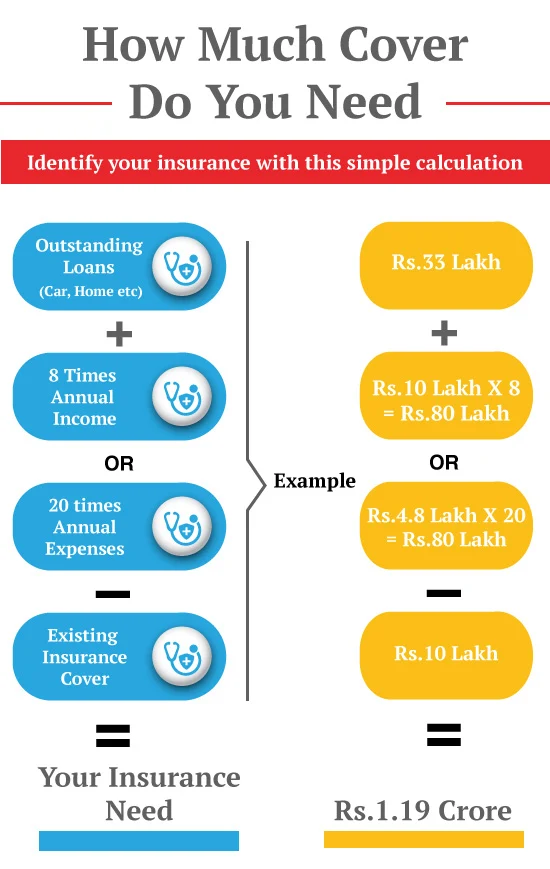
Life insurance policies, such as a term plan, protect your family as they offer life coverage for a specific period. It also gives you the option to add riders, such as critical illness riders. Here are the insurance covers you should consider for a safe retired life:
Critical illness health insurance
Mediclaim insurance for self and family
Accidental disability cover
Also, if you already have insurance and decide to retire early, make sure you have enough money saved that you can pay your premiums even after you retire.
The retirement corpus you have created, though adequate now, may not be so a few years down the line, all thanks to inflation. Things get more expensive each year. The price you see for your favourite burger now is not the same as two years ago.
So, it is necessary to account for inflation in your budget so that your funds don’t run out earlier than you thought.
Here’s how you can plan for inflation:
Invest in inflation-beating assets like NPS or balanced hybrid funds
Review and adjust your retirement target every few years to keep pace with rising costs
Include healthcare inflation while estimating medical expenses
Avoid over-dependence on fixed returns from traditional options like FDs or PPFs
Build a buffer above your estimated corpus to manage unexpected price hikes in essentials
Factoring in inflation early helps you stay financially secure even decades after you retire.
In your life, you may have some debts, or you may have taken out some loans in your name. These carry interest and regular payments. Make sure you are debt-free before you decide to retire.
If these payments continue after you retire, then these payments will unnecessarily dent your retirement fund. Therefore, it is better to clear all the loans before hanging up your boots.
Here’s how to manage debt before early retirement:
Pay off high-interest loans first, like credit card debt or personal loans
Avoid taking new long-term EMIs, especially close to your retirement
Consider loan prepayment options to reduce the interest burden
Create a debt payoff timeline that aligns with your retirement age
Don’t count on post-retirement income to manage leftover EMIs
Being debt-free means your savings can go toward enjoying retirement, not managing liabilities.
When you get married and start a family, you set many new financial goals, such as a child’s education, buying a new car, a home, etc. You would want to make sure that these investment goals are achieved before you decide to retire early.
If you plan to fulfil these goals after you retire, make sure that your corpus is large enough. If not, then you may have to wait a little longer so that it does not burden your post-retirement corpus.
Here’s how to align family goals with early retirement planning:
Estimate the cost of major milestones like higher education, marriage, or buying property
Separate short-term and long-term goals and plan investments accordingly
Use goal-based investment tools like SIPs or child education plans
Avoid dipping into your retirement corpus for family expenses
Reassess your timeline if key goals are still pending and require funding
Planning your family’s future in advance makes early retirement smoother and stress-free.
If you reduce your fixed expenses, your wealth will last longer automatically. Cutting down on expenses such as kitchen expenses, transportation, and house maintenance can go a long way in making your wealth last longer.
Moving to a smaller city will help you cut these expenses and bring you peace of mind.
Minimising these expenses will also give you a buffer that can be used in any emergency, such as medical, house repairs, etc.
Simple ways to reduce fixed expenses in retirement:
Downsize your home or shift to a more affordable city or neighbourhood
Use public transport or shared mobility to cut commuting costs
Switch to energy-efficient appliances to save on utility bills
Plan meals and grocery budgets to reduce kitchen expenses
Take annual maintenance plans to avoid one-time repair shocks
Lower fixed costs mean more breathing room in your retirement budget without compromising on comfort.
Another way to make your money last is to find a source to earn more. Building a passive income source always helps. If you can earn extra then it will reduce the burden on your corpus and will make it last for a longer time.
The following investments can help you build extra income:
Real estate for rental income
RBI gold bonds
Both incomes are inflation-adjusted and can support your pension income in post-retirement life.
Moving to a smaller house and selling or letting out your city house is a great option to generate income while reducing expenses.
If you have taken early retirement to start a different profession, then the income earned from this can also add to your existing corpus.
Health costs in the country are increasing with each passing year. Getting sick not only takes a toll on your physical health but also your finances.
Adopting a healthier lifestyle and habits has become very important nowadays. Few things go a long way in keeping you fit and fine; these are
Eating nutritious foods, avoiding junk food
Exercising regularly
Avoiding habits such as smoking and drinking
Adopting these things makes your body function well and significantly lowers your chances of contracting a major problem, such as heart ailments, high blood pressure, cancer, etc.
There could be many reasons why you would want to retire earlier than the specified retirement age. Unable to cope with the long, stressful hours of the job, wanting to start something new, or you just want to travel the world and enjoy. But early retirement without a sound financial plan can trouble you.
Along with regular investments, having a safety net in place is equally important. A term plan from Canara HSBC Life Insurance can help ensure that your family remains financially protected even if you choose to retire early.
Moreover, buying a pension scheme can also help you plan so that you can think of retirement early.
Disclaimer - This article is issued in the general public interest and meant for general information purposes only. The views expressed in this blog are solely those of the writer and do not necessarily reflect the official policy or position of Canara HSBC Life Insurance Company Limited or any affiliated entity. We make no representations or warranties of any kind, express or implied, about the completeness, accuracy, reliability, suitability, or availability with respect to the blog or the information, products, services, or related graphics contained in the blog for any purpose. Any reliance you place on such information is therefore strictly at your own risk. You should consult with a qualified professional regarding your specific circumstances before taking any action based on the content provided herein.







We bring you a collection of popular Canara HSBC life insurance plans. Forget the dusty brochures and endless offline visits! Dive into the features of our top-selling online insurance plans and buy the one that meets your goals and requirements. You and your wallet will be thankful in the future as we brighten up your financial future with these plans.