Capital Gain Tax on the Sale of a Property

How to Save Capital Gain Tax on the Sale of a Property?

Learn effective ways to save capital gain tax on property sales through investments in bonds, CGAS, and setting off capital losses for tax benefits.

2025-04-02

2544 Views

10 minutes read

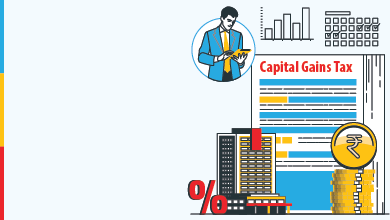
Selling a property is a huge and tiresome task in itself, and contemplating the fact that you will be imposed a tax on your capital gains can be a huge apprehension. An investment executed on procuring land is regarded as capital assets, and when you trade it, the resulting earnings are known as capital gains.

Hence, if you intend to trade your property, you will be required to pay capital gain tax on the earnings gained after conceding the indexed cost of acquisition and inflation depending upon the holding period of a capital asset. Although, there are numerous techniques to save on the capital gain tax at the time of sale of a property.

3 Ways to Save Capital Gain Tax on the Sale of Property

The taxes charged on the revenue generated by the trade of capital assets is regarded as capital gains tax and are defined by the term of possession of the asset as well as the actual variation between its purchase and sale price. This tax assessment is exclusively applicable if the asset is traded after a specific duration of ownership.

These capital gains are then categorized as long-term or short-term capital gains. If you trade your property within 2 years (24 months or less) of procuring it, it would be deemed a short-term capital gain. Whereas, if you trade your property after 2 years (24 months), it would be regarded as a long-term capital gain.

Long-term and Short-term Capital Gains:

Understanding the distinction between long and short term capital gains is significant because both of these gains are handled individually when it comes to taxation. The tax benefits and tax rates that pertain to the reinvestment of these two kinds of capital gains diversify.

Long-term Capital Gains on the disposal of property are charged at 20 percent (Source: Cleartax) along with Health & Education Cess if the sale meets specific provisions. In case there’s no indexation, the applicable tax rate would be 12.5%. If you market a gifted property or that you have received from your ancestors, you will yet be subject to pay capital gains tax on these properties.

Learn - what is long-term capital gain tax in India.

The expense of purchase, in this case, is estimated based on the value to the former owner, filed to the year of acquisition. As the sale of capital assets like property can be an important source of income or revenue, it is essential to comprehend how to save on capital gain tax on the sale of the property to maximize the revenues. Hence, to help you save capital gain tax on sale on the property, stated hereunder are a few ways.
Maximize Your Tax Savings - Talk to an Expert

Please enter correct name Please enter the Full name
Please enter valid mobile number Please enter Mobile Number
Please enter valid email Please enter Email

Enter OTP

An OTP has been sent to your mobile number

Didn’t receive OTP?

Application Status

Name

Date of Birth

Plan Name

Status

Unclaimed Amount of the Policyholder as on

Name of the policy holder

Policy Holder Name

Policy No.

Policy Number

Address of the Policyholder as per records

Address

Unclaimed Amount

Unclaimed Amount
Error

Sorry ! No records Found

.  Please use this ID for all future communications regarding this concern.

Request Registered

Thank You for submitting the response, will get back with you.

  • Invest in Bonds: If you have recently traded your property and want to save on tax, you can further invest in specified financial assets. Investment in such financial assets holds power to save your arduously earned capital gains as these long term capital gains are exempted under Section 54EC of the Indian Income Tax Act, 1961.

    To obtain this tax exemption on your capital gains, you should invest the sum earned in bonds within 6 months of the transfer of the sum and realization of gains. In addition to this, the funds are required to be invested in these bonds for a minimum of three years as a lock-in period.

    If you keep the funds invested in these bonds for a period beyond the lock-in period of three years, you will not gain any interest, and the redemption of these capital gains bonds will become automated. The other limitations in investing your capital gains on property sale are that you cannot assign these bonds to any other party or contract or trade them.

  • Invest in CGAS (Capital Gains Account Scheme): Investing in Capital Gains Account Scheme (CGAS) is another means to save capital gains tax on property sales. This scheme is perfect for individuals who cannot invest in a brand-new property before their income tax return filing, and this scheme provides a huge relief to the taxpayers.

    You can invest in this CGAS scheme for three years, and throughout this duration, you can utilize the capital gains for buying or building a residential house on your property. The deposit in this CGAS account must be made before filling or registering an income tax return, and then this investment in the Capital Gain Account Scheme (CGAS) must be specified in the income tax return.

    This CGAS account can be opened just with designated banks. Also, a regional bank and cooperative bank are not qualified for opening this account. The deposit in this account can either be made through monthly installments or lump sum to save taxes on capital gains.

  • Set Off all Capital Losses:This is again the most suitable way to save tax on capital gains resulting from the sale of your property. It enables you to set off all capital gains or profits against the capital losses you incurred earlier. It is analogous to the same year adjustment of capital loss and capital gains. However, the capital loss must be from the former date, and short term capital loss can only be set off against short term capital gains.

    Similarly, long term capital losses can be only set off against the long term capital gains along with the stipulation to carry forward all the capital losses for 8 consequent years. Apart from this, to carry forward all your capital loss, the income tax return must be filed before the closing date of your income tax return filing.

    Investing in real estate properties can assist in asset creation to provide you with financial protection and stability for the future. Hence, by benefiting from the tax-saving schemes discussed above, you can receive the maximum advantage on your property investment.

Disclaimer - This article is issued in the general public interest and meant for general information purposes only. The views expressed in this blog are solely those of the writer and do not necessarily reflect the official policy or position of Canara HSBC Life Insurance Company Limited or any affiliated entity. We make no representations or warranties of any kind, express or implied, about the completeness, accuracy, reliability, suitability, or availability with respect to the blog or the information, products, services, or related graphics contained in the blog for any purpose. Any reliance you place on such information is therefore strictly at your own risk. You should consult with a qualified professional regarding your specific circumstances before taking any action based on the content provided herein.

Tax Savings - Top Selling Plans

We bring you a collection of popular Canara HSBC life insurance plans. Forget the dusty brochures and endless offline visits! Dive into the features of our top-selling online insurance plans and buy the one that meets your goals and requirements. You and your wallet will be thankful in the future as we brighten up your financial future with these plans.

Recent Blogs

Will Budget 2026 Allow Joint Taxation for Married Couples?
29 Jan '26
8 Views
8 minute read
Find out what Budget 2026 may introduce on joint taxation for married couples, expected benefits, policy outlook, and how it may impact taxpayers in India.
Read More
Tax Saving
What is Income Tax Return (ITR)? Meaning & Filing Process of Filing ITR
21 Jan '26
4902 Views
10 minute read
Learn what an Income Tax Return (ITR) is, why filing your income tax return is important, and how to file your ITR online via the Income Tax Department. Documents, forms, steps, and FY 2026-27 details included.
Read More
Tax Saving
What Is Advance Tax? How to Calculate Advance Tax and Pay It Online
20 Jan '26
2518 Views
9 minute read
Understand advance tax under income tax, who should pay it, how advance tax is calculated, due dates, and online payment steps to avoid penalties.
Read More
Tax Saving
Importance of Taxes in India: Why Taxes Matter?
15 Jan '26
1614 Views
7 minute read
Understand the importance of taxes in India, how they support public services, economic growth, welfare schemes, and national development.
Read More
Tax Saving
What Is SGST? Meaning, Rates & Applicability Explained
15 Jan '26
627 Views
5 minute read
Learn what SGST means, its full form, tax rates, applicability, and how it works under the GST system for intra-state transactions.
Read More
Tax Saving
What is the GST Council? Role, Members & How It Works
14 Jan '26
542 Views
5 minute read
Understand what the GST Council is, its structure, powers, and how it decides GST rates, laws, and policies across India.
Read More
Tax Saving
Why is Your ITR Refund Delayed and What Can You Do?
13 Jan '26
537 Views
5 minute read
ITR refund delayed? Know the common reasons, timelines, and step-by-step actions to track, raise grievances, and speed up your income tax refund.
Read More
Tax Saving
80CCC: What is Deduction Under Section 80CCC?
11 Jan '26
1185 Views
6 minute read
What is Section 80CCC? How can you claim deductions under section 80CCC? Learn the eligibility criteria to claim a deduction under section 80CCC with a life insurance policy.
Read More
Tax Planning
How to Save Tax on Salary Above ₹15 Lakhs? | Tax Saving Guide 2026
10 Jan '26
4817 Views
14 minute read
Learn how to save tax on salary above ₹15 lakhs using effective tax saving options, deductions, exemptions, and smart income tax planning strategies
Read More
Tax Saving