Written by : Knowledge Centre Team
Last published : 2026-01-07
15 minutes read
Share

Income tax is one of the major forms of direct taxes levied by the government of India under the regulatory guidelines of Central Board of Direct Taxes (CBDT). This tax is imposed on income generated by individual persons. For salaried persons, income tax is levied on the earnest monthly salary and varies from one taxable slab to another. Section 80C of the Income Tax Act, 1961 allows deductions for specific investments which taxpayers take up for the purpose of saving taxes. However, while planning to invest in income tax saving plans and schemes, there are some common mistakes that taxpayers tend to make.
An OTP has been sent to your mobile number

Sorry ! No records Found
Thank You for submitting the response, will get back with you.
Thank you for your interest in our product. Our financial expert will connect with you shortly to help you choose the best plan.
Making systematic investments over a period of time are important for building a good investment portfolio. People tend to hurry and take last moment decisions to invest their money to save tax; little do they know that these last moment investments hinder you from reaping its full benefits. Therefore, it is ideal to start investing early on, starting from the beginning of a financial year to create a diversified investment portfolio.
It is the right thing to calculate your tax liability and Income tax on the salary, but you should also remember that there are various other incomes like business income, interest on deposits, mutual funds, capital gains from stocks, rent from property, gold etc. If you do not calculate your taxable income properly beforehand, you will not know exactly how much deductions you need to aim to reduce your payable taxes.
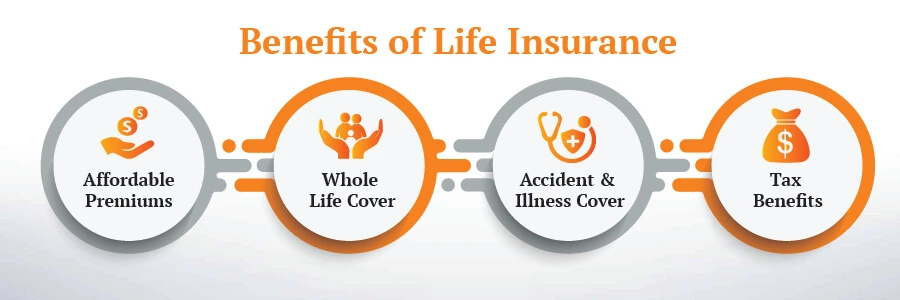
Most buy life insurance plans in a bid to meet Section 80C requirements. However, many people end up having too much invested in endowment and ULIPs but without being aware of the benefits they actually have. However, the primary objective of buying an insurance policy must be to protect yourself and your family financially in case of an unfortunate incident. For instance, the iSelect Smart360 Term Plan by Canara HSBC Life Insurance offers options like Whole life cover and limited pay options along with Tax benefits.
All salaried individuals receive a standard deduction of Rs.50,000 as per Income tax Act, 1961 and if they are paying school tuition fees for two children, house rent, or home loan principal and interest are also eligible exemptions/ deduction on account of the same as per Income Tax Act, 1961 subject to conditions provided therein. Hence, it is important to make informed decisions and figure out how much you have already saved before you look for any further adjustments in your income. Other thing you can consider is EPF, which is deducted by your employer as your own contribution.
Taxpayers usually do not know the exact returns offered by various investment avenues. Know your return options and invest accordingly. If you have a good risk appetite, you could consider ELSS or ULIPs. Before investing, make it a point to analyzing possible alternatives and not invest abruptly. Look for getting better returns, instead of focusing merely on saving taxes.
Click here to use - Investment Calculator
The above calculation and illustration of figures are indicative only and not on actual basis.
While looking for tax saving instruments, do not invest in a financial product only for the purpose of tax planning. Consider factors like your family’s needs, your long term financial goals and your life stage based requirements, to evaluate and find a plan that aligns with all your goals. For instance, if you are a young and unmarried, you might want to accumulate money in the near future to meet specific goals like marriage, a lavish trip etc. In this case, you shall opt for options with shorter maturity and easy liquidity options. However, if you are married and are planning kids, you might want to opt for investments with a longer period of maturity, keeping your children’s future expenses in mind. The Guaranteed Savings Plan by Canara HSBC Life Insurance offers guaranteed benefits along with the flexibility to choose your savings horizon, to meet your specific life goal.
Also Read - Goal-based investing
Tax saving can get confusing and may seem tiresome at times. However, it is important to ensure your hard earned money is put in the right places. So, research and plan thoroughly before making investments to gain the maximum and more relevant returns.
Disclaimer - This article is issued in the general public interest and meant for general information purposes only. The views expressed in this blog are solely those of the writer and do not necessarily reflect the official policy or position of Canara HSBC Life Insurance Company Limited or any affiliated entity. We make no representations or warranties of any kind, express or implied, about the completeness, accuracy, reliability, suitability, or availability with respect to the blog or the information, products, services, or related graphics contained in the blog for any purpose. Any reliance you place on such information is therefore strictly at your own risk. You should consult with a qualified professional regarding your specific circumstances before taking any action based on the content provided herein.





We bring you a collection of popular Canara HSBC life insurance plans. Forget the dusty brochures and endless offline visits! Dive into the features of our top-selling online insurance plans and buy the one that meets your goals and requirements. You and your wallet will be thankful in the future as we brighten up your financial future with these plans.