Last published : 2022-07-10
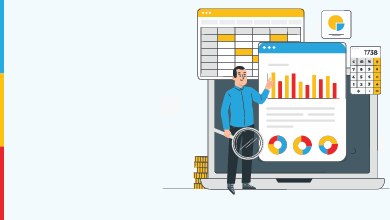

Taxation in India is well classified based on the category of taxpayer. Individual taxpayers and HUF (Hindu Undivided Family) have been provided ITR-1 form to file their income tax return.
The form makes it easier for you to simply use your bank statement and salary slips to estimate your tax liability. The entire process of filing your tax return online takes less than 30 minutes if you have all the documents ready at hand. Let’s see in detail what the ITR-1 form is and how it works.
What is ITR-1?
The Income Tax department has categorized taxpayers into slab brackets based on their income and source of income. Income Tax Return (ITR)-1 which is also known as Sahaj Form is for those individuals who have an annual income up to Rs 50 lakhs. You can file your taxes easily using the one-page ITR-1 form.
You can file your income tax using ITR-1 if you receive income from one of the below sources:
- Income from Pension/Salary
- Income from one House Property (Exclude cases where the loss is carried forward from previous years.)
- Income from other sources (Other sources do not include winning from the lottery or other similar sources of income.)
If you are a businessman, you cannot use ITR-1 form to file your returns. You will need to file ITR-2 form.
Begin securing your future
Enter OTP
An OTP has been sent to your mobile number
Didn’t receive OTP?
Application Status
Name
Date of Birth
Plan Name
Status
Name of the policy holder
Policy No.
Address of the Policyholder as per records
Unclaimed Amount

Sorry! No records Found
Thank you for your interest in our product. Our financial expert will connect with you shortly to help you choose the best plan.
What are Documents Required to File ITR-1?
Before you file an ITR, ensure you have the below documents with you:
- PAN Number
- Aadhaar Number
- All the bank account details
- Tax payment challans, if any
- Investment Proofs
You must have made some tax-saving investment. For example, you might have bought a Term Insurance plan and you must be paying a premium for it every year. You need to have proof of premium paid to include that under tax saving investment.
Form 16
If you are a salaried person, Form 16 is the most important document for you. It is issued to you by your employer and contains details of your salary and any TDS deducted. Form-16 consists of two parts:
- Part-A: It consists of all the details of the tax deducted by your employer during the year. It has details of the tax deducted from your salary. It also includes your Permanent Account Number (PAN), PAN and TAN of your employer.
- Part-B: This part of the form consists of your gross salary break-up details such as exempt allowances, perquisites, etc.
Form 26AS – TDS Details
It contains details of your income on which taxes have been deducted. It also has information about the taxes that have been paid by or on your behalf by the deductor, mostly your employer. The TDS with employer depends on your tax saving investment declaration. So, ensure you submit those on time. If you don't submit your investment proofs, your TDS will be higher. However, at the time of filing ITR, you can mention all your investments and reduce your taxable income.
How to File ITR?
Once you have all the documents with you, you can go ahead and file your income tax returns. You can either submit your ITR-1 online or offline.
Offline
Not everyone is eligible to use this medium to submit the ITR. If you fall in one of below two categories, you can use offline mode:
1. If you are at the age of 80 years or more at any time in the year for which you are filing returns.
2. If your income does not exceed Rs 5 lakhs and you have not claimed any refund in the return of income.
In offline mode, the return is filed in a physical paper form. Once you submit your form, the income tax department will issue an acknowledgement at the time of submission.
Online
Through this mode, you can submit your form online and then e-verify your submission through net banking, Aadhar OTP, or EVC. If you don't want to e-verify your return, you can sign it and send it to the Income Tax Department’s CPC office in Bangalore within 120 days of e-filing.
Once you submit your form electronically, you will receive the acknowledgement on your registered email id. You can download the acknowledgement received on email or from the income tax site.
What Are the Different Parts of ITR-1?
The ITR 1 form is divided into seven different parts:
Part A – General Info
This section has general information like your name, address, PAN number, Aadhar number, Mobile number, Email address, Return filing details and nature of employment like Govt/Pensioners/PSU/Other.
Part B – Income Sources & Details
This tab includes details related to your gross total income. This is divided into four parts
| Part B1 | It has details of your employer, your salary details, deduction in u/s 16, net salary, etc. |
|---|---|
| Part B2 | This is related to your house property. It includes gross rent received, tax paid to local authorities, annual value etc. |
| Part B3 | Deduction u/s 57(iia). |
| Part B4 | It is the sum of B1, B2 and B3. |
Part C – Deductions from Gross Total Income
This part includes all the deductions and taxable total income. It has deduction under 80C, 80CCC, 80CCD(1), 80CCD(1B), 80CCD(2), 80DD, s80DDB, 80E, 80EE, 80EEA, 80EEB, 80GG, 80GGC, 80U. It also has the value of total deduction and total income.
Taxation in India also has provisions for you to reduce your taxable income up to Rs. 2.5 lakh by following allowed exemptions.
Few of the most popular deduction options under Section 80 are:
| Section 80C - Deductions on Investments | You can claim a deduction of Rs 1.5 lakh your total income under section 80C. |
|---|---|
| Section 80CCC – Insurance Premium | Deduction for Premium Paid for Annuity Plan of LIC or Other Insurer |
| Section 80CCD – Pension Contribution | Deduction for Contribution to Pension Account |
| Section 80GG – House Rent Paid | Deduction for House Rent Paid Where HRA is not received |
| Section 80 TTA – Interest on Savings Account | Deduction from Gross Total Income for Interest on Savings Bank Account |
| Section 80E – Interest on Education Loan | Deduction for Interest on Education Loan for Higher Studies |
| Section 80EE – Interest on Home Loan | Deductions on Home Loan Interest for First Time Homeowners |
| Section 80D – Medical Insurance | Deduction for the premium paid for Medical Insurance |
Part D – Tax Liability
This section includes all the valuation of tax payable. It has sub-sections like tax payable on total income, Rebate u/s 87A, Total tax, fee and interest, total tax paid, refund and exempt income.
Part E – Bank Details for Refunds
This includes your bank details like name of the bank, account number and IFSC code of the bank. You should add all the bank accounts that are linked to your PAN number in this section. You also have to choose the account in which you want the income tax department to initiate the refund if any.
Schedule IT
This schedule carries income tax details of self-assessment tax and advance tax payments.
Schedule-TDS -TDS details of TDS/TCS
When you start the return filing process, you may notice most of the details are auto populated. The details are picked up from your Form 16 and other TDS filings by the deductors. Before submitting the form, ensure all the details provided are correct. If there is some mismatch, you can manually correct it.
Disclaimer - This article is issued in the general public interest and meant for general information purposes only. The views expressed in this blog are solely those of the writer and do not necessarily reflect the official policy or position of Canara HSBC Life Insurance Company Limited or any affiliated entity. We make no representations or warranties of any kind, express or implied, about the completeness, accuracy, reliability, suitability, or availability with respect to the blog or the information, products, services, or related graphics contained in the blog for any purpose. Any reliance you place on such information is therefore strictly at your own risk. You should consult with a qualified professional regarding your specific circumstances before taking any action based on the content provided herein.
Tax Savings - Top Selling Plans
We bring you a collection of popular Canara HSBC life insurance plans. Forget the dusty brochures and endless offline visits! Dive into the features of our top-selling online insurance plans and buy the one that meets your goals and requirements. You and your wallet will be thankful in the future as we brighten up your financial future with these plans.
Family Shield: Enhanced Protection
iSelect Smart360 Term Plan
- 3 Plan options
- Life cover till 99 years
- Steady income benefit
- Block your premium at inception
Fixed Returns, Zero Risks & Worries
iSelect Guaranteed Future Plus
- 4 Plan options
- Life cover + Guaranteed benefits
- Accidental death benefit
- Premium protection cover
Start Young, Pay Less, Stay Secured
Young Term Plan
- Life cover till 99 years
- Coverage for spouse
- Block your premium rate
- Covers 40 critical illness
Recent Blogs
Types of Taxes in India: Complete Guide to Tax Structure
06 Oct '26
Know the types of taxes in India. Explore India’s tax structure, including direct and indirect taxes, slabs, and exemptions. A clear overview of the Indian tax concept.
Read More
Tax Saving

What Are the Best Tax Saving Schemes For Senior Citizens?
25 Sep '26
Save on taxes with special schemes for senior citizens! Learn about 80C benefits for seniors and discover best investment for senior citizens with Canara HSBC Life Insurance.
Read More
Tax Saving

Top 8 Tax Saving Methods in India for FY 2025-26
25 Sep '26
Discover the top 8 tax-saving methods in India for FY 2025-26, including 80C investments, deductions, and smart strategies to reduce your taxable income legally.
Read More
Tax Saving

New ₹12 Lakh Zero Tax Slab Real Savings for Middle Class or Illusion
25 Sep '26
Explore if the new ₹12-lakh zero-tax slab truly benefits middle-class taxpayers or is just an illusion. Know the real savings for FY 2025-26.
Read More
Tax Saving
Income Tax Act 1961: Overview, Key Provisions and Applicability
22 Sep '26
Learn about the Income Tax Act 1961, its purpose, key provisions, applicability, and how it governs income tax laws in India.
Read More
Tax Saving
Popular Searches
- Tax Planning
- Income Tax Calculator
- TDS Vs TCS
- Section 80C
- What Is ITR
- Tax Concepts
- Section 80D
- Section 24
- 80DDB
- What is MAT?
- ITR-3 Form
- Term Insurance Tax Benefit
- TDS for Professional Fees
- Income Tax Slab FY 2025-26
- HRA Calculator
- TDS on Rent
- What is Income Tax Return?
- Income Tax for NRI
- How to File Income Tax?
- Section 80C Tax Benefits
- Old vs New Tax Regime
- LTCG Tax on Investments
- Tax Saving Options for Salaried
- Income Tax Rebate under 87A