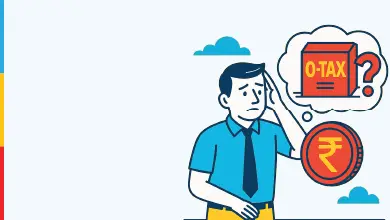



new-12-lakh-zero-tax-slab-middle-class-benefit

New ₹12-Lakh ‘Zero-Tax’ Slab: Real Savings for the Middle-Class or Illusion

Zero tax up to ₹12 lakh: genuine middle-class relief or just smart optics? Discover who truly benefits & how to use the savings wisely.

2025-08-05

15 Views

7 minutes read

The announcement of zero tax on annual income up to ₹12 lakh in the Union Budget has sent the cat out of the bag. So, to speak, a mix of curiosity, hope, and arguments has taken centre stage, at least among the middle classes of India. It seems on paper to be a straightforward win: More cash to you, less to the tax man. However, is it an actual financial break as it claims to be, or is it simply a smart change that feels satisfying more than it actually does?

This will appear as a game-changer to millions of salaried employees, small business owners, and retirees, considering that they will not pay any income tax on the first 12 lakh of their annual income. What needs to be asked is whether this reform means substantial, long-term savings or temporary psychological relief. In this blog, we take on the mechanics of how this change will operate, the beneficiaries, and how you can harness any excess cash flow into long-term financial security.

Key Takeaways


  • The ₹12-lakh ‘Zero-Tax’ slab offers relief under the new regime but may limit old-regime deductions and exemptions.
  • Actual savings vary depending on income level and previous deductions, and psychological relief may outweigh real gains.
  • Extra cash flow should be strategically allocated to emergency funds, debt repayment, and long-term investments.
  • Lower taxes do not guarantee wealth creation; consistent investment discipline is crucial for growth.
  • Life and retirement planning remain essential for financial security, regardless of tax benefits.

What The New ₹12-Lakh Zero Tax Slab Is All About?

The new tax slab, which relieves citizens with a yearly income of up to ₹12 lakh from paying any tax under the new regime, has generated curiosity in the whole middle-class population. This shift, which is intended to lighten the tax load, might imply that the household will have additional spending money. This can become a stimulus to consumption as well as to financial comfort.

With the new system, the taxpayers willing to switch to the new tax regime will pay no tax for their range of income not over ₹12 lakh due to increased rebates and simplified slab rates. This depends on eligibility requirements, which include sources of income and exemptions taken. The most important insight is that although this plan is a relief, it can effectively reduce the benefits of deductions and the exemptions that existed in the old regime.

Maximize Your Tax Savings - Talk to an Expert

Please enter correct name Please enter the Full name
Please enter valid mobile number Please enter Mobile Number
Please enter valid email Please enter Email

Enter OTP

An OTP has been sent to your mobile number

Didn’t receive OTP?

Application Status

Name

Date of Birth

Plan Name

Status

Unclaimed Amount of the Policyholder as on

Name of the policy holder

Policy Holder Name

Policy No.

Policy Number

Address of the Policyholder as per records

Address

Unclaimed Amount

Unclaimed Amount
Error

Sorry ! No records Found

.  Please use this ID for all future communications regarding this concern.

Request Registered

Thank You for submitting the response, will get back with you.

Who Benefits the Most From This Tax Change?

The result of the change seems universal, yet only on the surface, and its real effect is very different on various parts of the taxpayer. Who are the people making the best of the ₹12 lakh income tax relief? Let us find out.

  • Salaried Employees: In the case of salaried professionals, the higher rebate limit implied in the new tax slab will result in their receiving more pay in hand every month. This is then diverted to individual investments, debt payoffs, or savings. But the net benefit might be less since there is a loss of some deductions, such as HRA, LTA, or Section 80C deductions, in the old regime. Based on the two regimes, employees are required to compute their post-tax earnings to make an informed decision.
  • Small Business Owners: Entrepreneurs with moderate profits will not only find it easier to comply with authorities and simplify tax filings, but they will also increase their disposable income. This surplus can be used to expand business into different avenues, or opening of new formats, or even the digitisation process. However, when their business model was formerly used to exploit a variety of old-regime exemptions, the net benefit was less.
  • Retirees: In the bracket of pensioners who receive ₹12 lakh, they might experience a better monthly cash flow. Therefore, they might spend more on the improvement of their lifestyle or medical expenses. With that said, the monetary benefit might not appear to be as large to the retirees who were greatly invested in the exemptions on investment-linked deductions in the old regime, like when they took advantage of tax savings FDs or senior citizen saving schemes, and such retirees need to rearrange the balance in their incomes and investments.

Real Savings or Just a Psychological Relief?

The banner figure of zero tax up to ₹12 lakhs is fancy, but in reality, your tax saving, under the new regime, depends on what you were paying tax under the old regime. For example:

  • Income ₹5 lakh: Tax liability is nil under both regimes, hence no increment in the benefit.
  • Income of ₹10 lakh: Tax liability under the old regime (with deductions) may already be low; in this case, the tax benefit of the new regime may be small as well.
  • Income of ₹12 lakhs: As per the new tax regime, this may reflect more on the savings side in case you were in a higher slab before, but you were not able to enjoy substantial deductions.

Although the psychological effect of paying zero tax is huge, the actual increase in take-home pay may not seem as high as it could be to each individual. The major benefit is easier compliance as opposed to a large increase in real income.

trivia-img

Did You Know?

Over 91% of Indian taxpayers claim deductions under ₹2 lakh, showing why the ₹12-lakh zero-tax slab could simplify taxes for most.


Source: Wikipedia

YTP 1.5 CR

The Impact of The New Tax Slab on Your Finances

A smaller tax plan could give an illusion of better economic conditions; however, it does not assure lasting wealth generation. The savings that will be made should be directed to meaningful financial pursuits. These factors entail saving up on an emergency fund, taking out sufficient life and health cover, and retirement savings.

Budgetary control is very important. Regardless of lowered tax burden, the prudent investment in equity, debt, or hybrid instruments, or a combination of all three, may make a difference in providing long-term security and stability.


Tax Savings Vs. Investment Discipline: Which is Better?

Paying less in taxes is beneficial, but it’s ultimately your investment discipline that will shape the growth of your wealth. Tax savings may quickly be used instead of being utilised when there is no planned agenda.

How do they relate when the importance of each is evaluated? Here is how they compare:

Basis of Comparison

Tax Savings

Investment Discipline

Short-Term Benefit

An immediate increase in disposable income

Gradual but consistent growth of wealth

Long-Term Security

Limited without investments

Ensures sustained financial health and retirement readiness

Inflation Protection

Minimal

Strong, if invested in inflation-beating assets

Wealth Creation

None directly

Core driver of wealth accumulation

Financial Discipline

Optional

Essential

Smart Ways of Leveraging the Additional Savings

The increment in income as a result of lower taxes should be invested in enhancing your financial position in a manner that not only helps in addressing the current needs but also in achieving your future objectives.

  • Repay Debt: The surplus can be utilised to discharge debt at high interest rates, such as credit cards or personal loans, thereby creating future cash flow, reducing the burden of future EMIs, and releasing significant financial pressure. It is important to prioritise paying off the highest interest-bearing debts first to maximise their benefits.
  • Save on an Emergency Fund: Have at least 6-12 months of your expenses in an instrument that can be held as a liquid and safe investment, like a high-yield savings account or liquid mutual fund. These savings serve as a financial buffer when losing a job, a medical emergency, or any other eventuality.
  • Get Appropriate Insurance: Intensify the safety measures by purchasing term plans or ULIPs by Canara HSBC Life Insurance to be on the level of life risk cover, and at the same time, to create investment worth. Review your cover once every year so that it matches your family's needs, debts, and future financial requirements.
  • Purchase Retirement Plans: Invest some of the savings in the retirement plans so as to make sure that there is money to cater to oneself later in life. The power of compounding is easier to exploit by starting early; hence, it will be easy to maintain the standard of living you were enjoying before you retire.

Final Verdict: Is the Zero-Tax Slab a Game-Changer?

The ₹12 lakh tax exemption in the new tax rate system is a welcome development as it will ensure a streamlined taxation policy and a possible relief on the cash flow of many. But it is no alternative to disciplined financial planning. Only in case the additional revenues are properly invested and secured will the long-term advantages appear.

In essence, while the zero-tax announcement offers short-term relief, the real game-changer lies in maintaining investment discipline, prioritising protection-first strategies, and aligning spending with long-term goals. You can ensure that your relief today turns into security tomorrow by utilising financial means, such as retirement plans offered by Canara HSBC Life Insurance.

Glossary

  1. Rebate Threshold: The specific income limit up to which a taxpayer can claim a full tax rebate.
  2. Section 80C: A provision in the Income Tax Act allowing deductions for certain investments and expenses.
  3. HRA (House Rent Allowance): A component of salary that can be partially exempt from tax if renting accommodation.
  4. ULIP (Unit Linked Insurance Plan): A life insurance product that combines investment and insurance in one plan.
  5. LTA (Leave Travel Allowance): A salary component that covers travel expenses for employees during leave, usually for trips within India.
glossary-img
Uncertain About Insurance

FAQs

Under the revised tax regime, individuals with annual income up to ₹12 lakh can have zero tax liability by availing enhanced rebates. This is achieved through a combination of lower slab rates and higher rebate thresholds, provided certain conditions on exemptions and deductions are met.

Any resident individual with taxable income up to ₹12 lakh can qualify, but only if they opt for the new regime. The benefit is limited if they previously relied on deductions and exemptions available in the old regime, as most of those are not permitted here.

Taxpayers should calculate their net tax liability under both regimes. If they claim substantial deductions like Section 80C, HRA, or LTA, the old regime may still be better. If not, the new regime’s higher rebate threshold might result in lower or zero tax.

For many, the major advantage is simplified compliance, not necessarily higher savings. Real savings vary depending on previous deductions and exemptions. Those who already had low tax outgo under the old regime may see little change in disposable income.

It’s best to channel the surplus into financial goals, repay high-interest debt, build an emergency fund, invest for retirement, or enhance insurance coverage. This ensures that the benefit leads to long-term wealth creation, not just short-term spending.

Disclaimer - This article is issued in the general public interest and meant for general information purposes only. The views expressed in this blog are solely those of the writer and do not necessarily reflect the official policy or position of Canara HSBC Life Insurance Company Limited or any affiliated entity. We make no representations or warranties of any kind, express or implied, about the completeness, accuracy, reliability, suitability, or availability with respect to the blog or the information, products, services, or related graphics contained in the blog for any purpose. Any reliance you place on such information is therefore strictly at your own risk. You should consult with a qualified professional regarding your specific circumstances before taking any action based on the content provided herein.

Tax Savings - Top Selling Plans

We bring you a collection of popular Canara HSBC life insurance plans. Forget the dusty brochures and endless offline visits! Dive into the features of our top-selling online insurance plans and buy the one that meets your goals and requirements. You and your wallet will be thankful in the future as we brighten up your financial future with these plans.

Recent Blogs

Will Budget 2026 Allow Joint Taxation for Married Couples?
29 Jan '26
8 Views
8 minute read
Find out what Budget 2026 may introduce on joint taxation for married couples, expected benefits, policy outlook, and how it may impact taxpayers in India.
Read More
Tax Saving
What is Income Tax Return (ITR)? Meaning & Filing Process of Filing ITR
21 Jan '26
4897 Views
10 minute read
Learn what an Income Tax Return (ITR) is, why filing your income tax return is important, and how to file your ITR online via the Income Tax Department. Documents, forms, steps, and FY 2026-27 details included.
Read More
Tax Saving
What Is Advance Tax? How to Calculate Advance Tax and Pay It Online
20 Jan '26
2512 Views
9 minute read
Understand advance tax under income tax, who should pay it, how advance tax is calculated, due dates, and online payment steps to avoid penalties.
Read More
Tax Saving
Importance of Taxes in India: Why Taxes Matter?
15 Jan '26
1608 Views
7 minute read
Understand the importance of taxes in India, how they support public services, economic growth, welfare schemes, and national development.
Read More
Tax Saving
What Is SGST? Meaning, Rates & Applicability Explained
15 Jan '26
626 Views
5 minute read
Learn what SGST means, its full form, tax rates, applicability, and how it works under the GST system for intra-state transactions.
Read More
Tax Saving
What is the GST Council? Role, Members & How It Works
14 Jan '26
537 Views
5 minute read
Understand what the GST Council is, its structure, powers, and how it decides GST rates, laws, and policies across India.
Read More
Tax Saving
Why is Your ITR Refund Delayed and What Can You Do?
13 Jan '26
534 Views
5 minute read
ITR refund delayed? Know the common reasons, timelines, and step-by-step actions to track, raise grievances, and speed up your income tax refund.
Read More
Tax Saving
80CCC: What is Deduction Under Section 80CCC?
11 Jan '26
1180 Views
6 minute read
What is Section 80CCC? How can you claim deductions under section 80CCC? Learn the eligibility criteria to claim a deduction under section 80CCC with a life insurance policy.
Read More
Tax Planning
How to Save Tax on Salary Above ₹15 Lakhs? | Tax Saving Guide 2026
10 Jan '26
4812 Views
14 minute read
Learn how to save tax on salary above ₹15 lakhs using effective tax saving options, deductions, exemptions, and smart income tax planning strategies
Read More
Tax Saving