How to Save Income Tax in India?

How to Save Income Tax in Tax Year 2026-2027?

Learn practical, legal strategies to reduce your tax burden in Tax Year 2026-27. Optimised for your income, lifestyle, and future financial well-being

Written by : Knowledge Centre Team

2026-07-31

1611 Views

10 minutes read

The income tax regime in India offers multiple ways for individual taxpayers to save tax. You can invest your savings in specific long-term schemes to reduce your taxable income. Certain expenses, usually necessary in family life, also help you save tax. 

From the tax year 2026-27, individual taxpayers can choose between two tax regimes- the existing or old tax regime and the new concessional one. The rates of payable tax for a given tax slab differ between these two regimes.

Tax-saving investments will reduce your taxable income only under the old tax regime. However, the long-term investments help you save tax in India and also build long-term wealth for you. So, a majority of these investments are good for your present and future wealth. Let us understand how to save tax for business people & salaried employees.

Key Takeaways

  • If you intend to take deductions, go for the old regime; the new regime is for those with fewer investments

  • Leverage the ₹1.5 lakh limit using ELSS, PPF, NSC, life insurance, or home loan principal repayment, and get an extra ₹50,000 relief through NPS under Section 124 (3)

  • The insurance premium (up to ₹75,000 overall) under Section 126, previously known as 80D, protects your family and tax liability

  • Education Loans = Deduction Paradise: No cap on interest paid for higher education under Section 129, a much-understood advantage

  • Charity under Section 133 can fetch you up to 100% deduction from taxes if channelled properly through non-cash modes

How to Save Income Tax in India: Tax Saving Guide

To save taxes in India, it is crucial to be aware of the following sections of the Income Tax Act 2025:

Section 123:

Section 123 of the Income Tax Act, 2025, previously known as 80C, is the most popular section of the older Income Tax Act of 1961 in India. This section contains a large portfolio of investments you can use to save tax. Many of these investments can also make your investments completely tax-free, even in the future.

Section 123 deductions are available from the gross total income or taxable income. If you do not have taxable income in a financial year, you cannot claim deductions under this section. In other words, Section 123 investments out of a tax-exempt income will not lead to tax refunds.

Certain important family expenses also make the list of Section 123 eligible outflows. You can also claim deductions for emergency medical expenses under other sections such as 126, 127 (previously known as 80DD), etc.

Here are the most popular investments under Section 123 for tax savings:

  • Equity Linked Savings Scheme Equity-Linked Savings Scheme, or ELSS, is a pure equity mutual fund with allocation to specified equity stocks. Being a pure equity mutual fund, ELSS holds 90-95% of their assets in equity stocks. The scheme also has a lock-in period of three years, which is among the lowest for a tax-saving investment.

    However, the recommended holding period for your ELSS investments should be 5 to 10 years. SIP into ELSS has to be planned with a margin of at least 3 years. This is because every SIP into the scheme will face a 3-year lock-in.

  • Senior Citizen Savings Scheme: The Senior Citizen Savings Scheme (SCSS) is part of the small savings portfolio of the Government of India. This tax-saving scheme allows senior citizen investors to earn quarterly interest on their wealth. Eligible individuals can invest a minimum of ₹1,000 up to ₹30 lakh for a period of 5 years.

    The rate of return on the investment is higher than that of other deposits of similar maturity of five years. The scheme does not have a lock-in period. So, you can withdraw prematurely from the account. However, a penalty is applicable for early withdrawals.

    You can also extend the account for another three years after maturity. The current interest rate on the Senior Citizen Savings Scheme is 8.20% p.a. TDS is applicable if the total interest earned exceeds ₹1 lakh in a financial year. Investors can avoid TDS by submitting Form 121 if their total income is below the taxable limit. 

    Also Read -
    Income Tax Slab For Senior Citizens

Save Taxes While Building Long-Term Wealth

Please enter correct name Please enter the Full name
Please enter valid mobile number Please enter Mobile Number
Please enter valid email Please enter Email

Enter OTP

An OTP has been sent to your mobile number

Didn’t receive OTP?

Application Status

Name

Date of Birth

Plan Name

Status

Unclaimed Amount of the Policyholder as on

Name of the policy holder

Policy No.

Address of the Policyholder as per records

Unclaimed Amount

Error

Sorry ! No records Found

.  Please use this ID for all future communications regarding this concern.

Request Registered

Thank You for submitting the response, will get back with you.

Thank you for your interest in our product. Our financial expert will connect with you shortly to help you choose the best plan.

  • National Pension System: The National Pension System (NPS) is a modern retirement investment option open to all Indian residents. NPS allows you to invest in market portfolios of fixed income, corporate, government securities and equity stocks.

    The tax-saving scheme allows you to invest in a mix of funds as per your risk appetite. You can invest up to 75% in equity funds depending on your age.

    Alternatively, you can invest in an automated mode where your asset allocation will automatically change as per your age.

    Withdrawals from the account are available after you reach 60 years of age. For government employees, you can withdraw up to 60% of the total corpus tax-free, and the remaining 40% must be used to purchase an annuity. Non-government subscribers with a corpus above ₹12 lakh can now withdraw up to 80% as a lump sum, with only 20% required for annuity purchase, though only the 60% portion is currently tax-free under existing income tax law.

    Also, you can claim an additional tax deduction of ₹50,000 through NPS.

  • Life Insurance Premium Life insurance policies also qualify for tax savings under Section 123. Life insurance policies like term life insurance, endowment plans, moneyback policies, etc., all qualify for tax savings.

    To claim the full deduction, ensure your annual premium does not exceed 10% of the sum assured for policies issued on or after April 1, 2012 (20% for policies issued before that date). If your premium exceeds this limit, the deduction is applied proportionately rather than being disallowed entirely, and the maturity proceeds may also lose their tax-exempt status under Section 10(10D).

  • Public Provident Fund: Public Provident Fund, or PPF, is one of the safest long-term tax-saving investments in India. The rate of interest is announced every financial year by the government of India. PPF is a completely tax-exempt savings scheme. That means your invested money, interest on the fund, and maturity values are all exempt from tax.

    PPF is also only available to resident individual investors. The scheme has a maturity of 15 years, but partial withdrawals are from the seventh year of the account (i.e., after completing 5 full financial years), Within the lock-in period of five years, the scheme allows borrowing if you need money.

  • National Savings Certificate: National Savings Certificate, or NSC, is a five-year fixed return instrument. The certificate comes with a sovereign guarantee. Thus, offers a safe return on investment.

    The interest from NSC is taxable. However, through the tenure of the certificate, it is assumed to have been reinvested. Thus, the interest on NSC becomes taxable only upon maturity.

  • Tax-Saving Fixed Deposits: You can invest in tax-saving fixed deposits with your bank or post office. The deposits have a maturity period of five years. Unlike normal FDs, you cannot take a lien against tax-saving FDs and premature or partial withdrawals are not permitted during the lock-in period (except in the event of the depositor's death). If a premature withdrawal does occur, the tax deduction already claimed becomes taxable as income in the year of withdrawal. The interest on the deposit is taxable every year and will face a TDS deduction if the total interest exceeds ₹50,000 in the year (₹1,00,000 for senior citizens). 

  • Home Loan Repayment: If you take a home loan to purchase or construct a house, you can claim a deduction on the home loan principal repayment under Section 80C. The tax deduction is available up to ₹1.5 lakh per financial year, regardless of your age, and this limit is shared with your other Section 80C investments and expenses (such as PPF, ELSS, and life insurance premiums). This deduction is available only under the old tax regime and only after construction is complete and possession has been taken.

    The interest paid on the home loan can also be accounted for in your tax estimates. But you can do so while estimating your income or losses from house property.

  • Tuition Fees: Tuition fees paid for the full-time education of your children also qualify for a tax deduction under Section 123. The fees can be for school or college education. The deduction is available for expenses of up to two children only.

Do you know

Did You Know?

Out of 140 crore, only 7.78 crore Indians filed ITR in FY 2022–23! That’s a massive missed opportunity for smart tax-saving.
 

Source: PIB India

Introducing Promise4Wealth

Section 124:

Section 124, earlier known as Section 80CCD of the Income Tax Act, 1961, has been introduced to define the tax exemptions available for your NPS contributions. You can contribute to NPS as an employee or self-employed. Your employer can also contribute to your NPS account as an alternative to EPF.

Section 124 consists of two subsections defining the tax treatment of self and employer contributions to your NPS account:

  • Section 124(1): This section defines the tax treatment of self-contribution to an NPS Tier-I account. The section has two parts: Section 124(1) and Section 124 (3). While the first section is a part of Section 123 and provides a tax deduction of up to ₹1.5 lakhs on self-contributions.

    You can contribute up to 10% of your salary or 20% of your annual income (for self-employed) to your NPS account. If you contribute more than these limits, you can avail of an additional tax savings of up to ₹50,000 under Section 124 (3).

    Thus, the total deduction available on self-contribution to the NPS account is up to  ₹2 lakhs.

  • Section 124(2): Section 124 (2), previously known as 80CCD (2), defines the tax treatment of an employer’s contribution to an NPS account. An employer's contribution of up to 10% of your salary is tax-free in your hands. Any contribution beyond the limit is treated as a perquisite and becomes taxable as part of your income.

Section 126:

Section 126, previously known as 80D, is a deduction over and above Section 123. The tax saving is available on the premiums paid for securing a health insurance cover for the following:

  • Self, spouse and children

  • Parents

You can claim separate deductions for both health insurance covers. In the case of senior citizens, medical expenses for the treatment of specified diseases also fall under the deduction umbrella of Section 126.

You can claim up to  ₹25,000 on health insurance premiums paid if the age of the eldest covered member is below 60 years. In the case of senior citizen health cover (and medical expenses), the limit goes up to ₹50,000.

Section 126 limits also include a deduction for preventive health check-ups of up to  ₹5000.

Thus, the total deduction you can claim under Section 126 can go up to ₹75,000.

Section 129:

Section 129, earlier known as 80E, defines the conditions for deduction of interest paid on an education loan. The tax deduction is available for education loans taken to pursue higher studies. The deduction is available only for up to eight years. So, you can aim to repay the entire loan within this period.

This deduction does not have a maximum limit. The tax deduction is only available on education loans taken for higher studies after senior secondary. Higher education should be pursued from a recognised institution.

Section 130:

Deduction under Section 130, previously known as 80EE, is available for home loan interest payments. The tax deduction is limited to ₹50,000 per year. This deduction is separate from the deduction for loss from house property (Section 24B). Your home loan needs to meet certain conditions to qualify for this deduction:

  • Section 130 allows first-time homebuyers to claim an additional deduction of up to ₹50,000 per year on interest paid on home loans sanctioned during FY 2016-17 only 

  • The value of the loan should be up to ₹35 lakhs

  • The value of the house you have bought with the loan should not exceed ₹50 lakhs

  • At the time of buying the house, you did not own any other house property

  • The loan has been sanctioned by a financial institution or housing finance company

Section 133:

Deduction under Section 133, earlier known as 80G, in a way, rewards your charitable work. You can avail of the deduction when you contribute to any of the charitable institutions recognised under Section 332. You can claim the deduction if it meets the following conditions:

  • Contributions have been made from taxable income

  • Cash donations should not exceed  ₹2000

  • Larger donations should be made via cheque or draft

Deduction under Section 133  is available to both resident and non-resident Indian taxpayers. The limit of tax deduction can be 100% or 50%, depending on the institution’s registration.

Learn about - Section 80GG
Buying a Health Insurance Policy (Section 126)

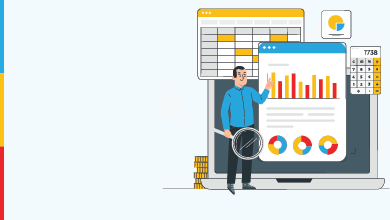
If you purchase a health insurance policy for yourself, your spouse, or a dependent (this cannot include siblings), you are eligible under Section 126 of the Act to claim an income tax deduction. The amount of possible tax savings will be ₹25,000 for each financial year if the insured individuals are under the age of 60 years.

If, however, an insured individual is above the age of 60 years, this amount can go up to ₹50,000.

What are the Best Tax Saving Schemes in India?

There are an abundance of schemes in India that work best when you are looking to save taxes, such as: 

How to Plan Your Tax Savings for the Year?

You need to plan your taxes for the year. However, the majority of tax planning happens at the investment stage. While investing, you can choose tax-saving options which have an EEE status:

  • Investments in the scheme are eligible for deduction

  • Interest accrued in the scheme is exempt from tax

  • Maturity values (including any withdrawals) are exempt from tax

This way, you will not have to create a separate tax plan after the goal and investment planning. Your investments should always be driven by your financial goals and not the short-term need to save taxes. You need to maximise your tax savings within the ambit of your goal-based investments.

Tax Saving Tips for Salaried & Non-salaried Taxpayers

You can take care of the following while investing to maximise your tax savings for the year:

  • Always use tax-saving investments like ULIP, ELSS, PPF, NPS, etc., for long-term goals

  • 10-15% of your income should go to your retirement goal into investments like EPF, NPS, and PPF, all of which offer tax savings

  • Self-employed individuals can invest up to 20% of their annual income in NPS

  • Term life and health insurance covers are a necessary addition to your emergency preparations

  • Benefit from long-term capital gains while investing in Equity stock investments for more than 12 months

  • Invest for at least 36 months in debt funds or gold

This way, you will not need a separate plan for tax savings, and you can maximise your tax savings with your goal-based investments.

Some Additional Income Tax Saving Tips

The best tax-saving methods enable an automatic reduction in tax liabilities. If you invest according to your financial plan, the following investments will allow you to maximise your tax savings:

  • Have term life insurance, and the premiums are deductible under Section 123.

  • Have health insurance coverage for self and family. Premium is deductible under Section 126.

  • Invest in NPS (available to self-employed as well) or EPF for retirement. Investment increases your deduction under Section 123. NPS investment can enable you to save ₹50,000 more under Section 124 (3)

  • Invest in Unit Linked Insurance Plans (ULIP) for your long-term goals, like your child’s education and marriage.

  • Use ELSS funds for investing in equity funds.

Conclusion

Inflation slowly devours your savings, reducing today's ₹100 to be worth less tomorrow. The only true defence? Compound interest, cleverly harnessed, can do just that by converting steady discipline into strong financial growth with time.

 With long-term options, you earn more than returns; you earn financial security. Their solutions are created to beat inflation and enable you to grow your wealth gradually. Because when your money works harder than inflation, your future remains secure.

Glossary

  1. Compound Interest: Earning interest on both the principal and the interest earned
  2. ELSS: Tax-saving equity mutual fund under Section 80C with a 3-year lock-in period 
  3. EEE Status: Tax status where investment, interest, and maturity amounts are all fully tax-exempt 
  4. PPF: Long-term savings scheme with tax-free returns
  5. NPS: Government retirement scheme offering an extra ₹50,000 tax deduction under Section 124
Glossary book
Uncertain About Insurance

FAQs

The best way to start saving on taxes is by investing up to ₹1.5 lakh in options such as PPF, ELSS mutual funds, or life insurance under Section 123. If you live in a rented house, you can claim an HRA exemption, and if you have a home loan, the interest paid is deductible under Section 24. You can also invest in NPS for an additional ₹50,000 deduction under Section 124 (3), and buy a health insurance policy to claim a deduction under Section 126.

Let's say you are 25 and earning ₹30,000 a month. Your tax liability is low right now, but starting early is always a smart move.

First, choose the new tax regime as it works better at this income level. Then start investing ₹1,000-₹2,000 a month in ELSS or PPF to gradually use your Section 123 limit. Also, get a basic health insurance policy to save tax under Section 126. Always submit your investment proofs to your employer and file your ITR on time. Small steps taken at 25 can make a big difference over time.

For salaried individuals, the most commonly used tax-saving tools are PPF, ELSS, and LIC premiums under Section 123, health insurance premiums under Section 126, and NPS contributions under Section 124 (3). If you live in a rented house, the HRA exemption is a big relief. Those with a home loan can also deduct up to ₹2 lakh on interest paid under Section 22.

The new tax regime has lower tax rates but allows very few deductions. Salaried employees can still claim a standard deduction of ₹75,000. You can also benefit from your employer's NPS contribution under Section 124 (2). However, popular deductions like Section 123, 126, and HRA are not available under this regime, so your actual tax savings are limited compared to the old regime.

There is no one-size-fits-all answer. The old regime works better if you have significant investments, a home loan, or an HRA to claim. The new regime is more suitable if you have fewer deductions and prefer simpler tax filing with lower slab rates. The best approach is to calculate your tax under both regimes and go with whichever results in a lower tax outgo. A CA or online tax calculator can help you decide.

Under Section 123, you can reduce your taxable income by up to ₹1.5 lakh in a financial year by investing in options like PPF, ELSS, LIC, EPF, NSC, or paying children's tuition fees. The actual tax saved depends on which slab you fall in. If you are in the 5% slab, you save around ₹7,500; in the 20% slab, you save ₹30,000; and in the 30% slab, you can save up to ₹45,000 just through this one section.

Disclaimer - This article is issued in the general public interest and meant for general information purposes only. The views expressed in this blog are solely those of the writer and do not necessarily reflect the official policy or position of Canara HSBC Life Insurance Company Limited or any affiliated entity. We make no representations or warranties of any kind, express or implied, about the completeness, accuracy, reliability, suitability, or availability with respect to the blog or the information, products, services, or related graphics contained in the blog for any purpose. Any reliance you place on such information is therefore strictly at your own risk. You should consult with a qualified professional regarding your specific circumstances before taking any action based on the content provided herein.

Recent Blogs

Declare Income Sources In Itr Thum Desktop

Don’t Miss These Income Sources While Filing ITR

11 Aug '26
1166 Views
6 minute read
Learn which income sources you must declare in your ITR for AY 2027-28. Avoid penalties and ensure accurate tax filing with this essential guide.
Read More
Tax Saving
Importance Of Taxes Thum Desktop

ITR-5 Form: What it is, Eligibilty & How to File for AY 27-28

07 Aug '26
1099 Views
7 minute read
File ITR-5 for AY 2027-28 with ease! A Step-by-step guide for partnerships, LLPs & associations to simplify your income tax return process.
Read More
Tax Saving
What is the income tax in India?

What is Income Tax in India? Know Income Taxation System

07 Aug '26
5737 Views
10 minute read
Learn everything about tax on income in India 2026 - what is income tax, who pays it, current tax slabs, and smart tips to reduce your tax liability.
Read More
Tax Saving
What are Tax-Saving Fixed Deposits? Benefits & Features Explained

What is Tax Saving Fixed Deposit (FD)? Know the FD benefits & Rates in India

07 Aug '26
7303 Views
10 minute read
Discover tax saving fixed deposit benefits, how it saves tax under Section 80C and key tax saving FD rates available for 5-year tax-saving FDs in 2026.
Read More
Tax Saving
How To Handle Sudden Loss Of A Family Member Thum Desktop

Income Tax on Family Pension: What You Should Know

07 Aug '26
1033 Views
8 minute read
Understand how family pension is taxed under Indian law, what deductions you can claim, and how to file your income tax return accurately and efficiently.
Read More
Tax Saving
Tax Implications Of Surrendering Insurance Policy Thum Desktop

Income Tax Calendar For India: Key Tax Filing Deadlines You Must Know

07 Aug '26
1026 Views
8 minute read
Stay updated with India’s income tax calendar. Know key filing deadlines for FY 2025–26 from ITR, TDS, advance tax, and avoid penalties.
Read More
Tax Saving
Importance Of Taxes Thum Desktop

Section 80CCD (1B): Deductions Under Section 80CCD of Income Tax Act

06 Aug '26
1863 Views
7 minute read
Learn about tax benefits under Section 80CCD (1B) for NPS contributions, including additional deductions under Section 80CCD(1B) to maximize your savings.
Read More
Tax Saving
What is Wealth Tax in India?

Wealth Tax in India: Its Meaning and How Does It Works

06 Aug '26
3252 Views
10 minute read
Explore wealth tax in India, a direct tax on high-value assets. Learn about its abolition and how it worked. Understand its impact with Canara HSBC Life Insurance.
Read More
Tax Saving
importance of Form 12BB

Form 12BB: Know the Purpose & Components of Form 12BB

06 Aug '26
4343 Views
8 minute read
Understand the importance of Form 12BB in tax filing. This comprehensive guide explains what Form 12BB is, its purpose, and how to use it effectively for accurate income tax declarations.
Read More
Tax Saving

Tax Savings - Top Selling Plans

We bring you a collection of popular Canara HSBC life insurance plans. Forget the dusty brochures and endless offline visits! Dive into the features of our top-selling online insurance plans and buy the one that meets your goals and requirements. You and your wallet will be thankful in the future as we brighten up your financial future with these plans.

Family Shield: Enhanced Protection

iSelect Smart360 Term Plan
  • 3 Plan options
  • Life cover till 99 years
  • Steady income benefit
  • Block your premium at inception

Fixed Returns, Zero Risks & Worries

iSelect Guaranteed Future Plus
  • 4 Plan options
  • Life cover + Guaranteed benefits
  • Accidental death benefit
  • Premium protection cover

Start Young, Pay Less, Stay Secured

Young Term Plan
  • Life cover till 99 years
  • Coverage for spouse
  • Block your premium rate
  • Covers 40 critical illness