Will Term Insurance Cover Accidental Death?

Does Term Insurance Cover Accidental Death?

Term insurance covers accidental death under standard policy terms, with optional riders offering extra payout for accident-related claims.

Written by : Knowledge Centre Team

2025-12-05

2202 Views

8 minutes read

In today's unpredictable and fast-paced life, no one knows what might happen at the next moment. This makes it imperative to think about your loved ones' future. For the safety of your family and securing their life, it is important to buy the best term insurance plan, which will act as a financial cushion in the future. A term insurance plan provides the policyholder with financial coverage for the policy term and offers financial security to their beneficiary in the event of the policyholder's demise during the policy term. The monetary amount to be received by the beneficiary will be according to the plan that you select.

While the core function of term insurance is to provide death benefits, many people wonder about the kind of deaths it covers, particularly accidental deaths. Does your standard term plan provide coverage for accidents? Are there exclusions? And what role do riders play in this context? If your mind ever crossed these questions, then you are on the right page. This blog explores everything regarding the insurance for accidental death. Keep scrolling to dive deeper into the details.

Key Takeaways

  • Term insurance is the most cost-effective way to secure a large life cover, including accidental deaths, making it ideal for young earners and primary breadwinners.

  • Most term insurance policies provide a death benefit in the event of accidental death, as long as it falls within the insurer’s defined conditions.

  • High-risk activities like adventure sports or self-inflicted injuries may not be covered unless you’ve opted for relevant riders. 

  • Adding an accidental death benefit rider, critical illness rider, or permanent disability rider can offer enhanced financial protection for you and your family.

  • Deaths due to drug overdose, STDs like HIV/AIDS, suicide, or if the beneficiary is involved in the policyholder’s murder are typically not covered.

Understanding Term Insurance and Accidental Death Coverage

A standard term insurance plan provides a death benefit if the policyholder passes away during the term. But the nature of the death, like natural, accidental, or otherwise, can impact the payout.

Does Term Insurance Cover Accidental Deaths?

Yes, most term insurance plans do cover accidental deaths. An accident is defined as an unforeseen, involuntary, and sudden event leading to death, typically within 90 to 180 days of the incident. Examples include:

  • Road accidents
  • Slipping in the bathroom
  • Falling from a height
  • Fire-related mishaps
  • Electrocution
  • Drowning

However, accidental deaths resulting from high-risk activities like adventure sports (e.g., skydiving or bungee jumping) or willful negligence may not be covered unless you’ve opted for specific riders.

What Type of Deaths are Covered and Not Covered by a Term Insurance Plan?

The payout and benefits of every life insurance policy you buy depend on the cause of the policyholder's death, among other things. These conditions may sometimes vary according to the company in question or the chosen plan.

All these details are clearly stated in your policy, and this is why you should always read the papers stating the terms and conditions before buying a life insurance plan and also share all these details with your nominee so that at the time of claiming the insurance payout, they are saved from any hassle and confusion.

The following list is an overview of the types of deaths that a typical term life insurance plan does and does not cover:

Deaths Covered in a Term Insurance Plan:

The following are the causes of death that are typically eligible for a term insurance payout:

  • Death Caused by Health Issues or Natural Deaths: If the policyholder dies a natural death, like dying in one's sleep, or a death caused by health-related issues except for sexually transmitted diseases, within the policy term.
  • Death Due to a Natural Calamity: If the policyholder passes away due to a natural disaster such as a tsunami or an earthquake within the policy term, the death benefit will be paid out to the beneficiary.
  • Accidental Death: Accident that arises due to the factors discussed above are covered by the life insurance policy.

Deaths Not Covered in a Term Insurance Plan:

The following are the causes of death that are typically not eligible for a term insurance payout:

  • Homicide by the Beneficiary: If the policyholder is murdered, and proven that the beneficiary was the one responsible.
  • Death Due to Sexually Transmitted Diseases: If the policyholder's death is caused by a sexually transmitted disease such as HIV or AIDS, then the death benefit is not paid out.
  • Death by Overconsumption of Intoxicating Substances: If the policyholder's death is caused by an overdose of any intoxicating substance like alcohol or drugs, then the death benefit will not be paid to the nominees of the term plan.
    Some plans offer an insurance payout on deaths by suicide but only if the death occurs within 12 months of buying the term insurance plan. At the same time, others offer no payout at all for deaths by suicide and self-inflicted injuries.

Get the Best Term Insurance Plan for Your Needs

Please enter correct name Please enter the Full name
Please enter valid mobile number Please enter Mobile Number
Please enter valid email Please enter Email

Enter OTP

An OTP has been sent to your mobile number

Didn’t receive OTP?

Application Status

Name

Date of Birth

Plan Name

Status

Unclaimed Amount of the Policyholder as on

Name of the policy holder

Policy Holder Name

Policy No.

Policy Number

Address of the Policyholder as per records

Address

Unclaimed Amount

Unclaimed Amount
Error

Sorry ! No records Found

.  Please use this ID for all future communications regarding this concern.

Request Registered

Thank You for submitting the response, will get back with you.

What are the Benefits of Buying the Best Term Insurance Plan?

There are numerous ways in which term insurance plans prove to be beneficial. Here are some of the benefits of buying a term insurance plan for the financial security of your loved ones:
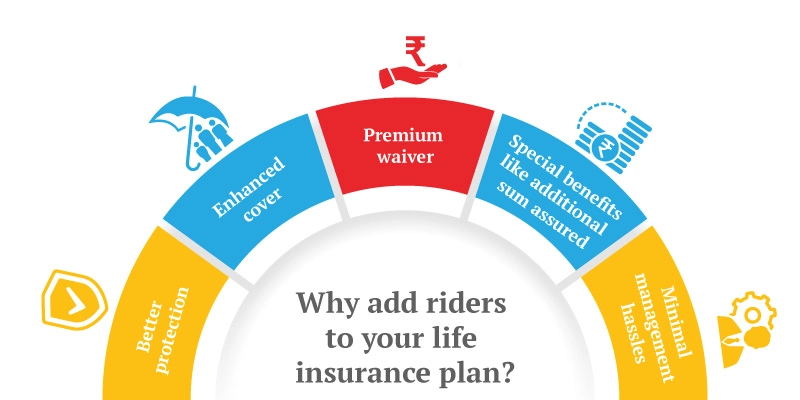
  • Term Insurance Riders: When buying a term insurance policy, you get the option to choose riders or additional clauses to go with it in exchange for a slightly increased premium. To better understand riders, think of how you order a pizza. You get the option of selecting additional toppings at different prices on the already existing recipe. Similarly, you can add a rider(s) of your own accord to the already existing policy with its predetermined list of benefits.
    For Example, you can add a cover for Critical Illness Rider to your term life insurance plan so that in case you get diagnosed with a critical illness during the term of your plan, the insurance company offers you a certain amount of money to meet the treatment expenses and save your family from the financial setback.
    Another example can be a rider for disability resulting from an accident, so that in case an accident takes place which results in dismemberment or any other kind of disability, a certain amount will be paid to you by your insurance company to cover the costs of treatment and make up for the lost income.
  • Protection Against Mishappenings: Especially in a country like India where most families depend upon a single breadwinner, it is of the utmost importance to ensure the rest of the family's financial security in case something occurs. Even in households with more than one earning member, if one is no more, it will be necessary to supplement that person's income for the family to maintain its lifestyle. Buying a term insurance plan will enable you to continue taking care of your family, even if you are no longer with them.
  • Tax Benefits: Under Section 80C of the Income Tax Act of 1961, you can avail of tax benefits of up to ₹1.5 lakhs on premiums paid in favour of your term insurance plan.

    Disclaimer: Tax benefits are subject to change in tax laws. Please consult your tax advisor.
  • Multiple Payout Options: If you feel that your beneficiary may not be able to manage a lump sum insurance payout or might fall prey to someone looking to scam them. You can choose from multiple payout options and select them to get the whole amount at once or in instalments paid to them at regular intervals.

4 Important Points to Keep in Mind Before Buying a Term Insurance Plan

Before purchasing a term insurance plan, it’s essential to take a step back and evaluate key factors that will determine how well the policy serves your family’s needs. From assessing your dependents' future requirements to choosing the right insurer and riders, here are four crucial considerations to make an informed decision:

  1. Assess the financial needs of the people for whom you are buying the insurance plan. For example, if there are children, you need to consider the number of children and the major costs like expenses on education that they will face. Also, consider the total number of dependents and their needs. It is very important to think of the needs that may arrive in the future. For example, if there are elders or people well on their way to old age, consider their medical requirements.

  2. Calculate the premium you will have to pay annually and decide according to your spending capacity. Factoring in the benefits you want, the payout amount you wish your beneficiary to receive, and the riders you want to attach along with the base plan offered by your insurance company.

  3. Study the Claim Settlement Ratio (CSR) of the company before making your purchase. An insurer's CSR is calculated as the percentage of claims that they have settled during a financial year. While considering your options, you should always look at a company's CSR for at least the last five years because you want to ensure that your family doesn't face any difficulties in claiming their rightful payout.

  4. Lastly, selecting riders is another important thing you need to think carefully about before buying a term insurance plan. The basic plan is always generic, but the needs of the people vary. This is why these riders exist in the first place, to give you a more customised experience based on your needs and wishes.

Conclusion

Life is unpredictable and unreliable, but we, at Canara HSBC Life Insurance, strive to be the opposite. We understand your needs and offer term insurance and many other plans that act as saving instruments for you so that you can ensure your family's future and ensure their happiness.

So, don't wait for uncertainty to strike. Act today and invest in a term plan that covers every curveball life may throw your way.

Disclaimer - This article is issued in the general public interest and meant for general information purposes only. The views expressed in this blog are solely those of the writer and do not necessarily reflect the official policy or position of Canara HSBC Life Insurance Company Limited or any affiliated entity. We make no representations or warranties of any kind, express or implied, about the completeness, accuracy, reliability, suitability, or availability with respect to the blog or the information, products, services, or related graphics contained in the blog for any purpose. Any reliance you place on such information is therefore strictly at your own risk. You should consult with a qualified professional regarding your specific circumstances before taking any action based on the content provided herein.

Recent Blogs

What Happens if the Nominee Dies in a Term Insurance Plan?
04 Jan '26
1558 Views
7 minute read
If your nominee passes away while you're still insured, their nomination becomes void. Update your nominee to keep your term insurance secure. Find out how!
Read More
Term Insurance
Is a Limited Pay Term Insurance Plan a Good Idea?
03 Jan '26
880 Views
Learn whether limited pay term insurance plans are a good idea, how they work, who should consider them, and when paying premiums early makes sense.
Read More
Term Plan
What Is Zero Cost Term Insurance and How Does It Work?
03 Jan '26
1396 Views
11 minute read
Understand what zero cost term insurance means, how premium refund works, eligibility conditions, benefits, limitations, and whether this option suits long-term protection needs.
Read More
Term Insurance
What Should Be the Duration of a Term Insurance Plan?
02 Jan '26
1411 Views
7 minute read
How long should my term insurance cover be? Read this blog to know the right term insurance period and also know when you should buy it to ensure complete financial protection for your loved ones.
Read More
Term Insurance
How to Select the Perfect Term Insurance Plan in 2026?
31 Dec '25
3944 Views
12 minute read
Looking for the perfect term insurance plan? Learn key factors to consider when choosing the best coverage to protect your family future. Learn about term insurance benefits, premiums, and more!
Read More
Term Insurance
Can I Buy a Term Insurance For a Cancer Patient in India?
31 Dec '25
2832 Views
10 minute read
Term Insurance for Cancer Patients: While it is impossible to procure an insurance policy for an individual who has already been diagnosed with cancer. Read More!
Read More
Term Insurance
How BMI Affects Your Term Insurance Premium?
29 Dec '25
6891 Views
12 minute read
Learn how your BMI impacts term insurance premiums, why insurers assess weight and height, and how maintaining a healthy BMI can help lower costs.
Read More
Term Insurance
Term Insurance Till Age 99 - How Lifetime Coverage Works?
29 Dec '25
1006 Views
10 minute read
Understand term insurance till age 99 and how lifetime coverage works. Learn benefits, eligibility and why long-term protection matters for your family
Read More
Term Insurance
What Is Pure Term Insurance Plan in India?
29 Dec '25
3413 Views
7 minute read
Learn what a pure term insurance plan is, how it differs from savings-linked policies, what it covers, why premiums are lower, and who should choose it for income protection.
Read More
Term Insurance