
- Claim Settlement Ratio: The percentage of claims an insurer settles against total claims received in a financial year
- Solvency Ratio: A measure of an insurer’s ability to meet its long‑term financial obligations, set by the regulator
- Sum Assured: The fixed amount paid to the nominee if the insured dies during the term insurance policy period
- Rider: An optional add‑on that provides extra benefits like critical illness or disability cover with a term plan
- Free Look Period: The time allowed to review and cancel a policy after purchase without penalty, subject to terms

Get Term Insurance at ₹626/month
Enter OTP
An OTP has been sent to your mobile number
Didn’t receive OTP?
Application Status
Name
Date of Birth
Plan Name
Status
Unclaimed Amount of the Policyholder
Name of the policy holder
Policy No.
Address of the Policyholder as per records
Unclaimed Amount
Request Registered
Thank You for submitting the response, will get back with you.
Complaint Registered
. Please use this ID for all future communications regarding this concern.Request Registered
Thank You for submitting the response, will get back with you.
Request Registered
Thank You for submitting the response, will get back with you.
Sorry
Browse article by category
0
1
1.
What is Term Insurance?
0
2
2.
How Does Term Insurance Work?
0
3
3.
Why Do You Need a Term Insurance Policy?
0
4
4.
Calculate Term Insurance Premium
0
5
5.
How Much Term Insurance Cover Do You Need?
0
6
6.
Who Should Buy a Term Insurance Plan?
0
7
7.
Types of Term Insurance Plans in India
0
8
8.
Protect Your Family with Affordable Term Insurance
0
9
9.
How is Term Life Insurance Different from Whole Life Insurance?
10
10.
Payout Options in Term Insurance
11
11.
Critical Illness and Disability Coverage with Term Insurance
12
12.
Income and Salary Protection with Term Insurance
13
13.
Is it Safe to Buy a Term Insurance Plan Online?
14
14.
Benefits of a Term Insurance Plan
15
15.
Is GST Applicable on Term Insurance Premiums?
16
16.
Features of a Term Insurance Policy
17
17.
Term Insurance Inclusions & Exclusions
18
18.
How to Choose the Best Term Insurance Plan?
19
19.
How to Choose the Best Term Plan as Per Your Needs
20
20.
How Much Term Insurance Cover Should Salaried Professionals Buy?
21
21.
Checklist to Consider Before Buying a Term Life Insurance Plan
22
22.
When is the Right Time to Buy a Term Insurance Policy?
23
23.
Term Insurance - Top Selling Plans
24
24.
What Should Be the Duration of Your Term Insurance Plan?
25
25.
Factors Affecting Term Insurance Premiums
26
26.
How Does Age Impact Term Insurance Plan Premiums?
27
27.
Understanding Life Expectancy & Mortality Trends in India
28
28.
India's Term Insurance Protection Gap: Why Coverage Matters More Than Ever
29
29.
How Health Trends in India Are Reshaping Long-Term Financial Risk
30
30.
Why Medical Inflation Increases Your Financial Risk
31
31.
How Inflation Affects Your Term Insurance Cover
32
32.
Impact of Pandemics & Unexpected Health Events on Mortality
33
33.
Insurance Market Growth in India & Why Now Is a Good Time to Buy
34
34.
Role of Term Insurance in a Complete Financial Plan
35
35.
Using Term Insurance Alongside Your SIP & Mutual Fund Investments
36
36.
Claim Settlement Process
37
37.
How to Avoid Claim Rejection?
38
38.
Common Mistakes to Avoid When Buying Term Insurance
39
39.
Get Life Cover + 100% Premium Back
40
40.
Steps To Buy a Term Insurance Plan Online
41
41.
How to File a Term Insurance Claim (Step-by-Step)
42
42.
Learn How to Calculate the Premium of your Term Life Insurance Plan
43
43.
Documents Needed to Buy Term Insurance
44
44.
Can I Buy Term Insurance Without a Medical Test?
45
45.
Term Insurance Glossary
46
46.
What are Riders in a Term Insurance Plan?
47
47.
What are the Advantages of Adding Riders to your Term Insurance Plan?
48
48.
Glossary
49
49.
Frequently Asked Questions (FAQs) for Term Insurance Plans
50
50.
Hear From Our Happy Customers
51
51.
Related Blogs
Term insurance plans offer financial safety in case of a policyholder’s unfortunate demise. However, choosing the right insurer is just as important as choosing the right cover amount. One of the key indicators of an insurer’s reliability is its Claim Settlement Ratio (CSR), which indicates the proportion of claims settled by an insurer during a specified period. A higher CSR may indicate that the insurer has settled a greater proportion of claims during that period, although it should be considered alongside other factors such as policy terms, exclusions, and service quality. We at Canara HSBC Life Insurance, take great pride in our claim settlement ratio of 99.52% for FY 2025-26.
Key Takeaways
|
What is Term Insurance?
A term insurance policy is a pure protection life insurance plan that provides a death benefit to the nominees if the policyholder passes away during the policy term. The coverage amount, known as the sum assured, is selected when purchasing the policy. This financial support can help beneficiaries:
- Look after their regular monthly living expenses.
- Pay off any financial liabilities, such as a car loan or housing loan.
- Invest money towards important life goals such as children’s education, marriage, and building a retirement fund for the spouse.
How Does Term Insurance Work?
Term insurance is the most traditional form of life insurance, offering financial protection for a specified period. In most term insurance plans, the premium remains fixed throughout the policy term and is determined based on factors such as the policyholder's age and risk profile at the time of purchase.
For example, Ankit, a 32-year-old salaried professional earning ₹12 lakh annually, purchases a term insurance plan with a sum assured of ₹1 crore for a 30-year policy term. He pays an annual premium of around ₹12,000-₹15,000, depending on the plan and benefits chosen. If Ankit passes away during the policy term, the insurer pays the ₹1 crore death benefit to his nominee. His family can use this amount to manage household expenses, repay outstanding loans, fund his children's education, and maintain their financial stability. If Ankit survives the policy term, no maturity benefit is payable unless he has opted for a Return of Premium (TROP) variant.
In simple terms, this is how a term insurance works:
Step 1: Choosing the Cover
You need to buy a policy based on various factors such as age, income, lifestyle habits, needs, inflation, etc. A higher sum assured can provide greater financial protection to your loved ones.
Step 2: Add Riders & Benefits
Depending on your needs, you can choose additional benefits or optional covers, such as critical illness or premium waiver, and select the policy duration that aligns with your financial responsibilities.
Step 3: Provide Nominee Details
Fill in the correct nominee details and other information required during the application process. Correct details can help ensure a smoother claim process for your nominee.
Step 4: Select Payment Mode & Buy
Once you have selected your coverage and benefits, choose a suitable premium payment option, such as regular pay or limited pay, depending on the available options under the plan.
Why Do You Need a Term Insurance Policy?
There are several reasons to buy a term policy. It the most basic type of life insurance, which provides reasonable rates and coverage for a predetermined amount of time. Throughout the policy period, it provides both financial security and life insurance. Besides safeguarding your life, the following are reasons why you should consider buying a term plan:
Financial Security for Your Family: Ensures your loved ones receive financial support in your absence
Income and Salary Protection: Monthly income payout options can help replace your income and support your family's day-to-day expenses
High Life Cover at Affordable Premiums: Term plans offer substantial coverage at relatively low premium rates
Protection Against Outstanding Liabilities: Helps your family repay loans and other financial obligations without additional stress
Support for Future Financial Goals: Assists in funding children's education, marriage, and other long-term goals
Flexible Payout Options: Choose from lump-sum payouts, monthly income, increasing income, or a combination of both
Tax Benefits: Eligible premiums and benefits may qualify for tax benefits under applicable provisions such as Sections 123, 126, and Schedule II, subject to prevailing tax laws, limits, and conditions
Coverage for Older Individuals: Certain term insurance plans offer coverage at higher entry ages, allowing eligible individuals to secure financial protection even later in life, subject to the insurer's eligibility and underwriting criteria

Did You Know?
India is the world's 10th largest insurance market, yet life insurance penetration stays below the global average, leaving many families underinsured.

How Much Term Insurance Cover Do You Need?
Insurance experts recommend buying term insurance plans covering 15-20 times your annual income. For example, if your yearly salary is ₹8 lakh, a term insurance plan must include a minimum of a ₹1 crore term plan. Two commonly used methods to estimate the right sum assured are the DIME Method and the Human Life Value (HLV) Method.
DIME Method
The DIME method helps estimate your insurance needs by considering four key financial obligations:
- Debt: Outstanding liabilities such as personal loans, vehicle loans, or credit card dues
- Income Replacement: The amount your family would need to maintain their lifestyle and meet day-to-day expenses in your absence
- Mortgage: Any outstanding home loan or property-related liabilities
- Education: Future educational expenses of your children and other long-term financial goals
Suppose you have: - Outstanding debts of ₹5 lakh
- Annual income of ₹15 lakh
- Home loan balance of ₹1 crore
- Estimated education expenses of ₹25 lakh
In this case, your family's financial requirement could exceed ₹1.4 crore. A term insurance cover of around ₹1.5 crore may help provide adequate financial protection against these obligations.
Human Life Value (HLV) Method
The Human Life Value (HLV) method is a more comprehensive approach that estimates the economic value of an individual's future earnings. It takes into account factors such as current income, expected salary growth, age, retirement timeline, existing assets, liabilities, and future financial commitments.
Here are some of the factors:
- Age: Younger adults can generally pay premiums for a longer duration and are usually charged lower premium rates. Older applicants may face higher premiums due to higher health-related risk.
- Current Cost of Family: Each family has its own lifestyle and expenses. The amount needed to cover those regular expenses will vary from family to family. You don't want your family's lifestyle to suffer if something happens to you. Hence, you must consider the current expenses to ensure you buy a term insurance plan with the right sum assured.
- Education: Your child’s future depends on your savings. Term insurance allows you to protect your child’s future even if you are not around. You don't want your children's education interrupted due to financial problems. Calculate the sum assured that covers children's education and buy the right term insurance plan.
- Wedding: Financial issues may impact your child’s marriage. If you are concerned about your children's wedding and want them to have the best, whether you are there or not, you must factor it into your sum assured. The best term life insurance plan helps you at every stage of life, no matter what.
- Premium: Choose a premium amount that comfortably fits your budget so that you can continue the policy without financial strain. Also, select a suitable premium payment option, such as single pay, limited pay, or regular pay, based on your income and financial goals.
Example: How a ₹1 Crore Term Plan Pays Out
A ₹1 crore term insurance plan is among the most popular coverage options for salaried individuals and young professionals. It is often considered a suitable starting point for individuals earning between ₹8 lakh and ₹15 lakh annually, as it may provide financial protection equivalent to approximately 10-15 times their annual income.
However, the ideal coverage amount should not be based solely on income. Factors such as outstanding loans, family expenses, children's education, future financial goals, and inflation should also be considered when determining whether a ₹1 crore cover is adequate for your family's needs.
Who Should Buy a Term Insurance Plan?
A term insurance plan is one of the essential financial tools in your life. You must buy term life insurance coverage if you have dependents or relatives who would suffer financially in your absence. Since financial protection matters at every stage of a family's journey, different milestones require unique coverage, such as:

Term Insurance for Parents
Parents provide for their children until they grow up and start earning. The loss of a parent early in life can be devastating for a child. Thus, parents with minor children must have term life insurance coverage.

Term Plan for Married Couple
Marriage is a union of love and a merger of responsibilities. Term insurance coverage is one investment in this common responsibility as the couple builds their lives around each other.

Term Plan for Working Woman
Working only elevates your status as a caretaker. Financial support covers not only immediate needs but also future ones. Use a term insurance plan to protect the future of your loved ones.

Term Plan for Young People
Buying term insurance early helps young professionals secure their family's future while enjoying lower premiums and long-term financial protection.

Term Plan for Self Employed
Term insurance helps self-employed individuals secure their family's financial future by providing a financial safety net in case of untimely demise.

Term Plan for TaxPayers
Premiums may qualify for deductions under Sections 123 and 126 of the Income Tax Act 2025, while the nominee's payout is generally tax-free, subject to applicable conditions.

Term Plan for Homeowners
If you have taken a home loan, your family may struggle to repay it in your absence. A term plan can prove beneficial in such a case. Your family members can use the death benefit payout to pay off the loan.

Term Plan for Equity Investors
If you invest in equities, your family could face financial instability if anything happens to you. A term plan ensures that your family has a guaranteed payout, providing financial security in fluctuating market.

Term Insurance for NRIs
NRIs who have dependents in India should consider term insurance to ensure their family’s financial stability. Many Indian insurers offer global coverage, meaning NRIs can stay protected even while living abroad.

Term Insurance for Diabetics
Diabetic people are at a higher risk of developing critical illnesses. Insurers offer term plans with special considerations for diabetics to ensure their families remain financially secure.

Term Plan for Senior Citizens
A term plan helps senior citizens with dependents secure their family's financial future and can also support legacy planning.

Term Insurance for Cancer Pati
Some cancer patients may qualify for term insurance after recovery. Eligibility depends on medical history, while a critical illness rider offers added financial support.

Term Insurance for Gig Workers
Gig workers like freelancers, consultants, and delivery partners can secure their family's financial future with affordable term insurance that provides life cover in case of untimely demise.
Types of Term Insurance Plans in India
There are different types of term insurance plans that you can buy. Here’s a list of term insurance plans to choose from that may help you secure the dreams and aspirations of your loved ones.
1. Standard Term Insurance Plan
A standard term insurance plan pays a fixed sum regularly for a specific amount of life cover. It is also called a standard term plan because the sum assured and policy premiums do not change throughout the policy's tenure.
For example, if you buy a ₹1 crore term insurance plan for 30 years at age 30, you may need to pay about ₹10,000 per year as a premium. You will pay the same premium regularly for the next 30 years, and your coverage amount will remain the same throughout the term of the insurance Policy. Once you complete the 30-year tenure, the term insurance plan will simply expire.
2. Whole Life Term Insurance
A whole life insurance plan allows you to use your term cover as a tool of wealth transfer to the next generation. The unique feature of the whole life plan is that the cover continues till the age of 99. Thus, the benefit payout from this term life insurance plan is almost certain.
For example, you purchase a ₹ 1 crore term insurance plan for your whole life and choose to pay till 60. The term insurance plan will cover your family in case of early demise during your working years, like the standard term insurance plan. After retirement, the plan will pay the benefit even in the case of natural death. However, if you survive the term of the policy, i.e., you attain the age of 99, the policy pays the entire sum assured to you.
3. Increasing Term Insurance Plan
An increasing term life insurance plan is similar to a standard term plan with one unique difference. The sum assured grows every year by a fixed percentage of the base sum assured.
For example, assume that you buy an increasing term cover with a ₹1 crore base sum assured. The life cover will grow at a rate of 5% per year. In the second year, your total life cover will be ₹1.05 crore, in the third, ₹1.1 crore, and so on.
The growth only stops in the following three cases:
- The term insurance plan expires; that is, the policy tenure is over
- A claim is made on the policy
- The total available sum assured becomes 200% of the base sum assured; i.e. the cover started with ₹1 crore and is now ₹2 crore
4. Decreasing Term Insurance Plan
A decreasing term plan is a term insurance policy where the life cover and sum assured continue to decrease over time. Such term insurance plans are usually linked to a long-term loan and protect the borrower’s family in the event of the borrower’s early death. When linked to a loan scheme, the tenure of this term insurance plan is also limited to the loan tenure. The sum assured declines in line with the principal loan balance.
For example, Rahul buys a decreasing term insurance policy with a sum assured of ₹1 crore and a decreasing rate of 5% per year. If he dies in the second year of the policy, his family will receive ₹95 lakhs, which is ₹1 crore less 5%.
5. Joint Life Term Insurance Plan
This term insurance plan allows you to add your spouse under the same cover. This addition is also applicable to a homemaker spouse. The biggest advantage of buying the best term plan jointly is that the surviving spouse may not need to pay the premiums to continue their life cover after a claim. If you are looking for a smart term plan that covers you and your partner, then iSelect Smart360 Term Plan is your go-to option, as it allows you to add your spouse to the same policy. Another aspect is that you can manage a single policy far more easily. You can select any option while searching for the best term insurance plan.
6. Convertible Term Insurance Plan
Convertible term plans are those that you can convert to another life insurance plan after buying. Usually, you can convert this term plan to a whole life or guaranteed savings plan. The conversion window could be limited to the first few years of purchase. What the convertible plan can change to is also determined by the insurer and is, in some sense, limited.
For example, you bought ₹50 lakhs of term insurance at 25. Before reaching 30, you decide to use whole life insurance with added benefits. When you convert the plan, the premium and sum assured are adjusted to suit your needs.
7. Group Term Insurance Plan
Group term life insurance is a popular employee benefit for many companies today. Insurance helps employers secure their employees’ families financially, helping the workforce focus and relax about the safety of their family’s future.
Group term insurance is a type of life insurance in which a single contract covers an entire group of people. Typically, a policy owner is an employer or business, such as a trade union, and the policy covers employees or team members. Group-term insurance is often provided as part of a comprehensive employee benefits package.
This is a win-win deal for both the employer and employees. Also, if you do not have any other insurance, group term life insurance will offer a basic safety umbrella.
8. Term Insurance with Return of Premium (TROP)
A Term Insurance with Return of Premium (TROP) plan combines life insurance protection with a survival benefit. If the policyholder passes away during the policy term, the nominee receives the sum assured. However, if the policyholder survives the policy term, the insurer refunds the eligible base premiums paid during the policy tenure, subject to the policy terms and conditions.
Since TROP plans offer both life cover and premium refund benefits, they generally come with higher premiums than standard term insurance plans. They are suitable for individuals who want financial protection for their loved ones while also receiving their premiums back if no claim is made.
Protect Your Family with Affordable Term Insurance
Enter OTP
An OTP has been sent to your mobile number
Didn’t receive OTP?
Application Status
Name
Date of Birth
Plan Name
Status
Unclaimed Amount of the Policyholder as on
Name of the policy holder
Policy No.
Address of the Policyholder as per records
Unclaimed Amount

Sorry ! No records Found
Request Registered
Thank You for submitting the response, will get back with you.
Thank you for your interest in our product. Our financial expert will connect with you shortly to help you choose the best plan.
How is Term Life Insurance Different from Whole Life Insurance?
Depending on your financial goals, you can choose either a term plan or a whole life insurance plan. Each of these plans will offer different benefits as follows:
Feature | Term Life Insurance | Whole Life Insurance |
Definition | A pure life insurance policy that provides financial coverage for a specific period (term). | A permanent life insurance policy that offers both a death benefit and a savings component. |
Coverage Duration | Limited to a specified term, such as 10, 20, or 30 years. Coverage expires at the end of the term unless renewed. | Provides coverage for the entire lifetime of the policyholder as long as premiums are paid. |
Premiums | Generally lower and fixed for the chosen term, making it more affordable. | Higher compared to term insurance due to the lifelong coverage and cash value component. |
Death Benefit | Pays a lump sum amount to the nominee if the policyholder dies within the term. | Pays a lump sum death benefit to the nominee whenever the policyholder passes away, provided premiums are paid. |
Maturity Benefit | No maturity benefit. If the policyholder survives the term, no money is paid out. | Offers a maturity benefit in the form of accumulated cash value, which can be withdrawn or borrowed. |
Cash Value Component | No savings or investment component. It is purely a protection plan. | Builds cash value over time, which policyholders can borrow against or withdraw. |
Loan Facility | Not available since there is no cash value accumulation. | Available, as policyholders can take loans against the accumulated cash value. |
Flexibility | Fixed term and coverage, with limited customisation options. | More flexible, as policyholders can choose to surrender, withdraw funds, or take loans. |
Suitability | Ideal for individuals looking for high coverage at an affordable cost, especially those with dependents or financial liabilities. | Suitable for individuals who want lifelong coverage, savings growth, and estate planning benefits. |
Premium Payment Options | Paid only for the chosen term, after which the policy expires. | Premiums can be paid throughout life or for a limited period (Limited Pay Option). |
Payout Options in Term Insurance
Most term insurance plans offer multiple payout options, allowing policyholders to choose how their beneficiaries receive the death benefit. The right option depends on the family's financial needs and long-term goals.
- Lump Sum Payout: Under this option, the entire sum assured is paid to the nominee in a single payment after the claim is approved. It is suitable for families that need immediate funds to repay loans, meet major expenses, or create a financial corpus.
- Monthly Income Payout: Instead of a one-time payment, the nominee receives a fixed monthly income for a specified period. This option is ideal for families that depend on a regular income to manage day-to-day expenses.
- Increasing Monthly Income Payout: The nominee receives a monthly income that increases at a predefined rate over time to help counter the impact of inflation. It is suitable for families seeking long-term income support and rising financial needs.
- Lump Sum & Monthly Income Payout: A portion of the sum assured is paid immediately as a lump sum, while the remaining amount is distributed as regular monthly income. This option is ideal for families that need both immediate financial assistance and a steady source of future income.
Critical Illness and Disability Coverage with Term Insurance
While a term insurance plan primarily provides financial protection through a death benefit, you can enhance your coverage by adding riders for critical illnesses and disabilities. These riders offer additional financial support during medical emergencies and can help reduce the financial burden on you and your family.
Some of the popular riders are as follows:
Critical Illness Rider
Critical illness insurance, available as a rider with your term plan, provides a lump-sum payout upon the diagnosis of specified serious medical conditions. These may include cancer, heart attack, stroke, kidney failure, major organ transplant, and other covered illnesses, depending on the policy terms. The payout is made regardless of the actual treatment expenses and is separate from and in addition to the death benefit under the base term insurance plan. For individuals exploring term insurance for cancer patients, a critical illness rider can provide valuable financial support in the event of a covered cancer diagnosis.
Temporary Total Disability (TTD) Rider
A Temporary Total Disability (TTD) rider provides financial support if the policyholder becomes temporarily unable to work due to an accidental injury. During the recovery period, the rider pays a predefined benefit, helping the insured manage daily expenses and compensate for the temporary loss of income. The benefit is typically paid for a specified period and is subject to the policy's terms, conditions, and waiting periods
How Riders Work with a Term Insurance Plan?
Riders are optional benefits that can be attached to a base term insurance policy at an additional cost. They enhance the scope of protection offered by the policy and can be selected based on individual health risks, financial responsibilities, and future needs. Adding relevant riders can help create a more comprehensive financial safety net for you and your loved ones.
Income and Salary Protection with Term Insurance
A family's financial security often depends on the income of its primary earning member. In the event of the policyholder's untimely demise, the loss of income can make it difficult for dependents to meet household expenses, loan repayments, and other financial obligations. This is where term insurance can play an important role. If the policyholder passes away, the monthly income payout option ensures the family continues to receive a salary-equivalent amount every month, replacing the lost income.
Monthly Income Payout Option
Many term insurance plans offer a monthly income payout option, under which the nominee receives a fixed monthly income instead of, or in addition to, a lump-sum death benefit. This regular income can help the family maintain their lifestyle and meet ongoing financial obligations over a specified period.
Salary Protection for Dependents
Salary protection insurance through a term plan works by replacing the policyholder's monthly income for their dependents after their demise. This feature can be particularly beneficial for families with young children, ongoing loan obligations, or limited alternative sources of income. By combining a lump-sum benefit with monthly payouts, policyholders can create a more comprehensive financial safety net for their loved ones.
How Term Insurance Supports Income Protection
Term insurance can help safeguard your family's financial future by replacing the income they may lose in your absence. Here's how it supports income protection:
- Provides Regular Income: The monthly income payout option ensures your family receives a steady income after your demise
- Helps Maintain Lifestyle: Regular payouts can help cover household expenses and maintain your family's standard of living
- Supports Financial Goals: The income can be used for children's education, daily expenses, and other long-term commitments
- Assists with Loan Repayments: Monthly benefits can help dependents manage EMIs and other financial liabilities
- Reduces Financial Stress: A predictable income stream offers financial stability during a difficult period
- Can Complement Lump-Sum Benefits: Some plans offer a combination of lump-sum and monthly payouts for more comprehensive protection
Is it Safe to Buy a Term Insurance Plan Online?
Buying a term insurance plan online is safe and convenient when purchased through the official website of an insurer or an authorised insurance intermediary. In India, online insurance sales are regulated by the Insurance Regulatory and Development Authority of India (IRDAI), which requires insurers to provide transparent policy information, disclose benefits and exclusions, maintain grievance redressal mechanisms, and follow prescribed customer protection standards. This regulatory framework helps safeguard customer interests while ensuring a reliable online shopping experience. It offers the the following advantages:
Knowledge at Your Fingertips: You may find all the information you need to buy a term insurance plan online by visiting the website. You get access to everything, including the ability to add riders and assess eligibility.
Convenient Monitoring: One of the key advantages of buying term insurance online is transparency and convenience in managing policy details and payments. You can easily track policy payments, renewals, premium due dates, and other pertinent data.
Economical: Buying insurance online is usually more affordable because it cuts out agent commissions, lowers the insurer's administrative overhead, and allows you to instantly compare multiple quotes."
Smart Comparison: The biggest perk of online term insurance is how easily you can compare different policies. By evaluating your options side-by-side, you can confidently choose the ideal plan with the right coverage at the best price.
User-Friendly: With a user-friendly experience, the technology helps people make wise selections. The straightforward approach makes it simple to buy a term insurance policy online.
Benefits of a Term Insurance Plan
Term insurance provides the policyholders with many advantages. Here are a few that you ought to know about:
Features of a Term Insurance Policy
Term insurance policies come with various features that define how the policy works, the benefits available, and the options you can choose during the policy term.
Tax Provisions
Eligible premiums and benefits may qualify for tax benefits under Sections 123, 126 and Schedule II, subject to applicable conditions, limits, and tax laws.
Long Policy Term
Depending on the plan and eligibility, you can choose a long policy term to align your coverage with your long-term financial responsibilities.
Entry Age from 18 Years
Eligible individuals can purchase term insurance from as early as 18 years of age, subject to the plan's terms and underwriting requirements.
Death Benefit as Regular Income
Some plans allow the death benefit to be paid as regular income to the nominee instead of, or alongside, a lump-sum payout, as per the selected payout option.
Return of Premium Option
Under eligible Return of Premium (ROP) variants, the policyholder may receive the applicable premiums paid on surviving the policy term, subject to the plan's terms and conditions.
Disability Rider
A disability rider can provide additional financial protection if the policyholder suffers a covered disability, with benefits determined by the rider's terms.
Critical Illness Cover
An optional critical illness rider can provide a lump-sum benefit on diagnosis of specified critical illnesses, subject to the rider's conditions and exclusions.
High Cover/Maturity Age
Certain plans offer coverage extending to an advanced age, while whole life variants may provide life cover up to age 99, subject to plan terms and eligibility.
Term Insurance Inclusions & Exclusions
The exact coverage and exclusions can vary by policy and rider. The following provides a general overview based on what is applicable to the policy terms.
Inclusions | Exclusions |
Natural death: Death due to natural causes is generally covered when the policy is active, subject to its terms and conditions. | Suicide within 12 months: Suicide within 12 months of policy commencement or revival is subject to the applicable suicide clause. |
Accidental death: Death resulting from an accident during the policy term is covered, subject to applicable exclusions. | War or terrorism: Death arising from war, invasion, hostilities, terrorism or civil commotion may be excluded, depending on the policy terms. |
Illness-related death: Death caused by an illness may be covered when the policy is in force, and the applicable terms are met. | Criminal activity: Death resulting from participation in a criminal or illegal activity with criminal intent may be excluded. |
Permanent disability: Permanent disability benefits may be available when the applicable disability rider is opted for, and the rider's conditions are met. | Alcohol or drugs: Certain claims arising while the insured is under the influence or abuse of alcohol, drugs, narcotics, or psychotropic substances not prescribed by a registered medical practitioner may be excluded. |
How to Choose the Best Term Insurance Plan?
Choosing the right term insurance plan requires careful evaluation of multiple factors to ensure your family's long-term financial security. Here are some key aspects to consider before making a decision:
- Claim Settlement Ratio: The claim settlement ratio indicates the percentage of claims settled by an insurer compared to the total claims received. A higher ratio generally reflects a stronger claim settlement track record. Canara HSBC Life Insurance reported a claim settlement ratio of 99.52% for FY 2025-26 for individual death claims.
- Solvency Ratio: The solvency ratio measures an insurer's financial ability to meet its long-term obligations and settle claims. As per regulatory requirements, insurers should maintain a solvency ratio of at least 1.5, with higher ratios indicating greater financial strength. Canara HSBC Life Insurance reported a solvency ratio of 189.9% for FY 2025-26, which is above the regulatory requirement.
- Persistency Ratio: The persistency ratio measures the percentage of policyholders who continue their policies by paying premiums over a specified period. Canara HSBC Life Insurance reported a 13th-month persistency ratio of 86.3% for FY 2025-26, up from 84.4% in FY 2024-25.
- Customer Experience: Look for insurers that offer a seamless customer experience through efficient onboarding, responsive customer support, digital services, and hassle-free claim processes.
- Benefits and Riders: Evaluate the range of benefits and rider options available, such as critical illness cover, accidental death benefit, waiver of premium, and income payout options, to enhance your protection.
- Adequate Sum Assured: Choose a coverage amount that aligns with your income, liabilities, future financial goals, and family responsibilities. Financial experts often recommend coverage of 15–20 times your annual income.
- Premium Affordability: Select a plan with premiums that fit comfortably within your budget. This helps ensure that you can maintain the policy throughout the entire coverage period without financial strain.
- Payout Options: Review the payout options offered by the insurer, such as lump-sum payouts, monthly income, increasing monthly income, or a combination of lump sum and regular income. Choose the option that best suits your family's financial needs.
- Free Look Period: Check the free look period available under the policy. This period allows you to review the policy terms and conditions after purchase and cancel the policy within the specified timeframe if it does not meet your expectations, subject to applicable terms and conditions.
How to Choose the Best Term Plan as Per Your Needs
The right term insurance plan depends on your age, income, financial responsibilities, policy term, and personal circumstances. Instead of choosing a plan based only on the premium, consider how much financial protection your family would need and how long they may need it.
Use the following guides to explore term insurance based on your specific needs:
By Policy Term: Choose a policy duration that aligns with your working years, outstanding liabilities, and dependants' financial needs
By Age: Buying term insurance earlier can help you secure long-term protection while you are younger, subject to eligibility and underwriting
By Salary: Your income can help determine the level of cover required to replace lost earnings and support your family's financial goals
By Gender: Premiums may differ based on factors considered during underwriting, including age, health, and other risk factors
By Profession: Your occupation and associated risks may influence eligibility, underwriting, and premium rates
How Much Term Insurance Cover Should Salaried Professionals Buy?
There is no single life cover amount that works for every salaried professional. Your income, age, dependants, outstanding loans, existing savings and future financial goals should all be considered when deciding the sum assured.
A commonly used starting point is 15–20 times your annual income. The following table translates this into indicative cover ranges for different salary levels:
Annual Income | 15× Income | 20× Income | Indicative Term Cover |
₹5 lakh | ₹75 lakh | ₹1 crore | ₹75 lakh–₹1 crore |
₹10 lakh | ₹1.5 crore | ₹2 crore | ₹1.5–₹2 crore |
₹20 lakh | ₹3 crore | ₹4 crore | ₹3–₹4 crore |
For example, a salaried professional earning ₹10 lakh a year could consider a term cover of around ₹1.5–₹2 crore as an initial benchmark. However, the final amount should also account for outstanding liabilities, the number of dependants, children's education, retirement needs, and existing assets.
Don't Rely on the Income Multiple Alone
The 15-20x income approach is only a starting point, not a universal rule. A professional with substantial loans or young dependants may need more cover, while someone with significant existing assets and fewer financial obligations may require less.
A useful way to assess your requirement is to consider future income replacement + outstanding liabilities + major financial goals − existing financial assets. This can give you a more personalised estimate of the cover your family may need.
Checklist to Consider Before Buying a Term Life Insurance Plan
Before purchasing a term insurance plan, evaluate more than just the premium. Use this checklist to compare your coverage needs, policy features, and the insurer's terms.
What to Check | What to Consider |
Sum Assured | Ensure the life cover is sufficient to replace your income, support dependants, repay liabilities, and meet major future goals. |
Policy Term | Choose a term that covers your key earning years and financial responsibilities. |
Premium Affordability | Select a premium that you can comfortably pay throughout the premium-paying period to keep the policy active. |
Claim Settlement Ratio & Solvency | Review the insurer's claim settlement track record and financial strength rather than relying on the claim settlement ratio alone. |
Riders | Consider relevant optional covers, such as critical illness or disability riders, based on your needs and the policy's availability. |
Liabilities Covered | Factor in outstanding home loans, personal loans and other financial obligations when calculating the required cover. |
Inflation & Future Expenses | Account for rising costs and future commitments such as children's education, healthcare, and retirement needs. |
Health Disclosure | Provide complete and accurate information about your health, medical history, lifestyle, and habits during the application process. |
Payment Mode | Choose a suitable premium payment frequency and option, such as regular or limited pay, based on what the plan offers. |
Policy Exclusions | Read the policy document carefully to understand exclusions, conditions, and circumstances under which benefits may not be payable. |
When is the Right Time to Buy a Term Insurance Policy?
The right time to buy a term insurance policy is when you receive your first pay cheque. Buying a term life insurance policy early gives you a cost advantage. With term plans like the Young Term Plan, you can continue to increase your term cover as your life progresses.
You can increase your term cover without buying a new term plan, keeping the safety umbrella growing with your family’s safety needs.
The premium cost for a male, non-smoking proposer earning ₹8 lakh per annum under the Young Term Plan is given below for a ₹1 crore term cover of 30 years with regular premium payment mode.
Age in Years | Monthly Premium Amount |
25 | ₹706 |
30 | ₹908 |
40 | ₹1790 |
50 | ₹4254 |
60 | ₹10,921 |
Term Insurance - Top Selling Plans
Canara HSBC Life Insurance offers online term insurance plans to secure your family financially in your absence.
Family Shield: Enhanced Protection
iSelect Smart360 Term Plan
- 3 Plan options
- Life cover till 99 years
- Steady income benefit
- Block your premium at inception
Start Young, Pay Less, Stay Secured
Young Term Plan
- Life cover till 99 years
- Coverage for spouse
- Block your premium rate
- Covers 40 critical illness
Family Shield: Enhanced Protection
Saral Jeevan Bima
- Affordable prices
- Multiple premium payment option
- Get Tax benefits
- Hassle-free purchase process
What Should Be the Duration of Your Term Insurance Plan?
The duration of a term plan depends on when you see yourself fulfilling all your goals. Choose the duration based on your and your family’s future needs. Consider these factors when deciding on the duration of a term insurance policy.
Financial Liability: Your financial liabilities will help you decide the policy terms you need. For instance, if an individual has a 10-year loan, the term insurance policy needs to be 10 years.
Dependents: Considering how long your loved ones will be financially dependent on you will help you decide the terms of your policy. Term life insurance policies help your dependents pay their expenses in your absence.
Large Expenses: It is a large one-time expense in the future. For example, if your child is 10 years old and you buy term insurance to cover their marriage or education, the policy duration could be 20-25 years.
Age: You should buy the best term plan at a younger age but for a longer duration. If you are 30 and opt for a 10-year plan, it will expire when you are 40. There is a lower chance that you will need coverage before this age.
Understanding Life Expectancy & Mortality Trends in India
Life expectancy and mortality patterns help insurers assess the likelihood of claims across different age groups and risk profiles. Insurers use this information along with individual details collected during underwriting to determine appropriate premiums for life insurance policies.
How Insurers Calculate Mortality Risk
Insurers use mortality tables, which contain statistical data on death rates across different age groups and populations. These tables help insurers estimate the likelihood of a policyholder dying during a given period. Insurers use themThey are used alongside factors such as age, health, lifestyle, and policy details to assess overall mortality risk.
Why Age and Health Affect Premiums
Age and health are important factors in determining life insurance premiums. Generally, the likelihood of health-related risks increases with age, while certain existing health conditions or lifestyle factors may also increase the assessed risk. As a result, purchasing term insurance at a younger age and maintaining good health can often help secure more favourable premiums.
Role of Medical Underwriting
Medical underwriting involves assessing an applicant's health and other risk factors before issuing a policy. Depending on the applicant and coverage sought, the insurer may review medical history, lifestyle information, and medical test results. This assessment helps determine eligibility, coverage, and the applicable premium based on the insurer's underwriting guidelines.
India's Term Insurance Protection Gap: Why Coverage Matters More Than Ever
A term insurance protection gap arises when the financial support a family would need after the loss of an earning member is greater than the life insurance cover available to them. India’s insurance penetration remains relatively low, with life insurance penetration declining from 2.8% in 2023–24 to 2.7% in 2024–25. Life insurance density stood at USD 72 in 2024–25, compared with the global figure of USD 388.
Many Indian Families Remain Underinsured
Having a term insurance policy is only the first step. The sum assured should be sufficient to replace lost income, clear outstanding liabilities, and support dependants' future goals. As income and responsibilities change over time, an old policy may no longer provide adequate protection. Regularly reviewing your cover can help ensure it keeps pace with your family's needs.
Rising Cost of Living Increases Dependency Risk
The financial impact of losing an earning member extends beyond immediate household expenses. Education, housing, healthcare, loan repayments, and other long-term commitments can continue for years. With rising living costs, families may need a higher level of financial protection to maintain their standard of living and stay on track with future goals.
Term Insurance as an Income Replacement Tool
Term insurance helps address this risk by providing a death benefit to the nominee if the insured dies during the policy term. This payout can be used to replace lost income, repay debts, and meet future financial commitments. Depending on the plan selected, the benefit may be structured as a lump sum, regular income, or a combination of both.
Choosing the Right Protection
The right term plan should therefore be based on more than just the premium. Consider your income, dependants, liabilities, financial goals, policy term, and required sum assured when determining your coverage.
Research indicates a significant gap in insurance coverage in India, making adequate financial protection important. The Claim Settlement Ratio (CSR) is one factor to consider when evaluating an insurer, alongside coverage, features, exclusions, and financial strength.
Canara HSBC Life Insurance reported a 99.52% CSR for individual death claims in FY 2025-26. Its term insurance range includes the Young Term Plan, Promise2Protect and iSelect Smart360 Term Plan, offering customers options based on their protection needs and policy terms.
How Health Trends in India Are Reshaping Long-Term Financial Risk
India's health landscape is changing, with non-communicable diseases (NCDs) such as diabetes, cardiovascular diseases, and cancer becoming important health concerns. For working-age individuals, these risks can have financial implications beyond medical expenses, particularly when a family's finances depend on their continued income.
Rise of Lifestyle Diseases Among Working Professionals
Long working hours, changing diets and reduced physical activity can contribute to the risk of lifestyle-related conditions such as diabetes, obesity and cardiovascular disease. For working professionals, a serious illness can affect both earning capacity and long-term financial goals. This makes it important to consider health risks when planning savings, emergency funds, insurance and other financial protection.
Stress, Sedentary Jobs and Health Risks
Desk-based work and prolonged periods of inactivity, combined with work-related stress, can affect overall health over time. While lifestyle changes can help manage these risks, financial planning should also account for the possibility of unexpected illness, reduced income or extended periods away from work. Adequate health and life insurance can form part of a broader strategy to protect financial stability.
Why Medical Inflation Increases Your Financial Risk
Rising healthcare costs can affect a family's finances over the long term, particularly when a serious illness requires expensive treatment or prolonged care. Medical inflation can increase how much families need to set aside for healthcare, so it's important to account for these costs when assessing overall financial protection.
While health insurance is designed to help cover eligible medical and hospitalisation expenses, term insurance serves a different purpose. It provides a death benefit to the nominee if the insured dies during the policy term, helping the family manage financial commitments after the loss of an earning member.
When deciding how much life cover you need, consider not only your current income and liabilities but also future expenses such as healthcare, children's education, and other family goals. This can help ensure that your term insurance cover remains adequate as costs rise over time.
How Inflation Affects Your Term Insurance Cover
Inflation can gradually reduce money's purchasing power. A ₹1 crore life cover may appear adequate today, but the same amount could have significantly less purchasing power 15–20 years from now. If your income, family expenses, and financial responsibilities increase over time, a fixed sum assured may not provide sufficient protection.
For this reason, consider future financial needs when choosing your term insurance cover. Some plans also offer increasing-cover options that allow the sum assured to grow during the policy term.
For example, the Canara HSBC Life Insurance Young Term Plan offers a Growing Life Cover option, under which the life cover can increase at specified intervals, subject to the plan's terms and conditions. This can help align your protection with changing financial responsibilities and inflation.
Regularly reviewing your life cover and considering an increasing-cover option can help ensure that your family's financial protection remains relevant as their needs evolve.
Impact of Pandemics & Unexpected Health Events on Mortality
Pandemics and other unexpected health events can temporarily change mortality patterns across populations, particularly when they result in higher-than-usual deaths over a short period. Such events can therefore affect the mortality assumptions insurers use when assessing long-term life insurance risk.
How Public-Health Shocks Affect Mortality Assumptions
Insurers use historical mortality data and actuarial models to estimate the likelihood of death across different age and risk groups. A significant public-health event can cause short-term deviations from these historical patterns, prompting insurers and actuaries to review assumptions as new data becomes available.
However, a temporary increase in mortality does not necessarily represent a permanent change in long-term mortality trends. Insurers consider broader and longer-term data when assessing risk, alongside factors such as age, health, lifestyle, and medical history.
Insurance Market Growth in India & Why Now Is a Good Time to Buy
India's insurance market is expanding, but the growth in insurance coverage has not fully closed the country's protection gap. For individuals and families, this makes timely financial protection particularly relevant as incomes, liabilities, and dependants grow.
India’s Insurance Market Is Expanding
According to the Swiss Re Institute, India's total insurance premiums are projected to grow by an average of 6.9% annually between 2026 and 2030, making India the fastest-growing major insurance market during this period. The report expects life insurance premiums to grow by 6.8% annually over the same five-year period.
This growth is supported by rising incomes, greater financial awareness, wider distribution and increasing demand for insurance products. Swiss Re also notes that term life cover is expected to benefit from India's expanding middle class and young population.
The Protection Gap Remains Significant
India’s insurance market is growing, with insurance premium income reaching USD 146 billion in 2025, a 9.4% increase during the year. However, rising premium income does not necessarily mean that households have adequate financial protection. The protection gap refers to the difference between the financial resources required after an insured event and the support available through insurance, savings, public schemes and other household assets.
For life insurance, this gap is particularly linked to income replacement and the financial obligations of dependants. A family may have an insurance policy but still be underinsured if the sum assured is not sufficient to replace lost income, cover outstanding liabilities or support future financial needs. This makes it important to assess life cover based on income, debts, assets, dependants and the duration of financial support required, not simply whether a policy is already in place.
Why Buying Term Insurance Early Can Help
A growing insurance market does not eliminate the need for individual financial planning. Your required life cover can increase as your income, loans, family responsibilities, and future financial goals grow. Buying term insurance earlier can help you secure protection before these responsibilities increase and while you may be eligible for lower premiums based on your age and risk profile.
The key is not simply to buy a policy, but to choose a sum assured and policy term that adequately protect your family's financial needs.
Role of Term Insurance in a Complete Financial Plan
A complete financial plan should address both wealth creation and financial protection. While investments such as mutual funds, equities, and other assets can help build wealth, term insurance provides a financial safety net for your dependants if you die during the policy term.
Income Replacement Strategy
Your income supports your family's everyday expenses and long-term goals. Term insurance can provide a death benefit that helps replace the financial contribution you would have made, allowing your family to manage expenses and maintain financial stability in your absence.
Covering Loans and Liabilities
Outstanding home loans, personal loans, and other liabilities can place a financial burden on your family if you are no longer around to repay them. Adequate term insurance cover can provide funds that your nominees may use to settle these obligations without having to liquidate other family assets.
Child Education Planning
The loss of a parent can disrupt a child's education and other future goals. A suitable term insurance cover can help provide the funds needed for schooling, higher education, and other planned expenses, even when the family's primary source of income is no longer available.
Wealth Protection vs. Wealth Creation
Term insurance and investments serve different purposes in a financial plan. Investments primarily create and grow wealth, while term insurance protects that plan against the loss of an earning member. Building both layers can help your family continue pursuing long-term goals while protecting them against unforeseen financial setbacks.
Using Term Insurance Alongside Your SIP & Mutual Fund Investments
SIPs and mutual funds can help you build wealth over time, but they do not replace the financial protection provided by life insurance. For financially planned households, combining wealth creation through investments with protection through term insurance can create a more balanced financial strategy.
Keep Wealth Creation and Protection Separate
A SIP helps you invest a fixed amount regularly in mutual funds with the objective of building wealth. Term insurance, on the other hand, provides a death benefit to your nominee if you die during the policy term. Keeping these objectives separate can help you avoid relying on investments alone to protect your family's financial future.
Protect Your Investment Goals
Consider a scenario where you are investing through SIPs to fund your child's higher education or build a retirement corpus. If your income stops unexpectedly, your family may have to withdraw these investments to meet immediate expenses. Adequate term insurance can provide a financial cushion, allowing your family to use existing investments for their intended long-term goals.
Review Both as Your Finances Grow
Your required life cover may change as your income, investments, loans, and family responsibilities increase. Review your term insurance alongside your investment portfolio periodically to check whether your protection remains adequate.
In simple terms, mutual funds can help you build the financial future you want, while term insurance can help protect that future for your family.
Claim Settlement Process
A smooth and timely claim settlement process ensures that your loved ones receive financial support when they need it the most. While the exact requirements may vary by insurer, the claim process generally involves the following steps:
- Notify the Insurer: The nominee or claimant should inform the insurance company about the policyholder's demise as soon as possible. This can usually be done online, through customer care, or by visiting a branch office.
- Submit the Required Documents: The claimant must submit the necessary documents, which typically include:
- Duly filled claim form
- Death certificate of the policyholder
- Original policy document (if required)
- Identity and address proof of the nominee/claimant
- Bank account details for claim payout
- Any additional documents requested by the insurer
- Claim Verification: The insurer reviews the submitted documents and verifies the claim details according to the policy terms and conditions. The insurer may request additional information if needed.
- Receive the Claim Payout: Once the claim is approved, the insurer disburses the benefit to the nominee based on the selected payout option, such as a lump sum, monthly income, or a combination of both.
How to Avoid Claim Rejection?
A term insurance claim can be settled smoothly when you provide accurate information and meet policy requirements. Taking a few precautions while purchasing and maintaining the policy can significantly reduce the chances of claim rejection.
- Disclose All Information Honestly: Provide complete and accurate details about your health condition, medical history, occupation, lifestyle habits, and existing insurance policies during the application process. Non-disclosure or misrepresentation may lead to claim rejection.
- Provide Accurate Personal Details: Ensure that information such as your name, date of birth, contact details, income, and nominee information is correct and consistent across all documents submitted to the insurer.
- Pay Premiums on Time: Paying premiums on time helps keep the policy active. Missing premium payments beyond the grace period may result in policy lapse and loss of coverage.
- Keep Nominee Details Updated: Review and update nominee details after significant life events, such as marriage, divorce, or the birth of a child. Accurate nominee information helps prevent delays during claim settlement.
- Read Policy Exclusions Carefully: Understand the policy terms, conditions, waiting periods, and exclusions before purchasing the plan. Knowing what is and is not covered can help avoid misunderstandings at the time of claim.
- Maintain Relevant Documents: Keep policy documents, premium payment receipts, identity proofs, and medical records safely stored and easily accessible for your family when needed.
- Inform the Insurer About Major Changes: If significant changes in your health, occupation, or lifestyle require disclosure under the policy terms, notify the insurer promptly.
- Purchase the Policy Early: Buying term insurance at a younger age often involves fewer health-related complications and disclosures, making underwriting and the future claims process smoother.
Common Mistakes to Avoid When Buying Term Insurance
Buying a term insurance plan is an important financial decision. Avoiding common mistakes can help ensure that your loved ones receive adequate financial protection when they need it most. Here are a few common mistakes that you should avoid at all costs.
- Delaying the Purchase: Many individuals postpone buying term insurance until later in life. Buying a policy at a young age can help you secure higher coverage at lower premium rates.
- Choosing Insufficient Coverage: Selecting a low sum assured may leave your family financially vulnerable. Consider your income, liabilities, future goals, and dependents while determining the appropriate coverage amount.
- Ignoring Riders: Riders such as critical illness cover, accidental death benefit, and waiver of premium can enhance your protection. Overlooking these optional benefits may result in coverage gaps.
- Opting for a Short Policy Term: Choosing a policy term that ends before your major financial responsibilities are fulfilled may leave your family underprotected. Ideally, the coverage period should align with your earning years and long-term obligations.
- Providing Inaccurate Information: Incorrect or incomplete disclosure of health conditions, lifestyle habits, income, or occupation can lead to complications during claim settlement. Always provide accurate information when purchasing a policy.
- Focusing Only on Premium Cost: Selecting a plan solely because it has the lowest premium may not provide adequate coverage or benefits. Evaluate the policy's features, claim settlement record, and rider options as well.
Steps To Buy a Term Insurance Plan Online
Buying a term insurance plan online is a quick and convenient process. By following a few simple steps, you can secure financial protection for your loved ones and choose a plan that aligns with your needs and budget.
1
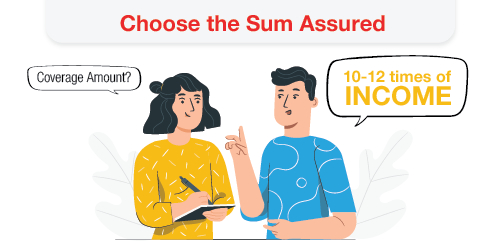
Determine the sum assured based on factors such as your income, financial liabilities, number of dependents, lifestyle expenses, and long-term financial goals. A commonly recommended coverage amount is 10–15 times your annual income.
2

Explore different term insurance plans and select one that best suits your needs. You can also enhance your coverage by choosing relevant riders or add-ons and selecting a suitable premium payment option and policy term.
3

Fill in the required details, submit the necessary documents, and pay the premium online. Once the insurer completes the verification process and approves your application, your term insurance policy will be issued.
How to File a Term Insurance Claim (Step-by-Step)
Filing a term insurance claim involves notifying the insurer, submitting the required documents, and completing the claim assessment process. The nominee or beneficiary should initiate the claim as soon as possible after the insured event.
Step 1: Notify the Insurer
The nominee should intimate Canara HSBC Life Insurance about the claim through the available claim-intimation channels. Provide the policy number and basic details of the insured and the claim event.
Step 2: Submit the Required Documents
Submit the claim form along with the documents requested by the insurer. The exact requirements can vary depending on the nature and circumstances of the claim.
Documents Required for Claim Intimation
Common documents may include:
Claim form duly completed and signed by the claimant
Original policy document, where applicable
Death certificate issued by the relevant authority
Nominee/claimant's identity and address proof
Bank account details for receiving the claim payout
Medical or hospital records, where applicable
FIR, post-mortem report or police records for accidental or unnatural death claims, where applicable
Step 3: Claim Assessment
Once the documents are received, the insurer reviews the claim against the policy terms and applicable conditions. The insurer may request additional information or documents if needed for assessment.
Typical Claim Settlement Timeline
The claim settlement timeline depends on the type of claim, completeness of the documents, and the verification required. Straightforward claims with complete documentation are generally processed faster, while claims requiring additional investigation may take longer.
How to Track Your Claim Status Online
Claimants can use our online claim-status facility, where available, to check the progress of a submitted claim. Keep the claim reference number or policy details handy when checking the status.
Step 4: Claim Decision and Payout
After assessment, the insurer communicates the claim decision to the claimant. If the claim is approved, the applicable death benefit is paid to the nominee through the registered or verified bank account, subject to completion of the required formalities.
Learn How to Calculate the Premium of your Term Life Insurance Plan
When you're young, you're more likely to find cheaper premium insurance because your mortality risk is minimal. You may also have additional debts, liabilities.
Provide details of the policy and verify your ownership
STEP 1
Contact your insurance agent or visit the nearest branch office
STEP 2
Provide details of the policy and verify your ownership
STEP 3
Use a cheque or card to pay the premium
STEP 4
Collect the receipt of the payment

How to Renew Your Term Insurance Policy?
STEP 1
To complete payment, provide your date of birth and COI(Certificate of Insurance)no.
STEP 2
Select the insurance policies you wish to pay for.
STEP 3
Choose between using a credit card, debit card or net banking.
STEP 4
Complete the required fields about your credit or debit card and hit submit.
STEP 5
Save or print the premium deposit acknowledgement and note the receipt number.

What Happens If You Miss a Premium Payment
If you miss a premium due date, your term insurance policy typically remains in force during the applicable grace period. For life Insurance policies, the grace period is generally 30 days for annual, half-yearly, and quarterly premium modes and 15 days for monthly mode.
If you pay the outstanding premium within the grace period, the policy continues without interruption. If the premium remains unpaid after the grace period, the policy may lapse, subject to its terms and conditions. A lapsed policy may be revived within the applicable revival period, generally up to five years from the date of the first unpaid premium, subject to payment of outstanding premiums, applicable interest or charges, and any underwriting or health requirements prescribed by the insurer.
Documents Needed to Buy Term Insurance
Paperwork is an important part of buying a term insurance policy. Before granting you insurance, the insurer needs to review financial information and documents. The following list of paperwork is needed when buying a term insurance policy:
1. Identity Verification
An official identity verification is helpful when evaluating the possibility of fraud and theft with a prospective policy buyer. Required documents to verify your identity:
PAN Card
Aadhaar Card
Passport
Voter ID Card
2. Proof of Address
You will then need to present documentation of your permanent address. It is necessary to lessen the likelihood of fraud. It might be necessary for you to share:
Bills for electricity and phone/mobile
Aadhaar Card, Passport, Ration Card
3. Age Proof
Most term insurance providers also ask for an age-proof document to ensure you meet the eligible age range. Also, your age affects the premium of the term insurance plan you buy. To prove your age, you may have to share:
Birth Certificate
School or College Leaving Certificate
Marriage Certificate
4. Proof of Income
The policyholder should be able to pay the premiums required for the entire tenure of their policy. Insurance providers ask policyholders for certified documents of their source and type of income to ensure this. The size of the sum assured for your term insurance policy is also heavily influenced by your income documentation.
Pay Slips for the past three months
The last three assessment years' income tax returns (ITR) for the previous six months
Bank statement showing your Pay/Salary for the Last Three Assessment Years
Form 130 (previously known as Form 16) (Recent) Audited Profit & Loss Account; and Balance Sheet
Most recent wage certificate issued by your employer (Form 26 AS168 (previously known as Form 26AS)
5. Health Reports
The cost of a term insurance policy is determined by your present health status as well as any potential hazards. When you apply for a term insurance policy, the insurer could request that you take medical exams. In addition to the documents listed above, you might also need to submit recent passport-size photos.
Can I Buy Term Insurance Without a Medical Test?
Yes, some term insurance policies may be issued without a medical examination, but there is no single age or sum-assured limit that applies to every applicant. The requirement depends on the insurer’s underwriting rules, along with factors such as entry age, sum assured, health, lifestyle, and medical history. However, it is important to note that medical-test requirements vary from case to case.
As a general indication, some policies may offer no-medical-test issuance for applicants up to around 40-45 years of age and for lower levels of cover, such as ₹20-25 lakh. However, these are not universal limits. Applicants with pre-existing conditions, a relevant family medical history, or other risk factors may still be asked to undergo medical tests regardless of age or sum assured.
What Are the Trade-offs?
Choosing a no-medical-test route can make the application process simpler, but it may involve certain limitations:
Potentially higher premiums: Without medical reports, the insurer may have less information to assess your individual health risk, which can affect pricing
Lower coverage limits: No-medical-test options may be restricted to lower sum assured amounts compared with policies that undergo full medical underwriting
Greater underwriting scrutiny: The insurer may assess the information provided in the proposal form and available records more closely, particularly when a claim is made
For larger covers, medical examinations can help insurers assess health risks more accurately and may support access to higher coverage and more appropriate premiums.
Term Insurance Glossary
A policyholder is a person buying the policy. In other words, the policyholder fills the proposal form of the insurance plan and applies for the insurance cover. The policyholder is also responsible for paying premiums of the cover. Please note that the policyholder and the assured (whose life is actually covered) can be two different people.
For example, if a father buys a term life insurance policy covering all the family members, the father is the policyholder while the family members are the beneficiaries.
The person whose risk the policy covers is called the Life Assured. For e.g. when a son buys a life insurance policy for his father, the son is the policyholder, whereas the father is the Life Assured.
Sum assured is the guaranteed benefit amount in case the covered risk or risks materialise. For example, in a term insurance policy, the covered risk is the death of the insured. If insured dies within the policy term, the policy is liable to pay at least the sum assured.
If you buy a term insurance policy of ₹1 crore. ₹1 crore is the sum assured of the policy.
Policy term refers to the duration for which a policy remains in force. For example, if you buy a term plan online at the age of 30 and wish to continue the same till you reach 60, your policy term has to be 30 years.
Usually, you are supposed to pay a regular annual premium for any insurance policy until the claim or expiry. For example, if your policy term is 30 years you need to pay 30 annual premiums. Thus your premium payment term will be 30 years or equal to the policy term.
However, your premium payment term or PPT can be shorter than the policy term. With a shorter PPT, you can pay the premiums of the entire 30-year term cover within five years.
Terminal illnesses are those diseases which are life-threatening due to their unpredictable and rapid growth nature. Few examples of such diseases are cancer, heart failure, renal failure, etc.
Surrender Value, also known as cash surrender value, is the amount of money that the policyholder receives if they decide to surrender or terminate their life insurance policy before the maturity date or before the policyholder passes away.
Maturity claim is a claim procedure in which the life insured is entitled to claim the maturity benefits of the life insurance policy or term life insurance policy if all the premiums have been duly paid.
It is the age when the policyholder becomes eligible to receive the benefits as defined under the life insurance policy they have bought.
The policyholder can choose the frequency of receiving the Sum Assured at maturity of the term insurance policy, or any other life insurance policy. Usually, policyholders are given the option to choose from
Lump Sum
Monthly
Part Lump Sum and Part Monthly
Note: A free look period is the buffer time given to the policyholder within which they can cancel their term life insurance policy, or any other life insurance policy, without any penalties.
A nominee is registered by the policyholder while buying a life insurance policy. In case, the policyholder passes away, the nominee or the beneficiary receives the benefits of the policy.
Know all about a nominee
A rider is an add-on that can be opted by the policyholder to enhance the term life insurance plan. Riders provide additional coverage options like Accidental Death Benefit, Child Support Benefit, Waiver of Premium, Accidental Total and Permanent Disability Benefit.
Learn what are term insurance plan riders and how it can benefit you.
It is a rider that waives the premium payments when the policyholder becomes critically ill, injured or disabled.
What are Riders in a Term Insurance Plan?
Term insurance riders are optional in-built covers that offer additional coverage to the policyholder. These are charged separately. Here are some riders that you can add to your term insurance plan:
What are the Advantages of Adding Riders to your Term Insurance Plan?
Adding riders to your term insurance plan enhances the policy’s coverage by offering additional financial benefits beyond the basic death benefit. Here are some key advantages of including riders in your term insurance policy:
Enhanced Financial Protection: Riders provide extra coverage for unforeseen circumstances like critical illnesses, accidental death, disability, or waiver of premium. They ensure comprehensive financial security for you and your family at a minimal cost.
Customisation to Suit Individual Needs: You can choose riders based on your personal risks and financial needs. For example, if you work in a high-risk job, an Accidental Death Benefit Rider would be a useful addition.
Cost-Effective Coverage Expansion: Instead of buying separate insurance policies for different risks, riders offer a cost-effective way to increase coverage under one policy. They can help you save money on premiums.
Tax Benefits: Premiums paid for riders qualify for tax deductions under Section 123 (previously known as Section 80C) and Section 126 (previously known as Section 80D) (for health-related riders) of the Income Tax Act, reducing your taxable income.
Peace of Mind for Policyholders and Families: Riders offer additional financial security, ensuring that your family is well-protected from unexpected life events, giving you complete peace of mind.
Conclusion
Term insurance plays a crucial role in protecting your family’s financial future at an affordable cost. By selecting the appropriate sum assured, policy duration, and riders, you can ensure long-term financial stability for your dependents. Evaluating factors such as claim settlement ratio, tax benefits, and premium affordability helps you select a term insurance plan that aligns with your life goals and responsibilities.
Glossary


Frequently Asked Questions (FAQs) for Term Insurance Plans
Term insurance is a type of life insurance that provides financial protection for a specified period in exchange for regular premium payments. If the policyholder passes away during the policy term, the nominee receives the death benefit. It is one of the most affordable ways to secure a high life cover for your family's financial future.
A term insurance plan provides life cover for a chosen duration, such as 10, 20, or 30 years. The policyholder pays premiums during the policy term, and if an unfortunate event occurs during this period, the insurer pays the sum assured to the nominee. Some plans also offer optional riders and flexible payout options to enhance coverage.
To purchase a term insurance plan, you generally need identity proof, address proof, age proof, income proof, passport-size photographs, and any other documents requested by the insurer. Depending on the policy and coverage amount, medical reports or health examinations may also be required.
Term insurance is suitable for anyone who has financial dependents, outstanding liabilities, or long-term financial goals. It is particularly beneficial for parents, married individuals, young professionals, self-employed individuals, homeowners, and anyone seeking to secure their family's financial future in their absence.
You should have term insurance coverage of at least 10 or 12 times your yearly income. However, the exact amount depends on factors such as your financial liabilities, family expenses, children's education needs, future goals, and inflation. Choosing adequate coverage can help ensure your loved ones remain financially secure in your absence.
Yes, upon the insured's demise within the policy term, the insurer pays the full amount as a death benefit. However, if you had chosen a lump sum plus regular income payout, the amount dedicated to regular income will be paid monthly. The payout is made according to the payout option selected at the time of purchase and is subject to the policy terms and conditions.
Yes, you can have two or more term insurance policies. However, your total life cover may not exceed 20 times your annual income. There is no restriction on the number of policies you can buy, but your financial status limits total life cover. Generally, the insurer will consider your annual income, but your net worth also influences your maximum insurance eligibility. Having multiple policies can help diversify coverage and provide flexibility in choosing different policy terms and benefits.
Generally, pure protection term plans only offer financial safety to your family in case of your early death. Term insurance will not provide any wealth-generation opportunities. However, the whole life term plan option of iSelect Smart360 Term Insurance also offers wealth creation benefits. You can receive a sum of 60 equal to all the premiums paid or a regular income. Individuals seeking both protection and savings benefits may also consider return-of-premium or whole life insurance variants, depending on their financial objectives.
The Insurance Laws (Amendment) Act 2015, Section 45, states that an insurance company cannot deny a claim once the policy has been in effect for three years, or three years after the date of policy reinstatement. This provision helps strengthen policyholder protection and provides greater certainty to nominees during claim settlement
Anyone who is of legal age (18-65) and has dependents can buy term insurance in India. Eligibility may vary across insurers and can depend on factors such as income, health condition, occupation, and underwriting requirements.
A term insurance supports the surviving spouse or the children in the policyholder’s absence. Getting adequate life insurance to pay off debts such as school loans, mortgages, or large credit card bills might be a smart move if one or both partners have any of these obligations. Separate life cover for both spouses can help ensure that the family's financial goals remain protected regardless of unforeseen circumstances.
To purchase a term plan, the policyholder must provide proof of income. Consequently, a person without an income might not be able to purchase a term plan. Some insurers may evaluate applications on a case-by-case basis, depending on the individual's financial profile and source of funds
The length of the term depends on how long you want to guarantee your family's financial security in the event of an unfortunate event. Insurance providers offer terms for policies that range from 5-40 years. You should base your policy term selection on your intended retirement date. Ideally, the policy term should cover your earning years and major financial responsibilities such as loans, children's education, and retirement planning.
Most of the time, an applicant must undergo required medical testing to determine his eligibility before purchasing a term insurance policy. The requirement for medical tests depends on factors such as age, health condition, lifestyle, and the sum assured being applied for.
If the policyholder outlives the policy, only a term insurance plan with return of premiums is provided to reimburse all premiums paid during the policy's duration. The premiums are not refundable if the policyholder dies while the policy is in effect. Standard term insurance plans do not offer a maturity benefit, whereas Return of Premium (TROP) plans provide a refund of eligible premiums upon survival till the end of the policy term.
To use a term insurance calculator, enter details such as your age, annual income, policy term, and desired sum assured. The calculator will provide an estimated premium based on the information entered. Most calculators allow you to get an initial estimate without providing personal details such as your name or mobile number.
Yes, individuals with a history of cancer may be eligible for term insurance, depending on factors such as the type of cancer, stage, treatment history, and current health condition. Some insurers may offer coverage with specific terms, exclusions, or higher premiums. You may also consider adding a critical illness rider for additional financial protection.
Term insurance does not directly cover job loss. However, plans that offer a monthly income payout option can help replace the policyholder's income for their family in the event of their demise. This regular payout can help dependents manage household expenses and ongoing financial commitments.
Temporary Total Disability (TTD) is a condition in which an individual is temporarily unable to work due to an accident or injury. TTD benefits, where available through riders, may provide financial support during the recovery period until the policyholder is able to resume work. It differs from permanent disability coverage, which applies to long-term or irreversible disabilities.
The premium for a ₹1 crore term insurance plan depends on factors such as age, health condition, lifestyle habits, occupation, and policy term. For a healthy non-smoking individual purchasing coverage at a younger age, premiums are generally more affordable. Using an online term insurance calculator can help you obtain a personalised premium estimate.
Term Insurance with Return of Premium (TROP) provides life cover along with a survival benefit. If the policyholder survives the policy term, the insurer refunds the eligible premiums paid during the policy tenure, subject to policy terms and conditions. Since it offers both protection and premium refund benefits, TROP plans generally have higher premiums than standard term insurance plans.
From 22 September 2025, individual term insurance premiums attract 0% GST, compared with the earlier 18% rate. This reduces the GST component of the premium payable by eligible individual policyholders.
Some applicants may be eligible for term insurance without a medical examination, depending on factors such as age, sum assured, health, and the insurer's underwriting guidelines. However, the insurer may require medical tests or additional information based on the applicant's risk profile.
If you miss the due date, your policy generally gets a grace period during which you can pay the outstanding premium and keep the policy active. If payment is not made within this period, the policy may lapse and can potentially be revived later, subject to the insurer's applicable terms and conditions.
With an annual income of ₹6 lakh, a commonly used starting point is around 15–20 times your annual income, which would indicate a cover of approximately ₹90 lakh–₹1.2 crore. Your final requirement should also account for loans, dependants, existing assets, and future financial goals.
Yes, a homemaker or non-working spouse may be eligible for term insurance, subject to the insurer's eligibility and underwriting criteria. Depending on the policy, the insurer may assess the family's financial profile and the earning spouse's income even when the applicant has limited or no personal income proof.
Claim Settlement Ratio (CSR) indicates the proportion of claims an insurer settles during a specified period, while Persistency Ratio measures how many policyholders continue their policies by paying premiums over time. CSR relates to claim handling, whereas persistency reflects policy continuation and customer retention.
Some term insurance plans offer increasing-cover options that allow the sum assured to rise during the policy term, subject to the plan's terms and conditions. If your existing policy does not provide this feature, increasing your cover may require a new policy or an additional policy, depending on the insurer's available options.
Hear From Our Happy Customers










How to Choose the Ideal Term Plan for Your Family Future?
26 Aug '26
6 minute read
Learn how to select the perfect term plan that covers your family's financial needs, liabilities, and lifestyle goals. Ensure a secure future today!
Read More
Term Insurance

Why Term Insurance Matters During Pandemics & Epidemics?
26 Aug '26
5 minute read
Pandemics & epidemics expose financial vulnerabilities. A complete breakdown of why term insurance is crucial during health crises & how it protects you.
Read More
Term Insurance

Why Term Insurance Premium Increases with Age?
26 Aug '26
9 minute read
Know why term life insurance premiums rise as you age. Learn the reasons behind premium hikes and how to lock in lower rates with early planning.
Read More
Term Insurance

Renewable vs Convertible Life Insurance Term Plans | Key Differences
26 Aug '26
7 minute read
Compare renewable and convertible term life insurance term plans. Learn their features, benefits, and how to pick the best option for your financial security.
Read More
Term Insurance

What Happens to Term Insurance If You Move Abroad as an NRI?
26 Aug '26
6 minute read
Moving abroad? Learn what happens to your existing term insurance and how NRIs can keep coverage active.
Read More
Term Insurance

Why New Parents Must Buy Term Life Insurance?
25 Aug '26
6 minute read
Just became a parent? Term life insurance is one of the most important financial decisions you can make. Here is why new parents must not delay buying one.
Read More
Term Insurance

Term Insurance Claim Rejection Due to Wrong Occupation Details
11 Aug '26
7 minute read
Can your term insurance claim be rejected for giving incorrect occupation details? Learn why insurers deny claims, common mistakes, and how to avoid rejection in India.
Read More
Term Insurance

Limited Pay Option in Term Insurance - Benefits
11 Aug '26
8 minute read
Limited pay option in term insurance lets you pay premiums faster while enjoying long-term cover. Learn how it works and its benefits.
Read More
Term Insurance
Buying Term Insurance Online - Step-by-Step Guide
11 Aug '26
10 minute read
Discover how to buy term insurance online easily. Learn the steps, what to compare, documents needed and tips for a quick, secure purchase.
Read More
Term Insurance
Popular Searches on Term Insurance
- Types of Term Insurance
- Buy Term Insurance Online
- Term Insurance Plan
- 1 Crore Term Insurance
- 2 Crore Term Insurance
- 5 Crore Term Insurance
- Term Insurance for women
- Term Insurance Calculator
- Term Insurance for Housewives
- Term Insurance Tax Benefit
- Term Plan with Return of Premium
- 50 Lac Term Insurance
- Zero Cost Term Insurance
- Temporary Total Disability
- Buy Term Insurance Online
- What is Term Insurance?
- Term Insurance for NRIs
- 10 cr Term Insurance
- Term Insurance for Senior Citizens
- Spouse Term Insurance Plans
- Term Insurance for NRI
- Accidental Death Benefit
- iSelect Smart360 Term Plan
- Young Term Plan