


UPI AutoPay Pitfalls

UPI Autopay Pitfalls: Staying On Top Of Silent Recurring Debits

UPI: A boon or a curse? How you manage your daily expenses determines whether autopay works for or against you.

2025-05-12

1208 Views

8 minutes read

When UPI was launched in India for the first time in 2016, all rejoiced in this transformative new beginning. With time, it evolved, and in 2020, National Payments Corporation of India (NPCI) introduced another new feature called UPI autopay to us all. It started with the good intention of automating the recurring payments for OTT subscriptions, insurance premiums, gym memberships, and utility bills. The goal was to reduce the time spent on repetitive payments by using just a one-time mandate process. 

But here’s the catch: these payments flow silently, and sometimes ‘too unnoticeably’.

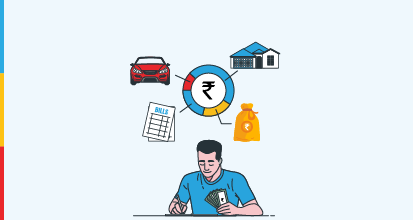
That gym you quit six months ago? Still billing you. A long-forgotten subscription? Still active. These small, regular payments often go unnoticed, quietly draining your bank account. For many, this is where the convenience of UPI turns into a blind spot in personal finance management

Key Takeaways

  • UPI autopay is handy, but may lead to unsuspecting money leaks.
  • Tracking daily expenses serves to identify recurring hidden charges.
  • Active personal finance management avoids budget surprises.
  • Routine mandate reviews keep your funds in your possession.
  • Smart financial tools and constant monitoring are the solutions to avoiding financial leaks and keeping your budget under control.


Why We Miss These Debits?

Even with the convenience that UPI autopay offers, most of us find ourselves caught off guard by the same feature that is supposed to make our lives easier. These debits are usually small, habitual, and hidden in the noise of online life. Without conscious tracking, they go unnoticed, slowly affecting your monthly cash flow. Here's why these payments tend to fly under the radar:

  • Lack of Notifications - Not all repeat payments have reminders. Low-value auto-debits are not always notified by some banks, leaving gaps in perception. Without these reminders, you won't even realise that amounts are quietly disappearing each month. These stealth drains can sabotage your budgeting without you even realising it.
  • App Fatigue - Since more than one app is connected to UPI, you find it difficult to keep track of which app is charging for what service. Such a mess causes negligence. You lack transparency across platforms, and so easily, outstanding charges keep piling up. It's as if you have ten wallets running simultaneously, utterly disorganised and confusing.
  • Digital Overload - With a hyper-digital lifestyle, it is so simple to swipe away a payment reminder mindlessly. We just assume it is something we authenticated, without verifying. Information overload breeds laxity. Before you realise it, swiping as a habit becomes an oversight in your money ways.

Worried About Emergencies? Start Planning Now

Please enter correct name Please enter the Full name
Please enter valid mobile number Please enter Mobile Number
Please enter valid email Please enter Email

Enter OTP

An OTP has been sent to your mobile number

Didn’t receive OTP?

Application Status

Name

Date of Birth

Plan Name

Status

Unclaimed Amount of the Policyholder as on

Name of the policy holder

Policy Holder Name

Policy No.

Policy Number

Address of the Policyholder as per records

Address

Unclaimed Amount

Unclaimed Amount
Error

Sorry ! No records Found

.  Please use this ID for all future communications regarding this concern.

Request Registered

Thank You for submitting the response, will get back with you.

Smart Moves to Stay Ahead

To avoid getting caught off guard by silent auto-debits, adopt a few practical habits that make financial awareness second nature. All these intelligent manoeuvres are not time-consuming, but they are game-changers.

  • Reviewing Mandates Monthly - Schedule 10 minutes every month to review your live UPI mandates. Look at your bank or UPI app dashboard and see what's running. It's like checking the fridge. You discard expired stuff, right? Do the same with your payments.
  • Tracking Daily Expenses - Use a notebook, an app, or a spreadsheet. What matters is consistency. When you track daily expenses, you create awareness of where every rupee goes. This small habit uncovers wasteful spending and highlights silent UPI debits, helping you take back control of your personal finance management.
  • Using UPI Apps with Better Insights - Some apps provide categorisation and reminders. Opt for one that distinguishes repeating payments clearly. Such apps work like financial mirrors, presenting to you clearly where money goes. They help intercept repeat deductions before they add up.
  • Pausing Before You Approve - Don't blindly agree to a recurring payment request. Know the amount, how often, and why. Think of it as financial consent; you won't sign a contract without reading it. Give your cash the same courtesy.
  • Unsubscribing Ruthlessly - No longer using a service? Turn it off. It can save you a huge amount of money each year. Each subscription cancelled is a victory for your wallet. It's like cleaning out your finances, only keeping what really works for you.

How Does it Impact Your Financial Health?

Imagine five regular payments of ₹200 each. That's ₹1,000 a month or ₹12,000 a year. Enough for an emergency kitty or a quick trip. But if one doesn't keep tracking daily expenses, this money silently vanishes in the background, without anyone really realising it.

Such silent financial bleeding may appear to be innocuous on a month-to-month basis, but over a year, it can become quite substantial. The irony? Most of us worry about saving less than what we should, failing to recognise that these minute drips are the actual culprits. Covert auto-debits tend to derail our long-term financial objectives, making it all the more important to watch every rupee. Remaining conscious enables you to take back control of your own personal finance management and route money into more significant ambitions such as insurance, investment, or debt repayment.

There’s also emotional fatigue that comes from not being in control. Not knowing where your money is going is like driving with a fogged-up windshield.

trivia-img

Did You Know?

NPCI allows instant auto-recharge of NETC FASTag & RuPay NCMC via UPI Autopay, so no 24-hr notice is needed.


Source: ET


iSelect Guaranteed Future Plus

Autopay: The Good Side When Managed Well

Autopay is not the enemy. In fact, it is a strong friend that can help simplify your financial life when used intelligently. Autopay will ensure that bills don't slip through the cracks, particularly during busy months. 

  • Avoid Late Charges: This feature pays your bills on time, saving you from unwanted penalties or interest fees.
  • Make Bill Payments Easy: It simplifies your finances by avoiding the inconvenience of remembering due dates for multiple services.
  • Keep Credit Score: On-time payments through autopay positively affect your credit history, enabling you to keep or enhance your credit score.


How to Use UPI Autopay Wisely?

These are expenses you can budget for, predictable, regular, and unavoidable. Autopay is sensible:

  • For fixed, unavoidable expenses such as insurance premiums, SIPs, and EMIs.
  • For services you actually use and require.
  • For the rest, manual payment may well be the better choice.

For the rest, manual payment may well be the better choice. It keeps you engaged, aware, and in charge of each rupee spent.

Only when left unregulated does it turn into an issue. That's when convenience turns into negligence.

How do you Cancel or Modify a UPI Autopay Mandate?

Most would think you require the services of a financial advisor to terminate an autopay, but the fact is, it is easier than everyone imagines:

  • Tap on your UPI-supported app (Google Pay, PhonePe, Paytm, etc.)
  • Navigate to your autopay/mandate section
  • Choose the subscription
  • Tap on "Cancel" or "Pause"

Be aware. A two-minute check can prevent you from being chased for a year's worth of unwanted payments.

The Role of Insurance in Your Financial Discipline

One place that autopay actually improves financial responsibility is insurance, particularly when it's a long-term policy related to your goals in life. Ongoing premium payments are not charges; they're investments in your future.

With Canara HSBC Life Insurance, handling this responsibility becomes hassle-free. Our policyholders get reminders and easily accessible dashboards to track premium payments, monitor policy benefits, and receive real-time updates. For example, the iSelect Guaranteed Future Plan provides a guaranteed lump sum or periodic income, allowing you to remain disciplined in saving while protecting your family. You can set up a UPI autopay for it too!

Final Thoughts: Stay Financially Awake

UPI Autopay works well when you are attentive, but it is risky if you go into autopilot mode. Most of us allow tiny debits to creep in quietly, only to find months down the line how much they've cumulatively taken out of our pockets. That's why attention is non-negotiable. Make it a monthly routine, check your mandates, interrogate every new debit, and axe what does not benefit you.

The cornerstone of managing personal finance is through persistent attention. Awareness is not about balancing once a week. It's about being proactively in touch with one's day-to-day spending and realising where each rupee is going. Financial stability or financial struggle often hinges on catching the leaks early. Silent recurring debits are those leaks, and the earlier you seal them, the better your mastery of your money. For after all, it's the little things that quietly construct your financial future.

Glossary

  1. UPI Autopay: A feature that automates recurring payments through a one-time approval, ensuring timely and hassle-free transactions.
  2. Mandate: A pre-approved instruction you provide to your bank or UPI app to automatically debit money at scheduled intervals.
  3. Recurring Debit: A fixed or variable amount withdrawn from your account regularly for subscriptions, utilities, or services.
  4. Expense Tracker: An app or tool used to track daily expenses and provide insights to help you manage spending better.
  5. Personal Finance: A strategy to manage income, expenses, savings, and investments to meet both short and long-term financial goals.
glossary-img
Uncertain About Insurance

FAQs

UPI AutoPay has robust authentication mechanisms such as UPI PIN and app-based authorisation, which render it very secure.

There are no charges for availing UPI AutoPay. There are no additional fees for activating or utilising the service.

UPI might experience problems such as server availability, transaction capacities, and dependence on internet bandwidth and mobile phone devices. Other than that, the silent expenditure, which most people do not keep track of, is also one of the most unnoticed pitfalls of UPI autopay.

Monitor UPI transactions through your bank app or a UPI-based app. Transaction history and expense summaries are made available by most apps.

Yes, you can suspend a UPI AutoPay mandate at any moment through your UPI app within the 'Mandates' section.

Visit your UPI app, go to ‘Mandates’, choose the active ‘AutoPay’, and select ‘Cancel’ to disable it right away.

Disclaimer - This article is issued in the general public interest and meant for general information purposes only. The views expressed in this blog are solely those of the writer and do not necessarily reflect the official policy or position of Canara HSBC Life Insurance Company Limited or any affiliated entity. We make no representations or warranties of any kind, express or implied, about the completeness, accuracy, reliability, suitability, or availability with respect to the blog or the information, products, services, or related graphics contained in the blog for any purpose. Any reliance you place on such information is therefore strictly at your own risk. You should consult with a qualified professional regarding your specific circumstances before taking any action based on the content provided herein.

Financial Planning - Top Selling Plans

We bring you a collection of popular Canara HSBC life insurance plans. Forget the dusty brochures and endless offline visits! Dive into the features of our top-selling online insurance plans and buy the one that meets your goals and requirements. You and your wallet will be thankful in the future as we brighten up your financial future with these plans.

Recent Blogs

Why Should You Check Your CIBIL Score Regularly?
12 Jan '26
540 Views
5 minute read
Learn why checking your CIBIL score regularly helps improve loan approval chances, interest rates, and financial health. Simple guide for Indian consumers.
Read More
Personal Finance
Financial Literacy for Young Indians: Why Insurance Knowledge Matters?
11 Nov '25
7 Views
7 minute read
Empower your future! See why every young Indian should master financial literacy and insurance basics for lifelong financial success.
Read More
Personal Finance
Different Types of Electronic Fund Transfers In India
03 Nov '25
128 Views
6 minute read
Understand the different types of electronic fund transfer in India, including NEFT, RTGS, IMPS, UPI and more. A simple guide for quick and safe payments.
Read More
Personal Finance
Adoption in India: Legal Steps & Financial Planning Guide
03 Nov '25
612 Views
7 minute read
Understand adoption in India with key legal rules, CARA process, eligibility, and smart financial planning to secure your child’s future.
Read More
Personal Finance
What is a Trust Fund and How Does it Work?
24 Oct '25
372 Views
5 minute read
Learn what a trust fund is, how it works, and how it supports your long-term financial planning goals.
Read More
Personal Finance
Legacy Planning: Build Wealth for Future Generations
24 Oct '25
269 Views
5 minute read
Learn how to leave a lasting legacy and grow wealth for your next generation through smart financial planning.
Read More
Personal Finance
Financial Goals for Your Midlife | Smart Money Planning
09 Oct '25
558 Views
7 minute read
Discover the most important financial goals for your midlife, including wealth protection, retirement planning, insurance needs, and smart investment strategies.
Read More
Personal Finance
How to Build Long-Term Wealth Successfully?
11 Aug '25
330 Views
7 minute read
Uncover strategies for long-term investments and wealth planning to grow and protect your money over decades.
Read More
Personal Finance
How Do Policy Riders Impact Life Insurance Premiums?
18 July '25
136 Views
5 minute read
Understand how policy riders impact your life insurance costs. Choose the right riders to balance coverage and affordability.
Read More
Personal Finance