

Written by : Knowledge Centre Team
2025-11-27
1195 Views
6 minutes read
Share
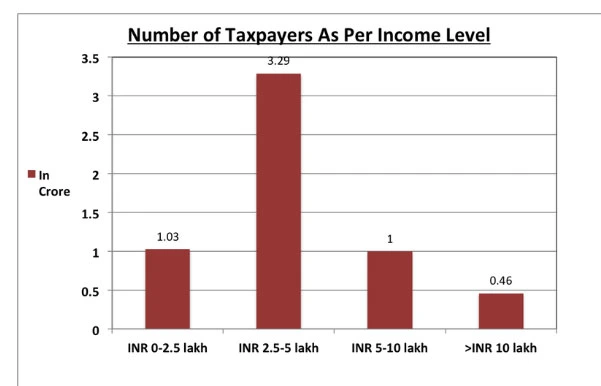
Data from the Income Tax Department clearly reveals that salaried people make up the bulk of taxpayers in India. For FY 2019-20, individual taxpayers in the Rs. 2.5-5 lakh per annum income bracket constituted the lion's share of income taxpayers in India.
In AY 2020-21, 5.78 crore salaried individuals filed their income tax returns (ITR), and by AY 2024-25, the number jumped to 7.28 crore. In the same period, ITR by business increased from 15.3 million to 22.5 million. Ironically, in the corresponding period, average business income grew by 7.2% per year, while average salaried income increased by a meagre 4.2%.
Salaried people have a limited scope for increasing their income, but have to bear a larger burden of the country’s taxes. In such a scenario, it is essential that you know how to minimise your tax outflow by using all the legal means and methods of saving tax at your disposal.
Your employer provides different types of allowances as a component of your salary to lighten your tax burden. You must know about each of these allowances, how to declare them, and use it to your advantage to enjoy maximum tax benefits.
An OTP has been sent to your mobile number
Sorry ! No records Found
Thank You for submitting the response, will get back with you.
HRA is the best among all types of allowances from an employee’s perspective. The extent of HRA tax deduction available to you is dependent on your basic salary, dearness allowance and other factors. If the value of your rent payments in a financial year is more than Rs. 1 lakh, you have to submit your landlord’s PAN Card.
The following factors will determine the extent of HRA tax deductions you can get on your tax return:
Leave and travel allowance is also a major component in your salary structure. With LTA you can avail tax deduction for a trip taken only with your spouse, children and dependent parents and siblings within India. The extent of exemption is equal to the actual expenses incurred on the trip which has to be claimed by submitting original bills. LTA exemption is available for only two journeys within a span of four years.
Some employers also provide dearness allowances (DA) to employees as part of the salary structure. However, DA is fully taxable in to the employer. Thus, you cannot enjoy any tax benefits on them.
Standard deduction is a default deduction that the government allows on your taxable income to help you bring down your tax burden. Prior to Budget 2019, individuals could claim a standard deduction of Rs. 40,000, but that has now been increased to Rs. 50,000.
If your annual income is Rs. 3 lakh, then Rs. 50,000 is taxable, but with a standard deduction of Rs. 50,000, your taxable income is reduced to 0; therefore you don’t have to pay any taxes. That is how the standard deduction helps taxpayers.
As companies today operate in multiple locations, employees might be asked to report to work in a different city and it may even come along with a promotion. Relocation incurs huge costs as you have to move furniture, vehicles and make other costly arrangements in a new city. As per section 10(14) of the Income-tax Act, 1961, read with rule 2BB of the Income-tax Rules, 1962, any allowance granted to meet the cost of travel on transfer (including packing and transportation of personal effect) or the ordinary daily charges incurred during the period of journey in connection with transfer can be claimed as exempt from tax. So you can claim the relocation allowance as exempt from tax to the extent of actual specified expenses incurred on your transfer.
If the amount paid by the employer is more than the actual specified expenses incurred, the difference shall be taxable as salary income in your hands. You should maintain the necessary documents substantiating the payment of expenses for the transfer.
Apart from various types of allowances, you can reduce your tax burden by investing in tax-saving instruments such as ULIPs, pension plans, NPS, PPF and tax-saving fixed deposits. You can also avail tax deductions on home loan interest paid under Section 24 and on interest paid on education loan as per Section 80E of the Income Tax Act.
Investing in ULIPs is one of the best ways to avail yourself of maximum tax benefits, get life protection, and generate wealth in the long term. Since ULIPs are EEE investment instruments, investors get the triple benefit of enjoying tax benefits on premiums paid, returns on investment, and on maturity/death benefit. Start with and meet your financial goals while maximising tax savings and returns.
Disclaimer - This article is issued in the general public interest and meant for general information purposes only. The views expressed in this blog are solely those of the writer and do not necessarily reflect the official policy or position of Canara HSBC Life Insurance Company Limited or any affiliated entity. We make no representations or warranties of any kind, express or implied, about the completeness, accuracy, reliability, suitability, or availability with respect to the blog or the information, products, services, or related graphics contained in the blog for any purpose. Any reliance you place on such information is therefore strictly at your own risk. You should consult with a qualified professional regarding your specific circumstances before taking any action based on the content provided herein.
We bring you a collection of popular Canara HSBC life insurance plans. Forget the dusty brochures and endless offline visits! Dive into the features of our top-selling online insurance plans and buy the one that meets your goals and requirements. You and your wallet will be thankful in the future as we brighten up your financial future with these plans.