2025-05-20
1054 Views
5 minutes read
Share
An OTP has been sent to your mobile number
Sorry! No records Found
Thank you for your interest in our product. Our financial expert will connect with you shortly to help you choose the best plan.
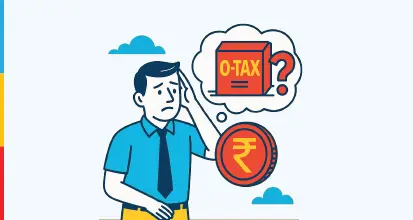
It is easy to confuse income tax jargon. The terminology in annual budget announcements and a lot of income-tax related articles and forums tends to be convoluted and nobody can be blamed for being misled into getting the incorrect picture.
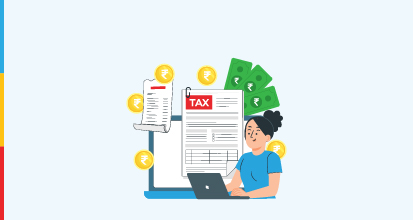
The short answer is: No, you do not need to file ITR for income less than 2.5 LPA (Lakhs Per Annum). Indeed, the bright side of being in this income tax bracket is that you do not need to compulsorily file ITR or pay any taxes at least.
However, as per annual budget 2019, if an individual who during the previous year—(i) has deposited an amount or aggregate of the amounts exceeding one crore rupees in one or more current accounts maintained with a banking company or a co-operative bank; or (ii) has incurred expenditure of an amount or aggregate of the amounts exceeding two lakh rupees for himself or any other person for travel to a foreign country; or (iii) has incurred expenditure of an amount or aggregate of the amounts exceeding one lakh rupees towards consumption of electricity; then will required to file ITR.
Further, you may need to file ITR (income tax returns) if you need to claim a refund or carry forward losses. Also, for a lot of our favourite travel destinations, ITR for the past three to five years are often part of the documents checklist. As a result, while you do not have to, it is advisable for you to do so anyway. It's like working out. Nobody has to work out, unless you make a living off your appearance (like actors) or if your daily bread relies on your fitness (like sports people), but most people do today anyway, because it is the healthier alternative.
You need to file what is called a nil income tax return. You get proof of your income for Visa applications in the future, not to mention that this comes in handy even when you want to apply for loans or any other type of credit. Similarly, if you have paid TDS despite your income being below the taxable limit, you need to file an ITR to claim a refund. What if you have incurred a loss in your day trading or mutual fund investments? This, too can be claimed if you file an ITR. So long as your overall income is less than Rs 2.5LPA you simply file a nil ITR and pay no tax.
Yes, absolutely. Investments are not only for tax saving but also for wealth generation, to grow your earnings, and also to safeguard your future and that of your family. Heard that one a lot, but don't know what it means? Well, put simply, it implies that you save to ensure that you and your family always have funds available, no matter what eventualities come your way. Eventualities is a euphemism or a softer word used in place of harsher ones, such as death and critical illness. However, we live in uncertain times. It is better to look at the possibility of eventualities in the eye and be prepared. Far better than to display ostrich syndrome and bury your head in the sand, pretending that nothing bad can happen to you.
You are not limited to tax saving investments for any chunk of your investments. You can choose any option that offers you good returns and that suits your other criteria. Look at lock-in period, costs (processing costs, payments to financial advisors, etc), taxability of ROI, and accessibility (can transactions be carried out online?)
For example, you could consider the iSelect Smart360 Term Plan by Canara HSBC Life Insurance. This gives you a bundle of benefits such as:
That means your total income is ₹ 4 LPA, which places you in the 4L bracket. Your income is, still taxable, and you are liable to pay taxes. You can however opt for investment options such as the which gives you tax saving plus insurance cover plus delivers growth (typically about 12% to 14%) on your capital sum. You are eligible for tax breaks of up to Rs 1.5L and upon maturity neither the maturity amount nor the interest is taxable.
What happens if I don’t file a return for income below Rs 2.5L, with no obligation under section 139(1) of the Income-tax Act, 1961?
Nothing legally or in other words, nothing punishable by law. You also will not face any financial implications if you do not need to claim rebates or carry forward any losses.. But it is not to say that there are absolutely no consequences. You could have trouble obtaining visas to some destinations and you could face obstacles should you need credit in the near future.
The bottom line is that if you are earning, it is always advisable to invest and to file ITR even if you are exempt from taxes.
Disclaimer - This article is issued in the general public interest and meant for general information purposes only. The views expressed in this blog are solely those of the writer and do not necessarily reflect the official policy or position of Canara HSBC Life Insurance Company Limited or any affiliated entity. We make no representations or warranties of any kind, express or implied, about the completeness, accuracy, reliability, suitability, or availability with respect to the blog or the information, products, services, or related graphics contained in the blog for any purpose. Any reliance you place on such information is therefore strictly at your own risk. You should consult with a qualified professional regarding your specific circumstances before taking any action based on the content provided herein.
We bring you a collection of popular Canara HSBC life insurance plans. Forget the dusty brochures and endless offline visits! Dive into the features of our top-selling online insurance plans and buy the one that meets your goals and requirements. You and your wallet will be thankful in the future as we brighten up your financial future with these plans.