9 Financial Lessons to Learn from COVID-19

9 Financial Lessons to Learn from COVID-19

Financial lessons drawn from the COVID-19 period that highlight the need for savings, insurance, and emergency preparedness.

Written by : Knowledge Centre Team

2025-12-08

881 Views

5 minutes read

COVID-19 has hit the professional life of many people and has affected the long-term financial plans for many. The pandemic has brought attention to the fact that it is only our savings that will ultimately save us during times of crisis.

They say, learning from others’ experiences is the best way to avoid the same pitfalls yourself. So, you can learn many financial management lessons from the crisis and out of the experiences of the people who suffered.

Here are 9 important financial lessons from the pandemic:


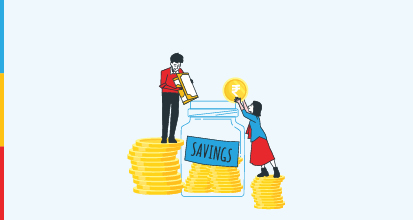
  1. Save as Much as you can - Savings should be an essential part of your life. The long period of lockdown due to COVID-19 has further taught us the importance of savings. Developing the habit of saving early on will gradually build financial independence in life.
    • Want to know how much you need to save? Understand the 50:30:20 budgeting ratio:
      • 50% of your income must be for your essentials and regular lifestyle expenses
      • 30% you should save for your long-term goals such as child’s education, marriage, etc.
      • Rest 20% of your income is sufficient for meeting short-term goals like home renovation, car upgrade, etc.

    Going by the above ratio, you can easily proportionate your savings. Thereafter, you can allocate them into various savings schemes such as PPF, Bank FD, or a ULIP where you can multiply your savings.

  2. Maintain Low Survival Expenses - Besides savings, COVID-19 pandemic has also taught us the importance of minimalism. An effective way to ensure financial security in these crisis-hit times is to limit your survival expenses. Remember your lifestyle expense is all about habits. They are built over some time and they take a similarly long period to change. Thus, you may want to build only those habits you can live with over a long period.
    • Here’s a list of things you would want to work on for crisis times:
      • Figure out the lowest amount of money you need for running all the important things in your household.
      • Eliminate unsecured debt as far as possible 
      • Have credit cards but ensure their limits are always open in full after the due period 
      • Explore the ways to reduce your mortgage interest expenses
    Good times, nowadays, are often synonymous with bad debt, or at least a lot of debt. So, you may want to contact a financial planner to consolidate and resolve this before the crisis hits.
  3. Create an Emergency Fund- The emergency fund is a pool of liquid investments. Liquid investments are savings account balances, super saver deposits, liquid mutual funds, etc. In other words, any investment that keeps your money safe and easily available.

    You can even count your credit card in this category, as it is also easily usable for transactions.

Why do you Need Emergency Fund?

It’s easy to get this question if you have already created a large pool of long-term investments and real estate. So, for one the purpose of an emergency fund is to support you at a time when nothing else is available.

For example, in the case of job loss or loss of income from profession. The reason you need this emergency pool of funds is that, in such situations:

  • Your insurance plans will not work
  • You may not get a loan
  • Your family and friends might be in the same boat of crisis

How much Emergency Fund you Need?

Ideally, the emergency fund should take care of the following expenses:

  • Kitchen expenses
  • Child’s school fee
  • Loan EMIs
  • Insurance Premiums
  • Utility Bills

The amount of money you will need depends not only on the amount of these expenses per month but also on the length of time.

Ideally, for any profession and any age saving six to nine months of your income should be enough for emergencies. But, you can increase or decrease the time as per your professional experience and industry.

Click to use : Power of Compounding Calculator

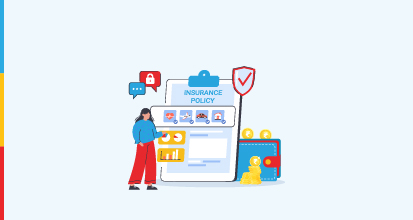
  1. Buy a Family Health Insurance- Covid has had many families who got affected, scrambling for medical support. Health insurance is a financial plan that is purpose-built for such emergencies. Thus, a family health plan which can take care of a large part of your medical expenses is a must.
    • You need the following two types of health insurance plans:
      • Mediclaim cover for hospitalisation and treatment costs and daycare expenses
      • Critical health cover against life-threatening diseases like cancer and heart failure
  2. Budget Preventive Medical Care -Covid pandemic has also forced us to realise the importance of good health and vitality. With preventive healthcare, you can avoid many large medical expenses and most of all emergencies.
    Thus, budget the regular health checkup in your expenses and maintain God’s gift without hiccups.
  3. Diversify your Investments -The next financial lesson from the pandemic is to invest your money into appropriate schemes that can build your wealth.
    • The most effective way to achieve this is to invest in diversified investments, that include both equity and debt.
    • A smart way to do this is to invest your money in a ULIP, such as the Canara HSBC Life Insurance Company Life Insurance Invest 4G. It offers you a multiple-asset portfolio including equity, debt, and hybrid mutual funds.
    • Apart from that, it offers you 4 different automatic portfolio management strategies that work in a pre-defined manner
    • Besides, if you opt for the century option in this plan, your plan will continue till 100 years of your age.
    • Ongoing debt
  4. Have an Adequate Term Life Cover -The pandemic saw many affluent families suffering financially due to the sudden demise of the primary breadwinner. Term life insurance cover is one small investment that will help you avoid such a situation for your family.
    • Have an adequate term insurance cover, i.e., 10-15 times your annual income is sufficient to take care of the following for the family:
      1. Ongoing debt
      2. Household expenses
      3. Important future goals
    • You can look for the regular income + lump sum payout feature in the plan
      1. The regular income feature allows your family to rest easy
      2. They can use the lump sum to pay off any debts and invest in long-term goals

Term insurance premiums are the lowest among all the life insurance plans for any age. Therefore, whether you have life insurance or not, ensure the long-term financial safety of your family with a term life cover.

Click to use : Term Insurance Calculator

  1. Long Term Investment -Long-term investments are the mainstay of your financial life. The pandemic forced almost everyone to look at their finances in a new light. While we have talked of all the short-term investments and emergency needs, long-term investments are also equally important.

    Wth the modern-day lifestyle expenses and demanding work environments, it's easy to miss long-term investments. So, you need to have a few trusted, tax-efficient and long-term investment options:

    • Public Provident Fund (PPF)
      • Invest for 15 years, then extendable in 5-year tranches
      • Withdrawal allowed after 5 years
      • Completely tax-free
      • Maturity money cannot be repatriated
    • Unit Linked Insurance Plans (ULIPs)
      • Invest up to 100 years of age. Eg., Century Option of Invest 4G from Canara HSBC Life Insurance
      • Partial withdrawal allowed after 5 years
      • Withdrawals and maturity are completely tax-free if the annual investment does not exceed Rs 2.5 lakhs
      • Bonuses for long term investors
      • Invest in both debt and equity funds or hybrid funds
      • Systematic investment and withdrawal options
      • Life cover and premium protection option
    • Guaranteed Savings Plans
      • Another long-term life insurance savings scheme
      • You can estimate the maturity benefit beforehand due to guaranteed benefits
      • Long-term investors are rewarded with additional bonuses
      • Life cover and premium protection option

      Apart from these, you can also consider Sukanya Sammriddhi Yojana, Guaranteed Income4Life and similar investments.

  2. Learn to Save Tax - If you want to save money and reduce your expenses, saving tax becomes your natural goal. Most long-term investments allow you to claim deductions from your taxable income for up to Rs 2 lakhs and more.

Health insurance premiums and medical expenses of your 60+ parents can give you a deduction of up to Rs 75,000.

Apply these nine financial lessons from COVID to stay prepared for any situation in life, at least financially.

Worried About Emergencies? Start Planning Now

Please enter correct name Please enter the Full name
Please enter valid mobile number Please enter Mobile Number
Please enter valid email Please enter Email

Enter OTP

An OTP has been sent to your mobile number

Didn’t receive OTP?

Application Status

Name

Date of Birth

Plan Name

Status

Unclaimed Amount of the Policyholder as on

Name of the policy holder

Policy Holder Name

Policy No.

Policy Number

Address of the Policyholder as per records

Address

Unclaimed Amount

Unclaimed Amount
Error

Sorry ! No records Found

.  Please use this ID for all future communications regarding this concern.

Request Registered

Thank You for submitting the response, will get back with you.

Disclaimer - This article is issued in the general public interest and meant for general information purposes only. The views expressed in this blog are solely those of the writer and do not necessarily reflect the official policy or position of Canara HSBC Life Insurance Company Limited or any affiliated entity. We make no representations or warranties of any kind, express or implied, about the completeness, accuracy, reliability, suitability, or availability with respect to the blog or the information, products, services, or related graphics contained in the blog for any purpose. Any reliance you place on such information is therefore strictly at your own risk. You should consult with a qualified professional regarding your specific circumstances before taking any action based on the content provided herein.


Recent Blogs

Types of Financial Planning: Key Strategies for a Secure Future
18 Feb '26
903 Views
Different types of financial planning guide your decisions at every life stage. Plan wisely from your first paycheck to retirement with Canara HSBC Life Insurance.
Read More
Financial Planning
Difference Between Financial Year (FY) vs. Assessment Year (AY)
16 Feb '26
1196 Views
7 minute read
Find out what is Assessment Year (AY) & Financial Year (FY). Visit this section and understand the difference between Financial Year and Assessment Year.
Read More
Financial Planning
Tips to Keep Financial Records Organized Effectively
12 Feb '26
619 Views
5 minute read
Learn how to sort, store, and manage your financial records with ease. Improve control and reduce financial stress.
Read More
Financial Planning
Financial Instrument: Meaning, Types and Importance
10 Feb '26
2685 Views
8 minute read
Financial instruments are essential to build and boost your wealth. Know the types of financial instruments available in India. Explore more about the tax benefits of financial instruments.
Read More
Financial Planning
Is SIP Tax Free? How to Start SIP To Save Tax on Your Income?
09 Feb '26
4421 Views
10 minute read
SIPs are one of the best tax-saving investments. Learn if SIP is tax-free under Section 80C of the Income Tax Act to plan your finances.
Read More
Financial Planning
Purpose of Financial Planning and Control in Money Management
16 Jan '26
3891 Views
10 minute read
An explanation of financial planning and control, focusing on budgeting, monitoring expenses, managing resources, and supporting long-term financial stability.
Read More
Financial Planning
PPF Account Basics: 7 Questions to Consider Before Opening
07 Jan '26
907 Views
6 minute read
Seven important questions to consider before opening a PPF account, covering eligibility, lock-in period, returns, and withdrawal conditions.
Read More
Financial Planning
Why Does Liquidity Matter in Financial Planning?
02 Jan '26
1052 Views
8 minute read
Learn what liquidity means in financial planning, why easy access to funds is important, and how liquidity helps manage emergencies and short-term needs.
Read More
Financial Planning
What Is the Right Way to Start Investing in Your 20s?
28 Dec '25
1081 Views
10 minute read
Learn how to invest in your 20s by balancing risk, building good habits early, choosing the right assets and setting the foundation for long-term wealth.
Read More
Financial Planning

Financial Planning - Top Selling Plans

We bring you a collection of popular Canara HSBC life insurance plans. Forget the dusty brochures and endless offline visits! Dive into the features of our top-selling online insurance plans and buy the one that meets your goals and requirements. You and your wallet will be thankful in the future as we brighten up your financial future with these plans.