


Thank you for your interest in our product. Our financial expert will connect with you shortly to help you choose the best plan.
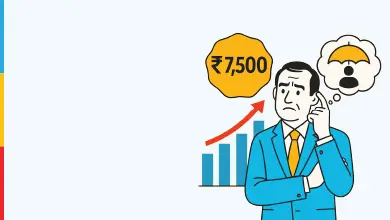
You may have heard the recent announcement of increasing the minimum pension under the EPS95 pension scheme to ₹7500 per month. At the end stage of your career, this move could change the way you think about retirement planning. Traditionally, many workers considered the voluntary retirement scheme (VRS) to secure financial stability and an early exit from the workforce. However, with this pension hike, you may need to pay attention to whether VRS is still the best choice or if staying longer could bring more benefits.
Key Takeaways
Plan beyond statutory pensions to secure a comfortable retirement
Combine EPS-95 benefits with savings and investments for financial flexibility
Use voluntary retirement strategically to maximise your long-term income
Early and diversified planning reduces dependency on government policies and ensures peace of mind
What is the EPS-95 Pension Scheme?
The Employees’ Pension Scheme, 1995 (EPS-95) is a social security initiative under the EPFO designed to provide lifelong pension support to employees in the private sector after retirement. Both you and your employer contribute 12% of your basic salary and dearness allowance to EPF. Out of this, 8.33% of the employer’s contribution goes into EPS.
You can start receiving pension benefits after completing 10 years of service and attaining the age of 58 years. The pension amount depends on your pensionable salary and pensionable service, meaning that longer service and a higher salary base result in better payouts.
The proposed minimum pension hike to ₹7,500 aims to improve financial security for retired workers who currently receive as little as ₹1,000 monthly- an amount insufficient to cover basic living costs.
Get Expert Guidance for Your Retirement & Investments
Enter OTP
An OTP has been sent to your mobile number
Didn’t receive OTP?
Application Status
Name
Date of Birth
Plan Name
Status
Unclaimed Amount of the Policyholder as on
Name of the policy holder
Policy Holder Name
Policy No.
Policy Number
Address of the Policyholder as per records
Address
Unclaimed Amount
Unclaimed Amount
Sorry ! No records Found
.  Please use this ID for all future communications regarding this concern.
Request Registered
Thank You for submitting the response, will get back with you.
The ₹7,500 Minimum Pension Hike: What’s the Story?
The Employee Pension Scheme (EPS-95) has been a lifeline for millions of retirees across India. For years, the minimum pension under this scheme has been fixed at ₹1,000 per month, a sum that might cover your basic needs. In early 2025, discussions began around a significant change: a proposal to raise the minimum pension to ₹7,500 per month.
If this hike comes into effect, it will benefit a lot of pensioners under EPS-95. For many retirees, this jump means improved quality of life. From managing household expenses to affording better healthcare, the increased pension could bring a sense of financial security for future uncertainties.
However, it is important to note that the government has not officially approved this proposal. In a recent parliamentary update, the Ministry of Labour clarified that no final decision has been made. This means the increase is still under consideration, and pensioners will need to wait for an official notification before the change takes effect. For you as a private-sector employee, the potential hike signals two things.
First, it highlights the government’s recognition of how inadequate the current pension system is
Second, it reminds you that relying only on statutory pensions may not be enough for your long-term retirement needs
Why is the Hike Being Considered?
The discussion around raising the EPS-95 minimum pension to ₹7,500 is not random. It stems from multiple social, economic, and legal pressures that affect millions of retirees. If you are part of this scheme or planning voluntary retirement, it’s important to understand the forces driving this proposal.
Inflation and Cost of Living: Prices of food, healthcare, and utilities rise every year. A pension of ₹1,000 cannot cover even basic needs in today’s economy. You may feel the pinch of inflation the most after retirement because you might have fewer income sources. A higher pension can help you manage these costs better.
Value of Long-Term Contributions: You may have contributed to EPS-95 for decades. However, the payout often feels too low compared to your efforts. Pensioners believe their years of service and savings deserve fair recognition. A revised pension would reflect the value of these contributions.
Demand From Trade Unions and Pensioner Groups: Trade unions and retiree associations are consistently raising this issue. They have held protests, submitted petitions, and met with policymakers to push for an increase. Their efforts show that pensioners like you are not alone in this fight for fair retirement income.
Legal and Policy Pressure: Several court cases have highlighted the need for better EPS-95 pensions. Legal directions and policy studies suggest that keeping the pension low will increase poverty among retirees. You benefit when such pressures force the government to take action.
Social Responsibility of the Government: The government carries the responsibility of ensuring social security for citizens. Public-sector retirees already receive better pensions, but private-sector workers often lag. By approving a hike, the government can reduce this gap and give you a more secure future.
Did You Know?
Since January 1, 2025, pensioners have been able to receive their EPS pension from any bank branch in India
Should You Re-think Voluntary Retirement Planning?
If you are considering voluntary retirement, you need to understand how this pension hike impacts your future income and whether relying solely on it is enough.
Higher Pension- But is it Enough: If the minimum pension rises to ₹7,500, it may not fully cover your retirement needs. Daily expenses, medical bills, and inflation can quickly eat into this fixed income. Depending only on EPS-95 might leave you financially constrained, especially if you plan to retire early or maintain an active lifestyle.
Voluntary Retirement and Pension Dependency: When you opt for voluntary retirement, your dependence on pension income begins sooner. This makes it critical to evaluate whether the EPS-95 hike will provide sufficient support. You can supplement the pension with employer provident fund balances, retirement-focused, annuities, or insurance-linked products to ensure financial stability.
The Role of Inflation: Relying solely on EPS-95 may expose you to inflation risk. A pension of ₹7,500 today may lose value in 10–15 years as the cost of living rises. Planning voluntary retirement without considering inflation could reduce your purchasing power and limit your financial freedom. Diversifying income sources helps you stay ahead of rising costs.
Should You Delay Voluntary Retirement?
The pension hike is still under consideration and has not yet been officially approved. You should not base your retirement decision solely on a possible increase. Delaying voluntary retirement could limit other financial opportunities. Instead, focus on creating a plan that works even if the hike takes longer to implement.
Comparing EPS-95 Pension vs Voluntary Retirement Planning
Aspect
EPS-95 Pension Only (₹7,500 Proposed)
EPS-95 + Voluntary Retirement Planning
Monthly Income
Fixed at ₹7,500 (if approved)
Pension + structured retirement income from savings, or annuities
Inflation Protection
Limited, may lose purchasing power over time
Better, with diversified investments that grow with inflation
Healthcare & Emergency Costs
May strain your budget for medical or unexpected expenses
Planned savings and insurance cover provide a financial buffer
Lifestyle & Leisure
Limited, mostly necessities
Enables you to maintain or improve your lifestyle post-retirement
Financial Independence
Partial, relies solely on pension policy
Higher, with multiple income streams ensuring comfort and security
The table highlights that while the EPS-95 hike is beneficial, pairing it with voluntary retirement planning offers a more secure and flexible financial future. You can choose to rely only on the pension or actively plan for long-term comfort. The decision ultimately depends on your priorities, risk appetite, and retirement goals.
Blending Pension with Wealth Planning
Think of EPS-95 as a foundation rather than the entire plan. Even with the proposed increase, your retirement security is stronger if you combine the pension with employer PF balances, annuity plans, and insurance. This strategy gives you control over your financial future and reduces dependence on policy changes.
Final Thoughts
The proposed EPS-95 minimum pension hike to ₹7,500 is a significant step toward improving retirement security for private-sector employees. However, relying solely on statutory pensions may not meet all your post-retirement needs. By combining EPS-95 benefits with voluntary retirement planning, savings, investments, and insurance, you can secure a more stable and flexible financial future. Evaluate your goals, consider inflation, and plan proactively to ensure that your retirement years remain comfortable and financially independent.
Glossary
EPS-95: Employee Pension Scheme launched in 1995 for private-sector retirement benefits
Voluntary Retirement Scheme (VRS): An Early retirement option offered by employers to eligible employees
Provident Fund (PF): A Retirement savings scheme funded by contributions from the employer and employee
Annuity Plan: An Investment that provides regular income after retirement
Inflation: The rate at which the cost of living and prices of goods/services increase over time
FAQs
EPS-95 is a government-regulated pension scheme for private-sector employees under the Employees’ Provident Fund Organisation (EPFO).
Private-sector employees who meet their company’s age and service criteria can opt for voluntary retirement, usually before the standard retirement age.
Not yet. The government is considering it, but official approval is pending.
Relying only on EPS-95 may not be sufficient due to inflation and lifestyle needs. Combining it with other retirement options is advisable.
You can plan using employer PF balances, annuities, insurance products, and personal savings to secure a stable post-retirement income.
Disclaimer - This article is issued in the general public interest and meant for general information purposes only. The views expressed in this blog are solely those of the writer and do not necessarily reflect the official policy or position of Canara HSBC Life Insurance Company Limited or any affiliated entity. We make no representations or warranties of any kind, express or implied, about the completeness, accuracy, reliability, suitability, or availability with respect to the blog or the information, products, services, or related graphics contained in the blog for any purpose. Any reliance you place on such information is therefore strictly at your own risk. You should consult with a qualified professional regarding your specific circumstances before taking any action based on the content provided herein.
We bring you a collection of popular Canara HSBC life insurance plans. Forget the dusty brochures and endless offline visits! Dive into the features of our top-selling online insurance plans and buy the one that meets your goals and requirements. You and your wallet will be thankful in the future as we brighten up your financial future with these plans.