



personal-finance-meaning-importance-and-tips-for-personal-finance

Personal Finance - Meaning, Importance, and Tips

Understanding personal finance is necessary for any working adult to have financial well-being. Read below to learn more about personal finance.

Written by : Knowledge Centre Team

2025-10-23

1295 Views

10 minutes read

Money touches every part of our lives, yet many people approach it without a clear plan. Personal finance is the discipline of managing your money so you can meet your short-term needs while securing long-term stability. It’s not just about earning more but also making informed decisions that help your money work harder for you.

A well-managed personal finance plan gives you control over your financial future, protects you from unexpected setbacks, and allows you to pursue life goals with confidence. Whether you’re just starting your career or planning for retirement, understanding personal finance is the first step towards lasting financial well-being.

Worried About Emergencies? Start Planning Now

Please enter correct name Please enter the Full name
Please enter valid mobile number Please enter Mobile Number
Please enter valid email Please enter Email

Enter OTP

An OTP has been sent to your mobile number

Didn’t receive OTP?

Application Status

Name

Date of Birth

Plan Name

Status

Unclaimed Amount of the Policyholder as on

Name of the policy holder

Policy Holder Name

Policy No.

Policy Number

Address of the Policyholder as per records

Address

Unclaimed Amount

Unclaimed Amount
Error

Sorry ! No records Found

.  Please use this ID for all future communications regarding this concern.

Request Registered

Thank You for submitting the response, will get back with you.

Personal Finance – Definition

Personal finance is the art and discipline of handling your income, expenses, savings, and investments in a way that secures your present while building a stable future. From budgeting to investing, from stock investment to retirement planning, everything remotely connected with money can be considered personal finance. However, the two main pillars of it are to save money and invest it in the right financial instrument for optimal return.

In simple words, anything related to money that requires planning and execution can be called personal finance. There was a time when people took the help of financial advisers to manage their wealth, but now individuals have access to the tools, information, and resources needed to take charge of their own financial decisions.

Components of Personal Finance

Personal finance has mainly four different components.

  1. Income: Without money, there’s no personal finance. So your ‘personal finance’ journey starts as soon as you have a steady source of income. However, salary is not the only type of income. Things like business profits, dividend income, and income from freelancing are also a part of it. All the sources of cash inflow are termed as income.
    Learn more about income from other sources.
  2. Expenses: Expenses or cash outflow are another vital aspect of personal finance. An accurate personal finance plan would never advise you to stop spending and put as much as you can into savings. Instead, you should spend enough money that it can’t offset your financial goals.
  3. Investments: Investment is a crucial part of personal finance. Purchase of land, stocks, bonds, and even opening a fixed deposit account can be termed as an investment. Investing in the right instrument in line with your risk appetite can be a tricky task. You need to put a lot of effort into research and analysis before proceeding with any investment.
  4. Financial Safety: Last but not least are financial safety and protection. Your money is of no use if it can’t make a soft landing during a financial crisis. Unexpected events like accidents or natural calamities can happen anytime to anyone. Having insurance is the best way to ensure financial safety in dire situations.
trivia-img

Did You Know?

In 2025, over 89% of Indian adults have a bank account. This is a big rise from the 44% that was recorded in 2011.


Source: DD News

iSelect Guaranteed Future Plus

Strategies for Managing Your Personal Finance

Strategising for effective personal finance goals is a must to ensure your financial matters are sorted. The sooner you start making a plan, the better it is.

Here are the key steps you should take while devising your personal financial plan:

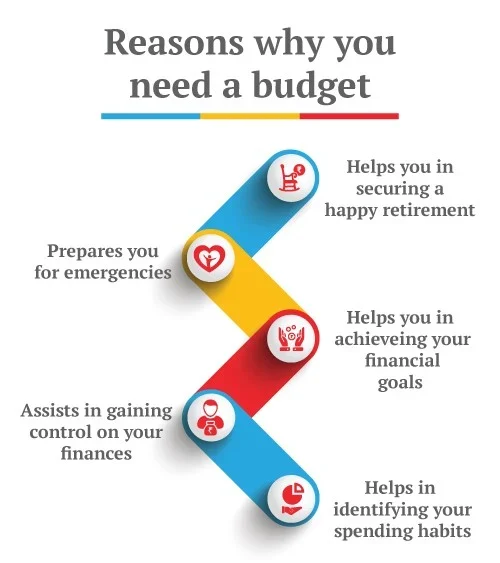
  1. Prepare a Budget: Be it a nation or a person, making a robust budget is a must-do exercise once a year. A well-laid-out budget guides you to live within your means and motivates you to save extra for long-term financial goals.
    An ideal budget should look like the following:
    • 40% of net income for essentials like rent, groceries, utility bills, transportation, paying off debt, and insurance premiums payment
    • 30% should be allocated towards discretionary expenditure like buying clothes, gadgets, dining out, and travelling to tourist destinations.
    • The rest 30% of net income must be saved for the future through different asset classes
      Recommended Reading - Income from Salary
       
  2. Save First before Big Expenditure: If you’re early in your career, your primary goal should be to save up a decent amount as an emergency fund. An ideal emergency fund consists of 3 to 6 months of living expenses. You can stretch it up to 12 months for extra cushioning.
    Always keep your emergency fund in highly liquid assets. Accessibility should be your priority for storing the money, not return. For this purpose, bank FD, liquid and ultra-short-term mutual funds are best suited.

  3. Keep Expenses in Check: One of the key objectives of setting up personal finance strategies is the reduction of expenses. People, especially the young ones, tend to be reckless with money. At its extreme, you could be spending more than your take-home pay, which is disastrous for your financial health.
    So, your goal while setting up the strategy should be to keep a tab on unnecessary expenses. List out all the requisite expenses for the coming year and allot a portion of your income towards it.
    Also Read - What are Financial Assets?

  4. Have Adequate Insurance: Having adequate insurance coverage during adverse situations is a lifesaver. People often have a misconception that life insurance is a waste of money. But those who have gone through a difficult stage of life know the real value of insurance coverage: 
    • Life cover equal to at least 10 times your annual income. 
    • Health cover equal to your annual income

Life insurance and health insurance are the two types that people of all ages should get. The earlier you purchase an insurance policy, the cheaper it is in terms of the premium amount.

Minimising Tax Using Personal Finance

Although you can’t avoid taxes, you certainly can lower them with proper financial planning. There are many financial tools available in India that can help you minimise your income tax burden. Here are all the popular tax savers in a tabular format.

Instrument NameTax Saving under SectionLock-in & ReturnMax Tax Exemption
PPF80C15 years & 7.1%₹1.5 lakhs
NPS80C & 80CCDUp to 60 years of age & 8-12%₹1.5 lakhs + Rs 50,000
Life Insurance80CVariable₹1.5 lakhs
ELSS80CMin 3 years & 10-15%₹ 1.5 lakhs
PF80CUp to 60 years of age & 8.1%₹1.5 lakhs
SCSS80C5 years & 7.4%₹1.5 lakhs
ULIP80CVariable₹ 1.5 lakhs
NSC80C5 years & 6.8%₹1.5 lakhs
Home Loan Interest24 & 80EENot applicable₹2 lakhs
Home Loan Principal rep.80CNA₹1.5 lakhs (₹2 lakhs for above 60 taxpayers)


There are quite a few provisions for reducing tax liability in the Income Tax Act of 1961. The most popular of them all is Section 80C. It is always advised to invest ₹1.5 lakh a year in popular saving schemes that carry tax benefits u/S 80C. You can choose more than one scheme and divide the whole amount into parts. Also, the New Pension Scheme (NPS) allows you to save taxes up to ₹16,500 over and above Section 80C.

Must Read - NPS Withdrawal

Personal finance is not rocket science. However, it has more than one aspect you will need to take care of. Thus, it pays to keep it simple. We can complicate it if we try implementing many things at the same time.

In reality, all we need to do is establish simple strategies and diligently follow the path laid out by those strategies. Automating your long-term investments allows you to focus on important and big financial decisions. With consistency, perseverance, and proper personal finance strategies, you can get to your desired financial targets.

How Does Personal Finance Help an Individual?

Personal finance is not just about earning and spending; it is about managing money wisely to secure financial stability and achieve life goals. Whether you are planning for short-term needs like emergency funds or long-term aspirations like retirement, personal finance plays a crucial role in shaping your financial well-being. Here’s how it helps an individual:

  1. Ensures Financial Security: A well-managed personal finance plan ensures that you are prepared for unexpected situations like medical emergencies or job loss. By setting aside an emergency fund and investing in insurance, you create a financial cushion that prevents stress during tough times.
  2. Helps in Achieving Financial Goals: Whether it’s buying a house, funding higher education, or planning a vacation, personal finance helps you set and achieve these goals systematically. Budgeting and disciplined savings allow you to track your progress and ensure that you have enough funds when needed.
  3. Reduces Debt Burden: Managing personal finance effectively helps in avoiding unnecessary debt and reducing financial liabilities. With a proper repayment strategy, individuals can clear loans on time, improve their credit score, and save money on interest payments.
  4. Builds Wealth Over Time: Investing in the right financial instruments, such as mutual funds, stocks, or fixed deposits, helps in wealth accumulation. A strong personal finance strategy ensures that your money grows over time, providing financial independence in the long run.
  5. Promotes Better Spending Habits: Tracking expenses and sticking to a budget encourages mindful spending. When individuals are aware of where their money is going, they can cut down on unnecessary expenditures and focus on saving and investing for a better future.
  6. Secures a Comfortable Retirement: One of the key benefits of personal finance is retirement planning. Investing in pension plans, provident funds, and other retirement schemes ensures that individuals can maintain their lifestyle even after they stop working.

Common Personal Finance Mistakes to Avoid

Managing personal finances wisely is essential for long-term financial stability. Many people unknowingly make mistakes that can impact their financial goals. Here are some of the most common personal finance mistakes to avoid:

  1. Not Having a Budget: One of the biggest mistakes is not creating a budget. Without a clear understanding of income and expenses, it’s easy to overspend and struggle with savings. A budget helps track spending habits, prioritise essential expenses, and set aside funds for savings and investments.
  2. Ignoring an Emergency Fund: Many people neglect building an emergency fund, assuming they won’t need it. However, unexpected expenses like medical emergencies, job loss, or urgent home repairs can arise anytime. Ideally, you should have at least 3-6 months’ worth of expenses saved in an easily accessible account.
  3. Overspending on Credit Cards: Credit cards offer convenience, but misusing them can lead to high-interest debt. Many individuals only pay the minimum amount due, which results in accumulating interest and long-term financial strain. It’s crucial to use credit cards responsibly by paying off the full balance each month.
  4. Not Investing Early: Delaying investments is another common mistake. Many people wait until they earn a higher income to start investing, missing out on the benefits of compound interest. Even small investments made early can grow significantly over time, so it’s important to start as soon as possible.
  5. Ignoring Retirement Planning: Relying solely on a salary or savings without planning for retirement can lead to financial difficulties later in life. Investing in retirement plans like the Employee Provident Fund (EPF), Public Provident Fund (PPF), or National Pension System (NPS) can help secure a comfortable retirement.
  6. Not Having Adequate Insurance: Many individuals either overlook insurance or opt for insufficient coverage. Health insurance, life insurance, and disability insurance are crucial for financial protection. Without them, unexpected medical expenses or loss of income can severely impact financial well-being.
  7. Failing to Track Expenses: Small, frequent expenses can add up quickly. Many people don’t realise how much they’re spending on non-essential items like dining out, subscriptions, or impulse purchases. Tracking expenses can help identify areas to cut back and redirect money toward savings and investments.

Conclusion

Personal finance is not rocket science. Personal finance has more than one aspect that you will need to take care of. Thus, it pays to keep it simple. By implementing different strategies at the same time, we might unnecessarily complicate the process.

All we need to do is establish simple strategies and diligently follow the path laid out by those strategies. Automating your long-term investments allows you to focus on important and big financial decisions. With consistency, perseverance, and proper personal finance strategies, you can get to your desired financial targets.

Glossary

  • NSC: This is a fixed-income investment scheme that you can open with any post office branch.
  • SCSS:  Senior Citizen Savings Scheme is a retirement benefits programme for people to have a steady source of income after retirement.
  • ELSS: An Equity Linked Savings Scheme is a type of diversified equity scheme which comes, with a lock-in period of three years.

glossary-img

FAQs

It is recommended to use the 50-30-20 rule to manage your finances. The 50-30-20 rule recommends putting 50% of your money toward needs, 30% toward wants, and 20% toward savings.


There are 5 main types or areas of personal finance: income, spending, savings, investments, inflation, and taxation.


The 4 stages of personal finance are based on the 4 stages of life. They are the budgeting years, accumulating years, managing years, and distributing years.


The best time to start saving is at any age when you begin to work and earn money for yourself.


Yes, personal financing is of great help to salaried persons. Having a fund of any kind can be of great importance when they are no longer salaried.


Disclaimer - This article is issued in the general public interest and meant for general information purposes only. The views expressed in this blog are solely those of the writer and do not necessarily reflect the official policy or position of Canara HSBC Life Insurance Company Limited or any affiliated entity. We make no representations or warranties of any kind, express or implied, about the completeness, accuracy, reliability, suitability, or availability with respect to the blog or the information, products, services, or related graphics contained in the blog for any purpose. Any reliance you place on such information is therefore strictly at your own risk. You should consult with a qualified professional regarding your specific circumstances before taking any action based on the content provided herein.

Recent Blogs

Financial Instrument: Meaning, Types and Importance
10 Feb '26
2685 Views
8 minute read
Financial instruments are essential to build and boost your wealth. Know the types of financial instruments available in India. Explore more about the tax benefits of financial instruments.
Read More
Financial Planning
Is SIP Tax Free? How to Start SIP To Save Tax on Your Income?
09 Feb '26
4421 Views
10 minute read
SIPs are one of the best tax-saving investments. Learn if SIP is tax-free under Section 80C of the Income Tax Act to plan your finances.
Read More
Financial Planning
Why Does Liquidity Matter in Financial Planning?
02 Jan '26
1053 Views
8 minute read
Learn what liquidity means in financial planning, why easy access to funds is important, and how liquidity helps manage emergencies and short-term needs.
Read More
Financial Planning
What Is the Right Way to Start Investing in Your 20s?
28 Dec '25
1082 Views
10 minute read
Learn how to invest in your 20s by balancing risk, building good habits early, choosing the right assets and setting the foundation for long-term wealth.
Read More
Financial Planning
Why Financial Planning Is Important for Long-Term Security?
27 Dec '25
4910 Views
11 minute read
Learn why financial planning is important, how it helps manage income, expenses and risks, and why it is essential for achieving long-term life goals.
Read More
Financial Planning
Best Investment Plans for 5 Years in India 2026
27 Dec '25
1548 Views
8 minute read
Explore the best investment plans for 5 years that balance returns and risk, helping you meet medium-term financial goals with stability and smart planning.
Read More
Financial Planning
Net Present Value (NPV): Full Form, Meaning & Formula
26 Dec '25
3900 Views
10 minute read
Net Present Value (NPV) measures an investment's total value and profitability. Learn how NPV helps in investment planning with Canara HSBC Life Insurance.
Read More
Financial Planning
How Can You Calculate SIP Returns in India?
26 Dec '25
887 Views
8 minute read
Learn how to calculate SIP returns, understand expected vs actual returns, use formula or calculators, and plan investments effectively for long-term wealth creation.
Read More
Financial Planning
Internal Rate of Return (IRR): Meaning, Formula and Usage
24 Dec '25
3868 Views
10 minute read
Understand Internal Rate of Return (IRR), its meaning, and calculation formula. Learn how it measures investment performance with Canara HSBC Life Insurance.
Read More
Financial Planning

Financial Planning - Top Selling Plans

We bring you a collection of popular Canara HSBC life insurance plans. Forget the dusty brochures and endless offline visits! Dive into the features of our top-selling online insurance plans and buy the one that meets your goals and requirements. You and your wallet will be thankful in the future as we brighten up your financial future with these plans.